Secrets of the Chesapeake Bay
What the Bay and the Birthplace of America Never Told You
This July 4th, America turns 250. From the monuments of Washington to the harbor at Philadelphia, the nation will pause to measure the distance between who we were and who we have become. But if you want to understand what this country truly is - not its mythology, but its bones - look no further than to the Chesapeake Bay.
The bay stretching nearly 200 miles from the mouth of the Susquehanna to the Atlantic is not merely a backdrop to American history. It is the stage on which the whole improbable drama was first rehearsed. Virginia's shores produced more Founding Fathers, more revolutionary fire, and more contradictions than anywhere else on the continent. The Revolution's decisive battle was fought at Yorktown, at its very edge. And yet the Chesapeake holds a few secrets that remain hidden under the bigger moments in history. Some are strange. Some are funny. Some are humbling. All of them are true.
18,000 B.C. — There Was No Bay
Before there were colonies, before there were Powhatans, before there was anything we would recognize as civilization on this shore, there was no Chesapeake Bay at all.
More than 18,000 years ago, the land where the Bay now shimmers was a river valley. The ancient Susquehanna flowed south through it and emptied directly into the Atlantic Ocean miles from where the shore is today. Then the glaciers began to melt. Sea levels rose. The ocean crept inland, slowly filling the Susquehanna valley, swallowing the lowlands, pushing north until, by about 10,000 years ago, the waters had reached what is now southeastern Virginia. By 3,000 years ago, the Bay had taken roughly its current shape.
The Chesapeake, in other words, is only about 10,000 years old — a geological infant. The nation we are celebrating at 250 was built on shores that had only existed, in any recognizable form, for a few thousand years before the first English ships arrived.
1607 — Jamestown Wasn't About Freedom. It Was About Gold.
The founding story most Americans absorbed runs like this: brave settlers seeking religious freedom crossed the Atlantic and built a new world on principles of liberty. That story is true, but it belongs to the Pilgrims, who arrived in Plymouth in 1620.
Jamestown came first, and it was something else entirely.
When Captain Christopher Newport sailed into the Chesapeake Bay in April 1607, he was not chasing freedom. He was chasing gold. The Virginia Company of London, a joint-stock corporation, had sent him to find the mineral wealth the Spanish had plundered from the Aztecs. The men who waded ashore were, in the most precise sense, employees of a for-profit company. Their mission was to generate a return on investment.
They found no gold. They found iron pyrite — fool's gold — mosquitoes, brackish water, and hostile neighbors. What they eventually found, almost by accident, was tobacco. It was the crop, not the creed, that secured the English presence on the Chesapeake.
1608 — The Bay That Was Too Alive to Believe
Captain John Smith, exploring the Chesapeake the following year, marveled that oysters "lay as thick as stones" and encountered fish so plentiful his crew attempted to catch them with frying pans. The oysters in particular defy modern imagination. In England they were already scarce, nearly over-harvested to extinction. Here, the reefs were navigational hazards, the bivalves grew so large some had to be cut before they could be eaten, and the population was so immense it could filter the entire volume of the Bay's water in approximately one week (it now takes one year).
1609 — The Worst Luck in American History
We have long blamed the Jamestown colonists for their near-destruction, their gold-hunting fantasies, their reluctance to farm, their fatal impracticality. But modern science shifts the picture dramatically.
Researchers examining the growth rings of a bald cypress near the original fort discovered that the colonists arrived at the beginning of the worst drought the region had seen in 770 years, a seven-year catastrophe from 1606 to 1612. The Native Americans of the Powhatan Confederacy, accused of deliberately withholding food, were not deceiving anyone. They were starving too.
The winter of 1609 to 1610, the Starving Time, claimed all but roughly 60 of the fort's 500 residents. Survivor George Percy wrote of eating horses, dogs, cats, rats, and mice, and then boots, shoes, and any leather that could be boiled. The colony that would become the cradle of the Revolution was, for a time, a place where people ate their shoes.
1730 — The Fox That Changed America's Landscape
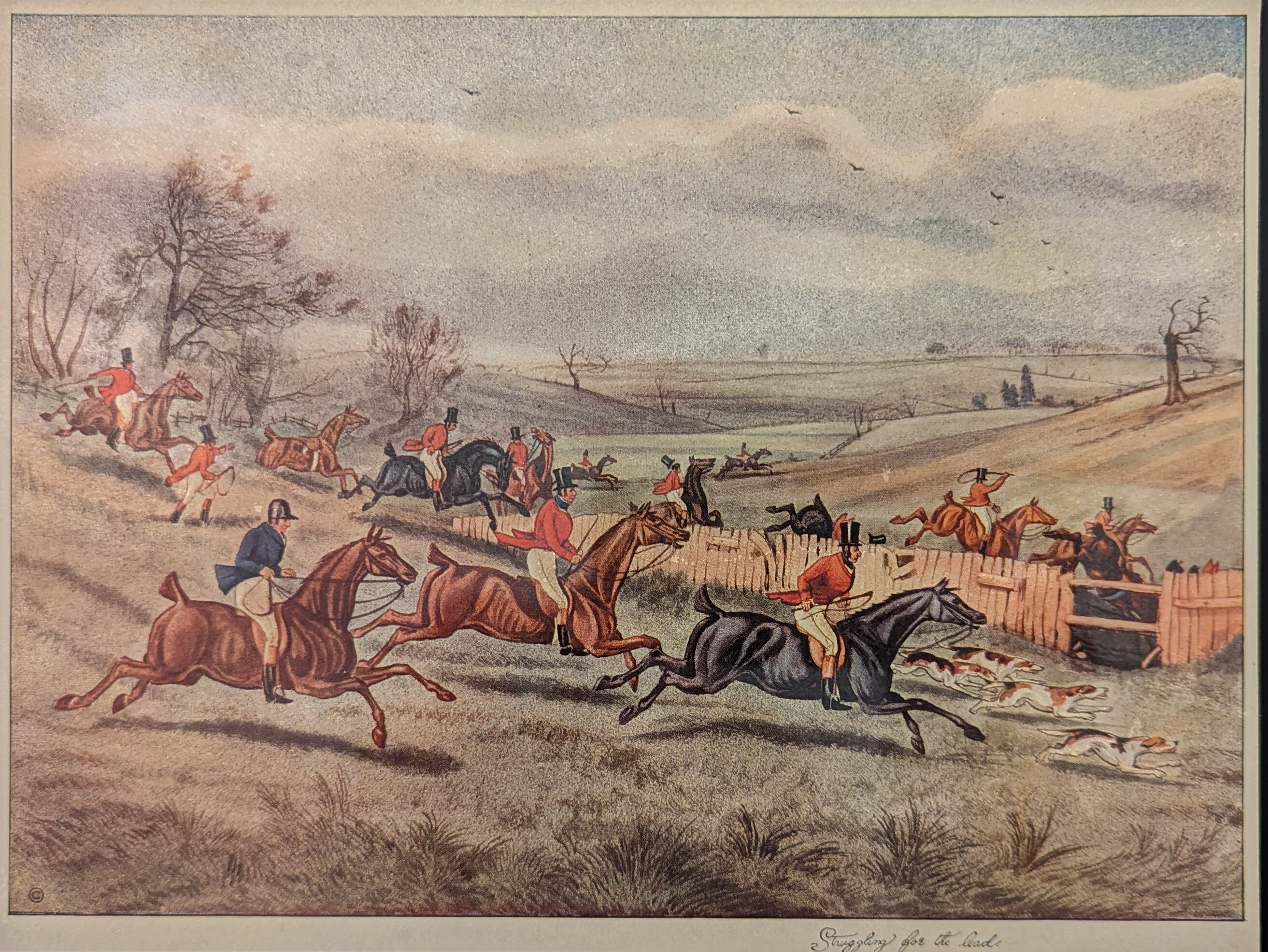
By the early 18th century, the tobacco planters of the Chesapeake had grown wealthy enough to indulge in the full theater of English country life, including the mounted fox hunt. Horses, hounds, a horn, a fox running across open fields. It was sport, yes, but also a performance of belonging to a certain kind of world.
There was one problem. Virginia's native gray fox killed their sport. An inhabitant of our forests for over a thousand years, when chased by English foxhounds, it did something maddening: it ran for the nearest tree and climbed it. The hunt was over before it began. English hounds were built for long, thundering runs across open countryside, not for staring up into the branches of a Virginia oak.
So the planters imported a solution. In 1730, prosperous tobacco growers began bringing red foxes over from England, releasing them into the cleared farmland of Virginia and Maryland where the open fields suited the animal perfectly. The red fox ran. The hounds gave chase. The hunt was saved, and so was the gray fox.
1754 — Washington's Other July 4th
Virginia alone gave the Revolution Washington, Jefferson, Madison, and George Mason. But the history up close is stranger and more human than the monuments suggest.
On July 4th, 1754, twenty-two years before Jefferson's declaration, a young Washington commanding Virginia militia was forced to surrender to a French force and sign, in French, a document he couldn't fully read. It turned out to be a confession that he had assassinated a French diplomat. It was the only military surrender of his career, helped ignite the Seven Years' War, and shadowed every Fourth of July celebration he ever attended afterward.
1776 — The Declaration Wasn't Signed on July 4th
Most Americans believe the Declaration of Independence was signed on July 4, 1776. It was not. Congress voted for independence on July 2nd. The text was approved and sent to the printer on the 4th. The actual parchment, the one with all 56 signatures, was signed on August 2nd, nearly a month later. The date that became a national holiday is simply the day the printer received his instructions.
John Adams, writing to his wife Abigail, predicted that August2nd would be the date Americans celebrated forever. He was off by two days and wrong about the month.
1920 — "Founding Fathers" Is Younger Than Jazz
The phrase "Founding Fathers" feels as old as the republic itself. It is not. Warren G. Harding coined it in a speech at the 1920 Republican National Convention — 144 years after the Revolution. For the first century and a half of its existence, the republic had no collective name for the men who built it.
The Chesapeake does not tell its stories loudly. It keeps them in the growth rings of cypress trees, in layers of sediment, in the oyster-shell middens of people who fished these waters thousands of years before there was a Virginia, or an America, or a word for any of it. Two hundred and fifty years on, the Bay is still here, older than the nation, deeper than its myths, full of secrets it has not finished telling.