The Mahjong Group - Building Community in BackCountry
What is the basic premise of Mahjong?
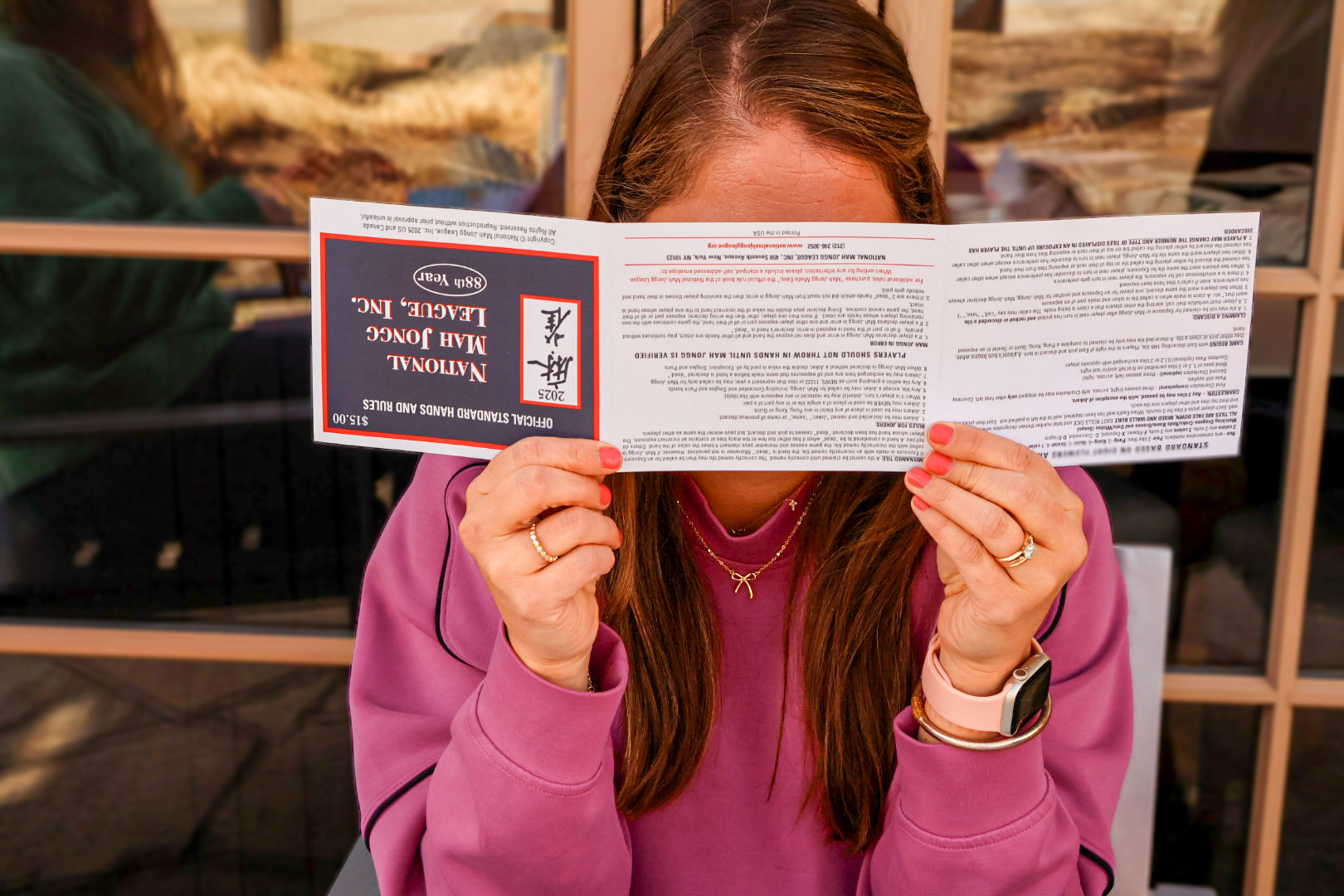
Mahjong is a strategic tile game that can be played by two, three, or four players. The
goal of Mahjong is to build a winning hand with 14 tiles made of specific sets, which may
include three of a kind, multiple pairs, and/or combinations using designated patterns
that are specified on a card published by the National Mahjong League. Each year, a
new card is released and includes the hands that players can play and the rules of play.
The game is played with 152 tiles.
What makes it so fun and addictive, in your opinion?
Mahjong is a game that requires strategy, memory, ritual, and, hopefully, a bit (or a lot) of
luck. Mahjong is about forming specific combinations using the cards. Depending on how the game is progressing and what others are playing and discarding, a player may need to “pivot”, that is, identify a different hand on the mahjong card to strive for. That helps keep one’s brain engaged.
Other components that make the game so fun include strategizing, studying the other
players and learning how to read both their movements and recognizing the patterns
they are working on by what they do, or do not discard, and what they expose on the
table.
When did the game originate, and tell us why it is spreading so fast across the
US?
Mahjong was first developed in China in the 19 th century. Its name comes from a
The Chinese word meaning “sparrow” was inspired by the sound of the tiles clicking
together. Mahjong came to the United States in the early 20 th century and was
introduced by Joseph P. Babcock, an American expatriate who learned the game in
Shanghai. Mahjong exploded during the Roaring Twenties and then found its decline
during the Great Depression and WWII. In the 1930s, Jewish-American women in New
York created the National Mah Jongg League (1937)
The game was revived in the 1950’s and 1960’s. Mahjong has surged in popularity in
the last couple of years and has captured the attention of multiple generations, including
youth and millennials.
For most, mahjong provides a sense of community and a social outlet. The
game can provide a departure from the daily grind and hustle of daily life. Some groups
select days and times to meet and play on an ongoing basis, while others may randomly drop
in to play at a specific location and not see each other again. Many groups form strong
bonds of friendship and support one another. It is not unusual to hear laughter,
conversation, and banter coming from a table or a table can be noticeably quiet; each
group takes on its own personality.
Social media enables players to connect, exchange ideas, ask questions, and form
groups. Players can play online alone or connect with others on platforms such as Real
Mah Jongg.
Mahjong can be addictive, which can be from the satisfaction of winning or from playing
with some of the beautiful sets of tiles and mats. When I first began playing, I found
myself captivated by the variety of ornate sets of mahjong tiles and mahjong mats, and
ended up with quite a collection that I never tire of. It isn’t unusual to find our group
talking about the latest tile set and/or mat they ordered, and one of the ladies in our
group designs mahjong accessories.
How long does it take someone to be able to play?
That is an interesting question. It took me about a year and a half to be comfortable
playing. I have taught some groups who picked the game up in three or four lessons
and others who still rely on help after six months, but the key takeaway on all of this is
that people continue to come back and enjoy the time we all spend together.
How did your group begin?
Someone mentioned they wanted to learn how
to play mahjong, and it got my attention. I offered to meet and help them. That was a
year ago, and we are still going strong. Most of the group is now out in the community, teaching others and helping spread the joy that mahjong brings.
How does the neighborhood of BackCountry help Mahjong become a great
community builder?
One can often walk into Lost Coffee in BackCountry and see a group of people
gathered around one of the tables playing Mahjong. I know there was a group that
played at the Sundial House on Monday mornings, and I assume there are other groups
that I may not be aware of. I would encourage anyone who has a group that is
interested in others joining to post information on the BackCountry Facebook page. Our
group typically plays on Thursdays at Lost Coffee and on Sunday afternoons at the
Sundial House. Our gatherings range from two to eight ladies playing mahjong, and we
are always excited when someone new joins our group. We always learn new things
about the game when someone new joins.
How would someone be able to get involved in one of these groups if they were
Looking for something fun and new to participate in?
I am not aware of all of the groups in BackCountry. I would encourage others who have
groups in our community to post on the BackCountry page on Facebook. For those who
may be looking for a group, I would check in with the Sundial House Desk; they are
always very helpful.