Two Generations, The Strength We Share - Ashley Bonasso and MOM
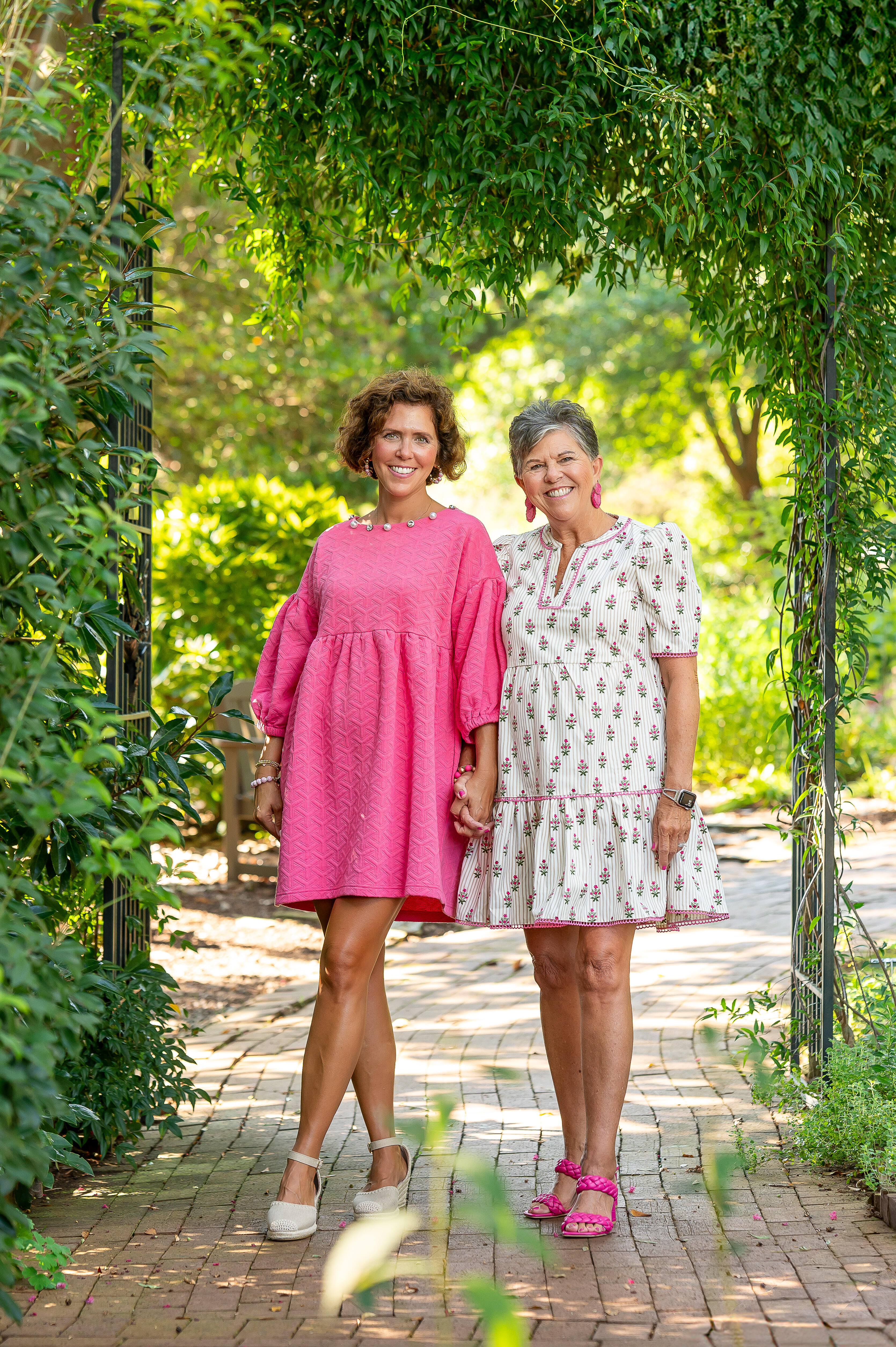
Twelve years ago, my mom was diagnosed with breast cancer. I remember being scared, but what I remember most is the way she walked through it—with strength and joy. Her experience wasn’t easy but she persevered.
My mom has always been a safe place. She’s the one first one I want to share news good or bad with, so receiving my own breast cancer diagnosis was no different.
I was 37 years old and a mom of six when I felt a lump and called my OBGYN. They brought me in right away. I was not yet 40 and had no baseline mammograms, so lots of imaging followed. Not long after, I heard the words I never expected to hear.
My exact response was, “I don’t have time to have cancer.”
And honestly, that feeling never really went away.
With 6 kids my days were already full. Suddenly, cancer felt like I was given another full time job. There were appointments, specialists, treatment plans, medications, insurance conversations and decisions I never imagined I would have to make. I had a port placed quickly, which my kids affectionately named “Portia.”
My treatment included six rounds of two different chemotherapy drugs, a year of immunotherapy, and a double mastectomy with reconstruction. I also chose to use cold capping during chemotherapy, a process that can help preserve hair during treatment. It was cumbersome and insurance does not yet cover it, but for me, it was worth it. I wanted to maintain “Mama” as much as possible for my kids. I knew cancer would change a lot, and I wasn't willing to give it anything it didn't have to take.
I traveled to San Francisco for a sensation sparing double mastectomy, a newer technique that is not yet widely available. We have wonderful healthcare here in Winston-Salem, but sometimes the best decision for your particular situation means looking beyond your own backyard. Most women lose sensation following a mastectomy. My surgeons are grafting nerves back in to allow the body to slowly redevelop sensation. It was an out of the box decision but cancer treatment isn’t only about removing the disease. It’s also about thinking through the life you will be living after treatment.
The hardest part came toward the end of chemotherapy. Physically, my body was at its lowest. Yet throughout treatment, I tried hard to keep life as normal as possible for my children. It wasn't because I didn't want them to see me struggle. I think there is something healthy about children seeing their parents walk through difficulty. However, I wanted their lives to keep going. Cancer had taken enough from our family. I was determined to not let it take any more.
Cancer brought with it a loss of control. One day your life is your own, and the next, your calendar, your body and your future seem to belong to doctors and treatment plans. I felt more angry than afraid or sad. I work diligently to live a healthy life, and I struggled with the question of why this was happening to me.
My faith in God became an anchor. It gave me perspective when I couldn't see beyond the next appointment and reminded me that cancer did not define my life.
For a long time, I dreamed about the day I could finally say, “I'm finished.” When that moment came, it felt surreal. I sat in a rocking chair at the cancer center with my husband and cried. It felt as though my body had been holding onto a year's worth of tension and, finally, it could begin letting go.
As I look at the milestones passing—the appointments behind me, the treatments completed—I am deeply grateful to be on the other side. Life feels lighter.
Now, standing beside my mom to honor Breast Cancer Awareness Month, I see something I couldn’t have fully understood twelve years ago. I always knew she was strong, but I didn't realize just how much strength, resilience, grit and grace it takes to walk through something so difficult without becoming hardened or bitter. Cancer didn't steal my mom's joy twelve years ago, and I hope that in my own journey, I am carrying that same spirit forward.