Learning to Ride Ruger One-Handed at CRC!
by Luellen Lucid
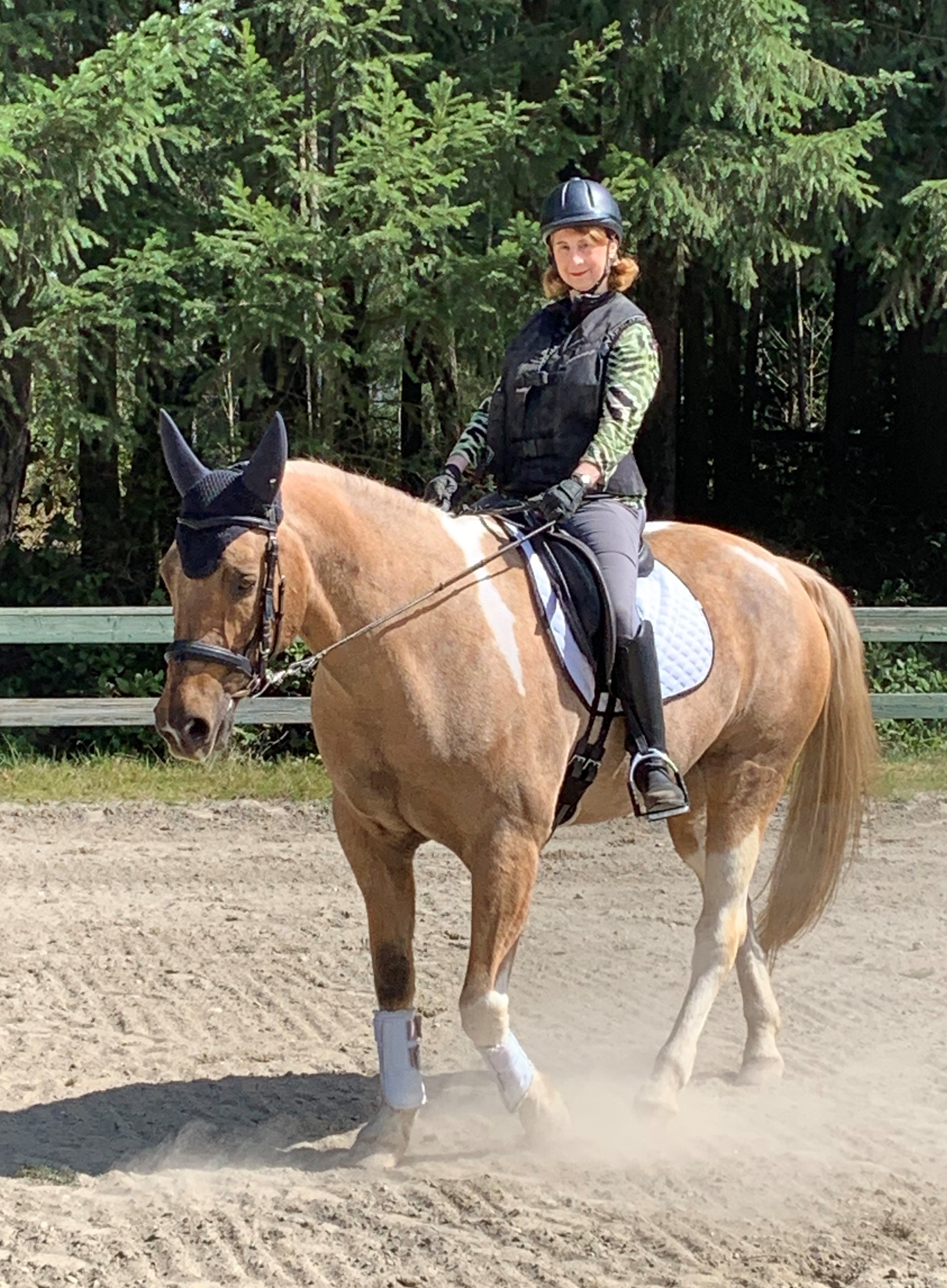
Riding Ruger two-handed in the outdoor arena
Learning to ride a horse one-handed in the traditional Western style when you have always ridden two-handed in the English style is quite a challenge but ultimately useful and enjoyable. Recently, this rider had to learn to ride with one (left) hand after sustaining an injury in the other (right) hand. Fortunately, our trainer, Delicia Molton Sorensen, has taught Western dressage and understands the nuances of learning to ride using neck reining, the traditional Western way of directing the horse with one hand.
We started out riding slowly, learning not to twist when steering the horse and not overdoing the reining. As articles on one-handed or neck reining explain, learning this skill boosts the rider’s balance and control on horseback. Gradually, each lesson, we worked on riding with one hand at a sitting trot, keeping the gait slow, and then at a posting trot, maintaining a steady pace, then sometimes extending the trot, but always with the rider determining the pace, not the horse!
It took practice to ride at these different gaits and getting the horse to turn when needed without over-reigning. The goal is for the horse to turn with little perceptible effort by the rider. It means using the seat and legs to communicate more than using the hand and rein. I’m used to doing this with two hands on the reins; it is more challenging doing it with one rein. Once I mastered the basics, I was then asked to ride my horse in a serpentine pattern we often do in dressage and also in a figure eight, again with minimal reliance on the rein, using the legs to guide the horse through the turns.
I’ve now graduated to riding a variety of patterns and turns, doing large and small circles in the arena. My skills have progressed to a level where I can communicate with my horse and get him to turn while keeping my hand and rein mostly straight rather than pressing on the horse’s neck, which is one’s initial instinct when neck reining.
One reason I have been able to progress quickly over a three-week period is that my horse, in his younger days, was shown in Western pleasure classes. He already knows about neck reining and is re-learning how to respond. Elephants are often referred to as having amazing memories, but horses do too. I have found that once my horse learns a skill, he doesn’t forget it even if he isn’t asked to use it for an extended period of time. Myconversion (temporarily) to one-handed riding was accelerated because I was learning this new skill on a horse who already knew how to do it if asked properly.
I look forward to regaining use of the right hand for riding and resuming my dressage work using two-handed aids, but I am enjoying the challenge of learning a different way of riding. Delicia says that what I am doing has already helped my riding skills overall, as I learn to balance and control my horse and ride straight in the saddle, relying more on seat and leg aids than on my hands.