From Stage Lights to Canvas: The Many Worlds of Tom Stovall
An Old Northeast neighbor blends a lifetime in the performing arts with a painter’s eye for nature, history, and imagination.
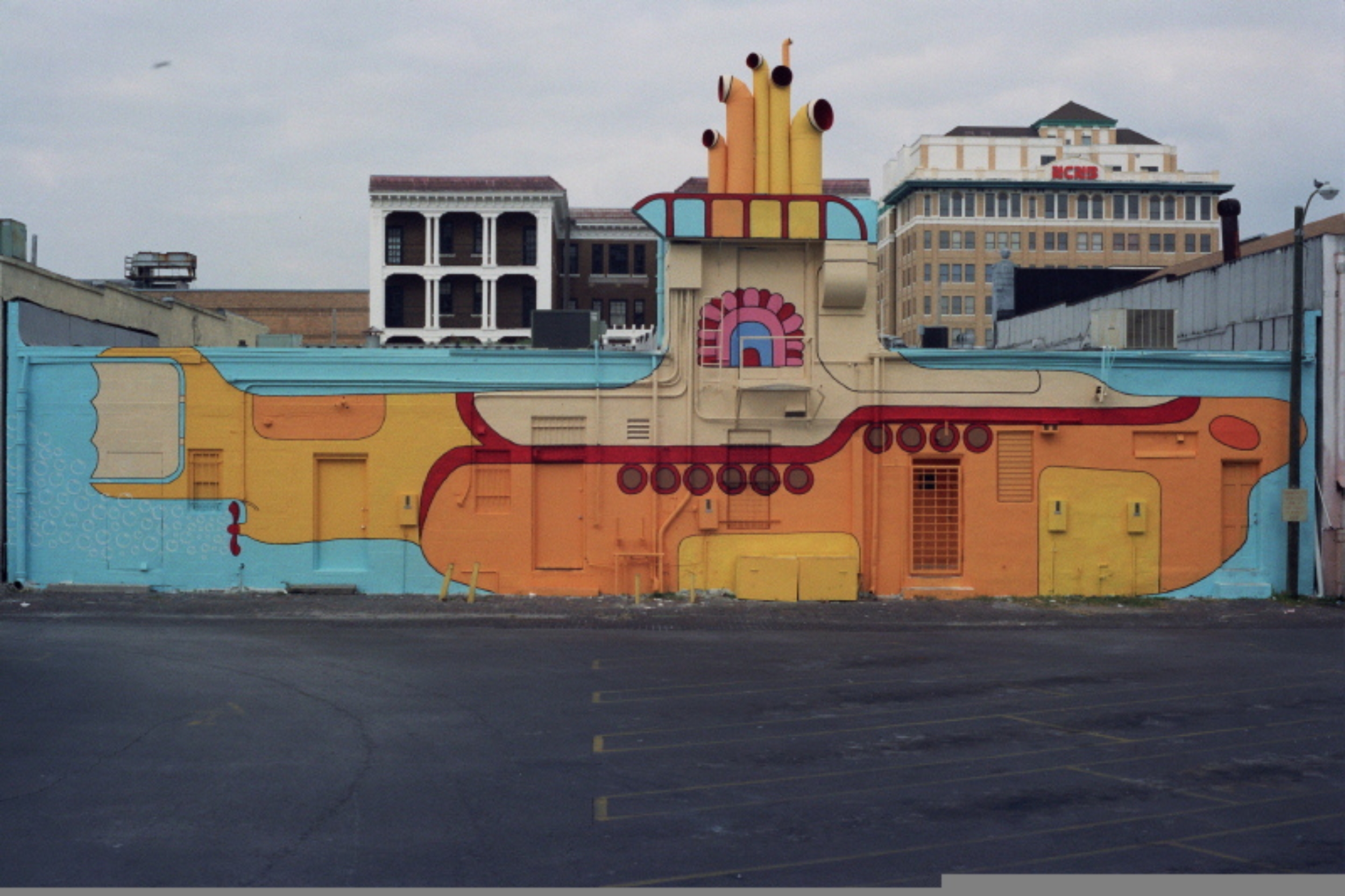
After - much improved!
Tom Stovall’s creative life has never fit neatly into a single box. Born and raised on Snell Isle, Stovall spent decades in New York City and Los Angeles working across the performing arts before returning to St. Petersburg and settling in the Old Northeast. Today, he calls the neighborhood one of his favorites, especially for families and children, and it is here that his visual art continues to evolve alongside a rich career in theater, music, dance, film, and television.
Stovall describes himself as a lucky boy, and it is easy to see why. His artistic journey has unfolded across multiple disciplines, each shaping how he approaches painting. Years spent on stages and sets taught him to think about movement, mood, and storytelling, qualities that now surface in his visual work. While his creative life began in performance, painting has become another way to explore the same sense of wonder and expression.
His primary mediums include graphite, acrylic, and oil, each offering a different language for his ideas. Nature is his central inspiration, but his work is not limited to literal landscapes. Instead, Stovall often looks for emotional resonance in natural forms, translating light, color, and atmosphere into compositions that feel both grounded and imaginative.
Among his favorite projects is a piece inspired by Yellow Submarine, made even more meaningful by the fact that Ringo Starr loved it. Yet the most memorable honor of his career came through a major historical commission: painting the murals in the Elliott Aster Restaurant at the Vinoy Resort Hotel. Listed on the National Register of Historic Places, the space required a deep respect for history paired with creative vision. For Stovall, the opportunity to contribute to such an iconic St. Petersburg landmark remains a defining moment in his artistic life.
Influence is something he embraces broadly rather than narrowly. He draws inspiration from painters like Johannes Vermeer, photographers such as Jim Marshall, and the energy of movements and styles associated with artists like Jackson Pollock and Robert Rauschenberg. For Stovall, creative influence is not about imitation but conversation, a dialogue across time, disciplines, and mediums.
Some of his most demanding projects have been large scale public works, particularly murals on water towers and treatment tanks. Each structure presented its own list of challenges, from sheer size to technical complexity. Ranging from half a million gallons to ten million gallons in capacity, these surfaces required not just technical skill but imagination and intuition. Stovall credits those qualities with helping him overcome obstacles that at first seemed impossible.
Although he does not often sell his work, Stovall remains deeply committed to the act of creating. When he does offer pieces, they are typically graphite works, intimate in scale compared to his monumental public projects. For him, art is less about commerce and more about connection.
When asked what he hopes his work brings to others, Stovall answers simply: joy. It is a fitting goal for an artist whose career has spanned stages, screens, and canvases, always guided by curiosity and passion.
In the Old Northeast, where history and creativity quietly coexist, Tom Stovall’s story feels right at home. His journey reminds neighbors that art can take many forms and many paths, and that it is never too late, or too early, to follow where imagination leads.
727.580.9100