Finding Her Voice
Our Journey with Childhood Apraxia of Speech
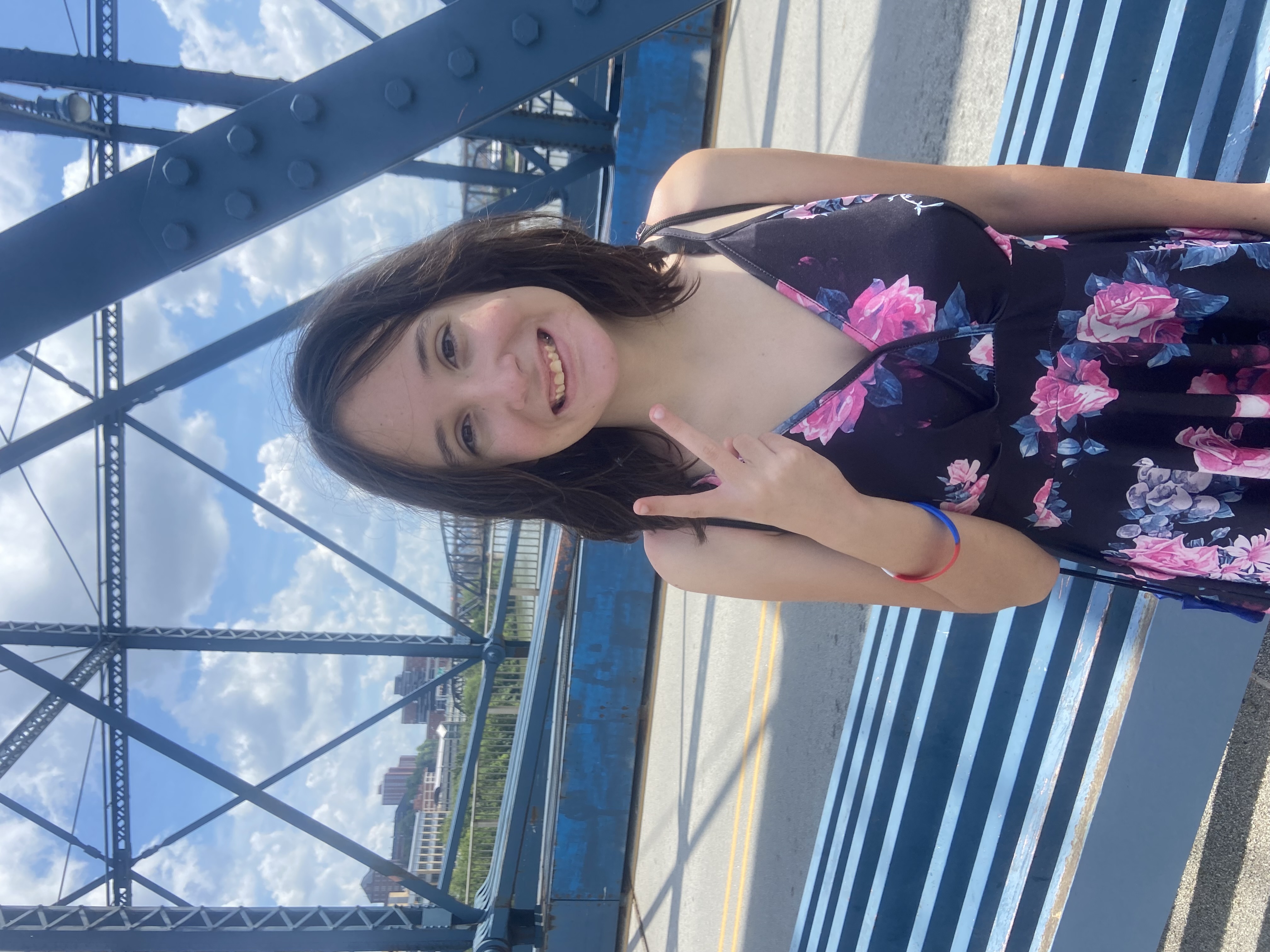
Aliyah in Pittsburgh.
After four boys, she was finally here! My baby girl.
When Aliyah was born, she was surrounded by big brothers. They were so excited to finally have a little sister! She brought a whole new dynamic into our home and lots and lots of pink.
Despite the loudness and constant activity in a bustling home full of busy boys, she still had things she wanted to say. Her first sentence was, “I tell Mama,” and believe me, there was a lot to tell! Even from a young age, she wanted to communicate, share what was happening around her, and make sure her voice was heard.
As she began saying words, it soon became clear that her speech was developing differently. Because the boys had spoken early and clearly, I quickly knew that something was off. I placed her in speech and occupational therapy.
We soon learned that her speech challenges were related to Childhood Apraxia of Speech (CAS). There were evaluations, therapy, questions, and learning, though I wish I had known more. Because it is fairly rare, it can often be mistakenly treated as an articulation disorder, rather than a motor speech disability. Even one of my brothers, who was a speech-language pathologist, did not fully understand and attributed it to my lack of teaching her to speak correctly.
When she was younger, she sometimes became very frustrated when people could not understand what she was trying to say. She knew what she wanted to communicate, but getting others to understand her could be difficult. Trying to focus on hearing her, as a parent with multiple children and activities going on at once, was often challenging. Driving in a car and not being able to look at her face and read body language was especially taxing.
Although her speech has come a long way, being understood is still a consistent struggle. Even as her mother, someone who has listened to her and learned her speech for 16 years, there are still times when I have difficulty understanding her. She often has to repeat herself multiple times. Sometimes she has to try a different word or explain what she means another way. Communication can take extra time and effort.
At 16, she wants people to understand that apraxia does not only affect young children.
“I wish people knew apraxia can be difficult for older people too,” she said. She adds, “I wish people knew that it takes time, sometimes years, to learn to be understood.”
Those words reflect something many people may not realize: progress does not always mean that the challenges disappear. Children with apraxia grow into teenagers and adults with friendships, interests, talents, dreams, and goals. They deserve to be recognized for who they are, not defined by how easily they speak.
Apraxia can look different for every child, and there is not always one clear explanation for why it occurs. In some cases, it may be connected to genetic differences or neurological factors. In other cases, even after testing and evaluations, the cause remains unknown. In our family, I suspect there may be a genetic component, as some of her brothers have experienced various neurological issues as well. We do not know whether those experiences are connected to her apraxia, but they have made me curious about whether there could be an underlying family link.
This year, my daughter and I had the opportunity to attend the Apraxia Kids National Conference in Pittsburgh, through a scholarship from Apraxia Kids. The conference gave us the chance to learn from professionals, connect with other families, and meet people who understand the experiences and challenges that can come with apraxia.
One of the most meaningful parts of the experience was seeing teens and young adults with apraxia connecting with one another and realizing they are part of a larger community. I was so impressed with the confidence of some of the young adults who used their voices to speak at the conference and by their refusal to let this disability limit their dreams. It gave me true hope for my daughter and her future.
Aliyah also participates in Young Able Voices, where she has had opportunities to connect with other teens with apraxia on Zoom. During one discussion, the teens talked about devices they wished existed to make communication easier.
My daughter dreamed of a watch that could help translate what she was saying. She described being able to repeat a word and then answer “yes” or “no” until the watch found the word she actually meant. Her idea was a powerful reminder that people with communication challenges are often thinking creatively about what would help them be understood.
Aliyah and I are participating in the Walk for Apraxia this year to raise awareness and support individuals with apraxia and their families. We would love for people to join us, donate, or help spread the word.
Aliyah has always had plenty to say. Our journey has been about helping others hear and understand her, and making sure she has the opportunity to use her voice.
What is always clear is that a child’s speech does not define their intelligence, personality, or potential. Children with apraxia have ideas to share, relationships to build, and goals they want to reach. They deserve to be recognized for the whole person they are, not just the way they communicate.
Apraxia of Speech at a Glance
Childhood Apraxia of Speech (CAS) is a motor speech disorder that affects the brain’s ability to plan and coordinate the movements needed for speech.
It is not simply a speech delay. Children with apraxia often know what they want to say and understand language, but have difficulty organizing the precise movements needed to produce clear speech.
Common signs may include:
• Inconsistent speech errors (a word may sound different each time)
• Difficulty moving smoothly between sounds and syllables
• Unusual stress patterns in speech
• Trouble imitating or producing certain words
• Inconsistent speech errors (a word may sound different each time)
• Difficulty moving smoothly between sounds and syllables
• Unusual stress patterns in speech
• Trouble imitating or producing certain words
Every child’s experience is different. Apraxia may occur with other diagnoses, but some children have no known cause. Many children benefit from specialized speech therapy focused on motor planning.
Awareness matters. Understanding apraxia helps families find support, helps communities better serve children, and helps children have their voices heard.
Our family was able to attend the Apraxia Kids National Conference through a scholarship from Apraxia Kids (https://www.apraxia-kids.org).
A grant from the Once Upon a Time Foundation (https://onceuponatime.org) helped provide additional teen activities, creating opportunities for connection and friendship among young people with apraxia.
We really appreciate support for these foundations.
Stroll Lake Quivira (https://www.strollmag.com/locations/lake-quivira-ks/)