More Cowbell in Cortina: An Olympic Year in the Italian Alps
The silence was deafening.
Moments earlier, my daughter and I had been sprinting up the mountain after scoring last minute tickets, only to discover the race had already begun. I waved down a volunteer van driver I recognized, and he raced us uphill. After one final slippery sprint, we burst into the bleachers just minutes before Lindsey Vonn pushed out of the start gate. She was the reason we came.
Cowbells. Flags. Thousands of voices echoing through the natural amphitheater, the sound ricocheting off our favorite range, the Tofane, glowing in magical orange and pink alpenglow, the pale rock reflecting the light so completely it seemed illuminated from above and below at once.
Then nothing.
Thirteen seconds into her run, wearing bib 13, Lindsey caught a gate and went down. Hard. After the most improbable comeback season in ski racing history, competing without an ACL, she lay motionless on the Tofane. When the rescue helicopter lifted her hundreds of meters into the cold blue sky, the stillness broke.
Thousands rose to their feet. The ovation rose with her — and so did the mist in our eyes. It was not for a medal, but for a career, and perhaps its final chapter, defined by relentless commitment to the sport.
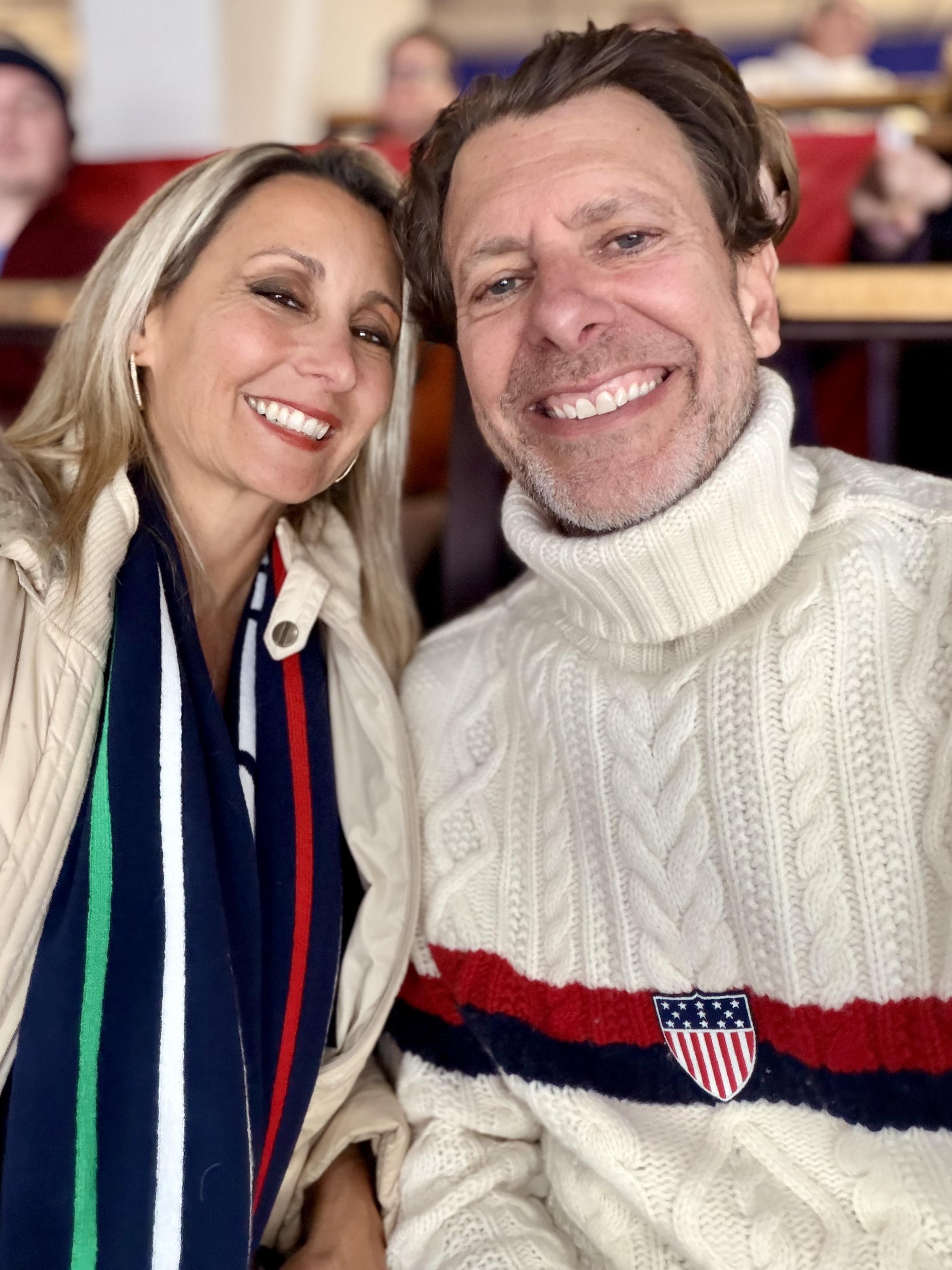
Breezy Johnson of the US took the lead and ultimately won gold. Italy then sent its local favorite, Sofia Goggia, down the course. The Italians around us stood in unison. I stood with them, cheering for our host and the hometown hero even as she chased an American. Goggia skied brilliantly and secured bronze for Italy. In perfect Olympic irony, the cameras swung toward us as she attacked the course. That was the moment captured — an American on his feet, cheering for Italy. It felt like the right expression of a shared spirit.
That day was also my daughter’s first ski race.
The next morning, I woke to messages from friends around the world, including neighbors from Lido Isle. “Was that you on TV?” Apparently, even in the Alps, Newport still finds you.
That race embodied the Winter Games in Cortina. Intimate and global at once.
For nearly 20 years, we have spent summers here. Ellie’s connection runs deeper. She grew up about 90 minutes away in the Prosecco Valley, but Cortina was where she spent weekends, holidays, and summers. It is home to her mother’s family for generations. We were married here in the same small church where her parents were married nearly sixty years ago.
This was also the year of our 20th anniversary. We celebrated it in the same venues, with familiar faces and new friends, including a few who made the journey from Lido Isle. Two decades later, the setting felt both unchanged and entirely new.
After my father passed away in Newport, a long-discussed dream of a year abroad became reality. If not now, when? If not Cortina, where?
We are a family that loves the outdoors, mountains, skiing, great food, and Italy. The return of the Winter Olympics sealed it. Living here during an Olympic cycle, not as vacationers but as residents and volunteers, felt like rare timing.
Cortina first hosted the 1956 Winter Olympics, the first Winter Games ever televised, capturing international affection for Cortina. With time, the shine dulled. The ski jump decayed. The bobsled track fell quiet. The train stopped because of avalanche risk. The airport closed. Cortina remained the Queen of the Dolomites, though with less sparkle. As preparations accelerated for 2026, cranes rose, and quiet anxiety followed. Would everything be ready?
Living here meant watching that tension unfold up close.
In the quieter months, we met Cortina beyond the postcard. Café owners lingered while I practiced my Italian over my morning cappuccino after walking the dog. Ski tuners paused to talk. Shopkeepers shared their hopes and concerns. Then the surge returned and the valley pulsed.
And we skied. A lot.
Before school. After school. And the occasional well deserved POW day off. Bluebird weekends. Ski tours skinning directly behind our house. The Sella Ronda, the iconic 25-mile circuit linking four valleys around a towering limestone massif, where you glide from village to village without removing your skis. Armentarola, where you finish the run and are pulled by horses along a frozen stretch that feels lifted from another century. Polenta, funghi, salsiccia, formaggio alla piastra, zuppa d’orzo, grigliata mista — and the Italian lifestyle that lingers long after the lifts close.
Winter reshaped our summer friendships. For years, we shared hikes and August dinners with our Italian friends but rarely skied together. This year changed that. We rode lifts side by side, chased fresh tracks, and warmed up over espresso at mid-mountain rifugi. Our winter friendships deepened in a shared love for this place and its rhythm.
By late afternoon, the national houses began to glow. Flags draped from balconies. Music spilling into the frigid air. On closing night at the Swiss House, the celebration peaked. The US beat Canada in a hockey match that will be remembered for years, and the place erupted. I found myself exhausted, still in ski boots, nearing midnight, shoulder to shoulder with Swiss, Italian, and American fans alike, with a long walk home ahead. More cowbell. Champagne sprayed. The celebration refused to end. It felt less like a national function and more like the happiest living room on earth.
Through volunteering in the Olympic Village, we experienced the Games from the inside. My role focused on checking in foreign teams and coordinating residential logistics. Ellie’s was more personal. She helped ease the stress of competition by organizing impromptu foosball tournaments and late night karaoke sessions that made the Village feel like home for athletes who couldn’t sleep. When the Italian President came to thank the volunteers and shook Ellie’s hand, it was a quiet moment of pride. This small town had carried something enormous.
For now, the flame has flickered out. The cranes are fewer. The rhythm is settling again.
We came for family roots, mountains, and lifestyle. We committed because of winter sport. What we found was something deeper.
For one unforgettable season, Cortina was not just a backdrop for history. It was home.
Moments earlier, my daughter and I had been sprinting up the mountain after scoring last minute tickets, only to discover the race had already begun. I waved down a volunteer van driver I recognized, and he raced us uphill. After one final slippery sprint, we burst into the bleachers just minutes before Lindsey Vonn pushed out of the start gate. She was the reason we came.
Cowbells. Flags. Thousands of voices echoing through the natural amphitheater, the sound ricocheting off our favorite range, the Tofane, glowing in magical orange and pink alpenglow, the pale rock reflecting the light so completely it seemed illuminated from above and below at once.
Then nothing.
Thirteen seconds into her run, wearing bib 13, Lindsey caught a gate and went down. Hard. After the most improbable comeback season in ski racing history, competing without an ACL, she lay motionless on the Tofane. When the rescue helicopter lifted her hundreds of meters into the cold blue sky, the stillness broke.
Thousands rose to their feet. The ovation rose with her — and so did the mist in our eyes. It was not for a medal, but for a career, and perhaps its final chapter, defined by relentless commitment to the sport.
Breezy Johnson of the US took the lead and ultimately won gold. Italy then sent its local favorite, Sofia Goggia, down the course. The Italians around us stood in unison. I stood with them, cheering for our host and the hometown hero even as she chased an American. Goggia skied brilliantly and secured bronze for Italy. In perfect Olympic irony, the cameras swung toward us as she attacked the course. That was the moment captured — an American on his feet, cheering for Italy. It felt like the right expression of a shared spirit.
That day was also my daughter’s first ski race.
The next morning, I woke to messages from friends around the world, including neighbors from Lido Isle. “Was that you on TV?” Apparently, even in the Alps, Newport still finds you.
That race embodied the Winter Games in Cortina. Intimate and global at once.
For nearly 20 years, we have spent summers here. Ellie’s connection runs deeper. She grew up about 90 minutes away in the Prosecco Valley, but Cortina was where she spent weekends, holidays, and summers. It is home to her mother’s family for generations. We were married here in the same small church where her parents were married nearly sixty years ago.
This was also the year of our 20th anniversary. We celebrated it in the same venues, with familiar faces and new friends, including a few who made the journey from Lido Isle. Two decades later, the setting felt both unchanged and entirely new.
After my father passed away in Newport, a long-discussed dream of a year abroad became reality. If not now, when? If not Cortina, where?
We are a family that loves the outdoors, mountains, skiing, great food, and Italy. The return of the Winter Olympics sealed it. Living here during an Olympic cycle, not as vacationers but as residents and volunteers, felt like rare timing.
Cortina first hosted the 1956 Winter Olympics, the first Winter Games ever televised, capturing international affection for Cortina. With time, the shine dulled. The ski jump decayed. The bobsled track fell quiet. The train stopped because of avalanche risk. The airport closed. Cortina remained the Queen of the Dolomites, though with less sparkle. As preparations accelerated for 2026, cranes rose, and quiet anxiety followed. Would everything be ready?
Living here meant watching that tension unfold up close.
In the quieter months, we met Cortina beyond the postcard. Café owners lingered while I practiced my Italian over my morning cappuccino after walking the dog. Ski tuners paused to talk. Shopkeepers shared their hopes and concerns. Then the surge returned and the valley pulsed.
And we skied. A lot.
Before school. After school. And the occasional well deserved POW day off. Bluebird weekends. Ski tours skinning directly behind our house. The Sella Ronda, the iconic 25-mile circuit linking four valleys around a towering limestone massif, where you glide from village to village without removing your skis. Armentarola, where you finish the run and are pulled by horses along a frozen stretch that feels lifted from another century. Polenta, funghi, salsiccia, formaggio alla piastra, zuppa d’orzo, grigliata mista — and the Italian lifestyle that lingers long after the lifts close.
Winter reshaped our summer friendships. For years, we shared hikes and August dinners with our Italian friends but rarely skied together. This year changed that. We rode lifts side by side, chased fresh tracks, and warmed up over espresso at mid-mountain rifugi. Our winter friendships deepened in a shared love for this place and its rhythm.
By late afternoon, the national houses began to glow. Flags draped from balconies. Music spilling into the frigid air. On closing night at the Swiss House, the celebration peaked. The US beat Canada in a hockey match that will be remembered for years, and the place erupted. I found myself exhausted, still in ski boots, nearing midnight, shoulder to shoulder with Swiss, Italian, and American fans alike, with a long walk home ahead. More cowbell. Champagne sprayed. The celebration refused to end. It felt less like a national function and more like the happiest living room on earth.
Through volunteering in the Olympic Village, we experienced the Games from the inside. My role focused on checking in foreign teams and coordinating residential logistics. Ellie’s was more personal. She helped ease the stress of competition by organizing impromptu foosball tournaments and late night karaoke sessions that made the Village feel like home for athletes who couldn’t sleep. When the Italian President came to thank the volunteers and shook Ellie’s hand, it was a quiet moment of pride. This small town had carried something enormous.
For now, the flame has flickered out. The cranes are fewer. The rhythm is settling again.
We came for family roots, mountains, and lifestyle. We committed because of winter sport. What we found was something deeper.
For one unforgettable season, Cortina was not just a backdrop for history. It was home.