Meet Brent Bishop - Mountain Peaks to Madison Park
From conquering Everest and Kilimanjaro to charging up Rainier and Index, Brent Bishop lives for epic climbs, yet stays grounded right here in the Pacific Northwest.
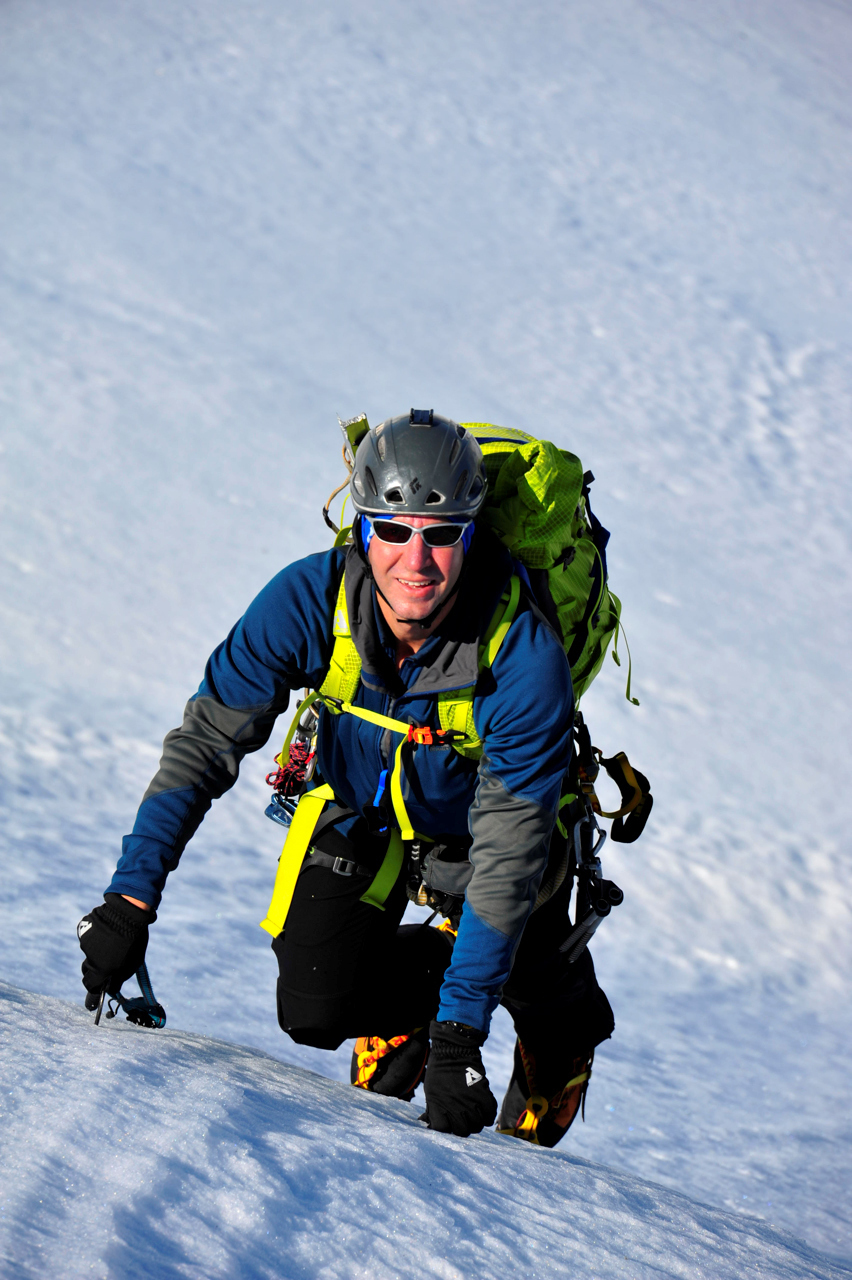
You might spot Brent Bishop walking on his way to grab a coffee at Starbucks or picking something up at Bert’s Red Apple, looking like any other laid-back local. What you might not realize is that he has stood on the summit of Mount Everest several times, led high altitude cleanup missions, and spent a lifetime exploring some of the most remote and rugged places on Earth.
Born in Washington, D.C. in 1966, Brent was introduced to climbing at just four or five years old by his father, Barry Bishop, a legendary mountaineer and member of the first American team to summit Everest. His mother also shared a love of the mountains, leading treks in Nepal and strengthening Brent’s early bond with the region.
In 1994, Brent became the first American legacy climber to summit Everest, continuing his father’s legacy. On that climb, he was shocked by the amount of trash left behind at the high camps. The experience sparked a commitment that would shape much of his future work on the mountain.
While earning his MBA at the University of Washington in 1993, Brent developed what would become the Buy Back Program, an environmental initiative that paid mountaineers a bonus to bring down discarded gear and waste like oxygen bottles from Everest’s high camps. On that first cleanup expedition, his five-person team removed more than 5,000 pounds of trash, including over 200 oxygen bottles. Waste was sorted and transported down the mountain to be recycled.
His goal wasn’t just to remove garbage, but to shift how climbers think about the mountains. Over time, more expeditions adopted the Buy Back model. In the coming years, over 25,000 pounds of waste including nearly 1,500 oxygen bottles were removed from Everest's higher camps, a remarkable legacy of stewardship. Brent and his team were recognized for these efforts with David Brower Award for Conservation from the American Alpine Club.
Brent returned to Everest in 2002 as part of the National Geographic Mount Everest Expedition, commemorating the 50th anniversary of the first ascent, a journey documented in Surviving Everest. He went back in 2016 to film the first virtual reality footage from the summit. That expedition became the foundation for a groundbreaking VR documentary, produced by Sports Illustrated and Endemol, which was shown at the Sundance Film Festival in 2017.
The video was shot over the span of two months using cameras mounted on zip lines and body harnesses worn by climbers, including six-time Everest summiteer Garrett Madison and three-time summiteer Brent Bishop. This marks the first time, viewers will be able to experience the climb in first person using virtual reality, offering a powerful, immersive look at what it’s like to stand on the top of the world. The film won a Sports Emmy for digital innovation in 2018.
Brent returned to Mount Everest in 2012 along with an Eddie Bauer team to make a movie titled, High and Hallowed: Everest 1963. This is a documentary chronicles the first American ascent of Mount Everest via the West Ridge.
In 2017, Brent returned to Everest once again to guide and film additional footage.
Though his climbs have taken him around the globe, Brent’s heart remains in the Pacific Northwest. Some of his favorite peaks are Mount Rainier, Index, and the North Cascades, right here in our backyard. Locally, he climbs at Vertical World gyms in Fishermen’s Terminal and Lynnwood, often with his two grown sons.
Rescue work is another core part of his life. Brent co-leads Seattle Mountain Rescue for the past eight years as the Vice Chair with longtime friend Doug McCall. Seattle Mountain Rescue focuses on technical rescue operations throughout King County, and we also support missions on Mount Rainier when the rangers are furloughed after the summer season. The group responds to about 100 missions a year, many on Mount Rainier. Doug describes Brent as someone who “He is a laid-back man but knows how to focus and get things done.” Doug also notes that when guiding new climbers he takes a gentle approach. No need to go too fast, just take one step at a time.
Brent has faced a serious health scare two years ago and encourages active male friends to check their coronary calcium score to make sure they are not at risk for cardiac arrest. Additionally, he has faced shoulder surgery and back surgery and a hip replacement in the past 5 years, yet his adventurous spirit is undimmed. He recently climbed in Chamonix, France, and plans to return to Nepal where he will be instructing climbers and in January and guiding a charity club up Kilimanjaro in February.
Brent holds a bachelor’s degree in economics from Duke University and an MBA from the University of Washington. Throughout his career, he has provided consulting services to both Fortune 500 companies and startups, bringing strategic insight and business acumen across a range of industries. In addition to his professional work, Brent is actively involved in the non-profit and outdoor communities. He serves on the board of directors for The Juniper Fund, which supports families and communities affected by the loss of Himalayan high-altitude workers; Seattle Mountain Rescue, a volunteer organization dedicated to saving lives through mountain rescue and safety education; and Vertical World, America’s first climbing gym.
Brent Bishop has built a life of balance; summits and service, ambition and humility, adventure and stewardship. Whether he’s thousands of feet above sea level or right here in the neighborhood, he remains grounded and ready for whatever the next climb brings.