The Swans of Medallion
The seasonal rhythms, survival stories, and personalities of our most beloved wildlife residents.
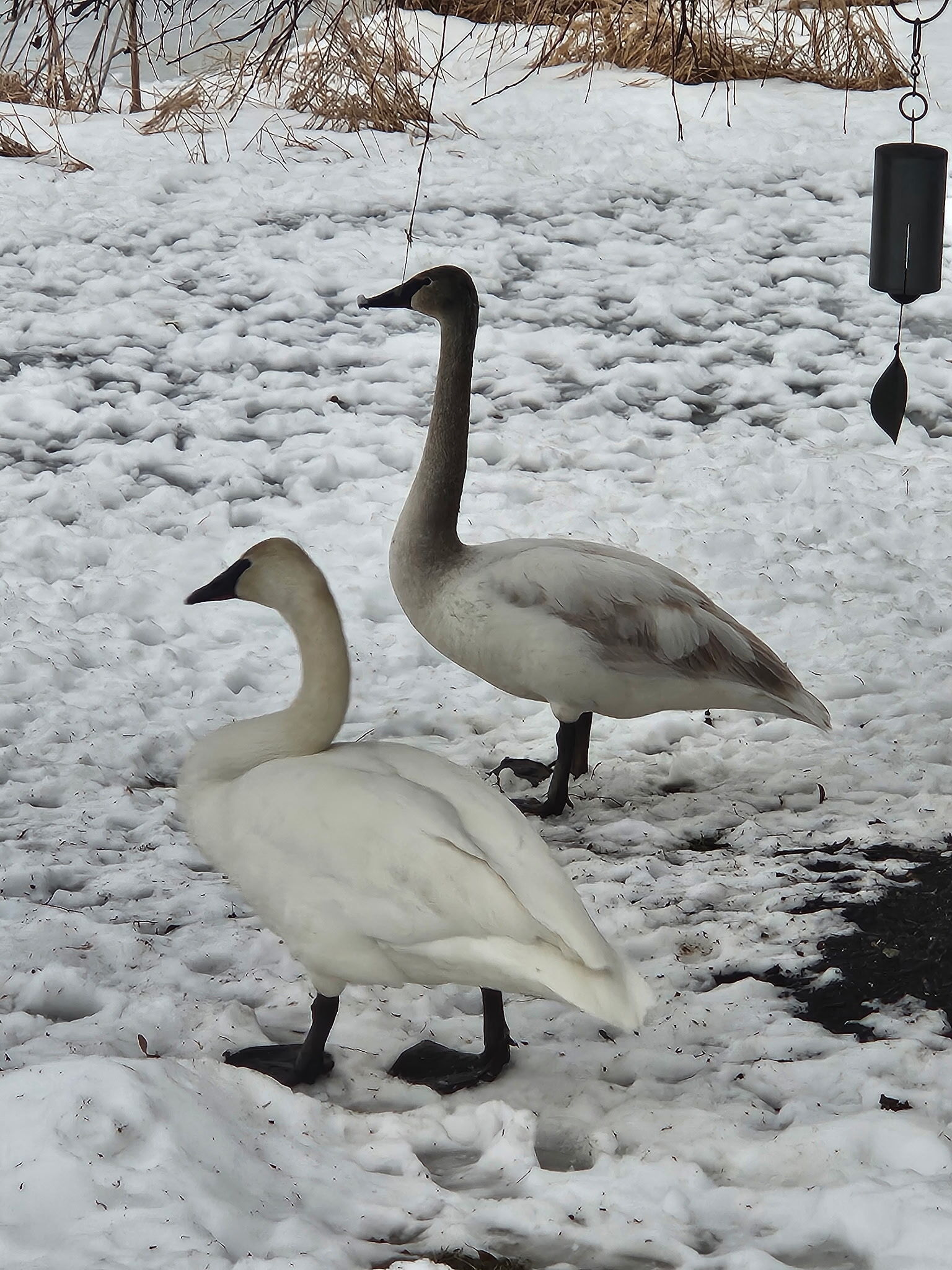
Our Medallion swans are always the talk of the neighborhood. Everyone keeps tabs on them as to their location and what they are up to. In the summer, they will fly from pond to pond, and in the winter they all gather at Meadows #7 because that pond does not freeze completely.
When Gary and I moved here 16 years ago in April, a pair of Mute Swans adopted us and made their home on Meadow #1 pond. We were lucky enough to see them have many babies over the years and add such beauty to the pond. Mute Swans have an orange beak, and Trumpeters have a black beak. Mutes are not native to the United States, but Trumpeters are. The Mute Swans nested at the Meadows pond for about 7 years and were getting quite old. We were told by the neighbors they had been there for a long time before we moved in.
About 8 or 9 years ago, two young Trumpeter Swans came to the pond and chased the Mute Swans away. The Mute Swans ended up nesting by the pond on #8 Rookery for only a year, then left. So, these two Trumpeter Swans have made their home in the Meadows #1 pond for quite a while now. They are very territorial. If other swans come around, there is a crazy, quite loud standoff, and they will chase them away by land or air.
Medallion also has a pair of swans that reside around #6 Preserve and #7 Rookery. Besides these six swans, we have a baby who will be 1 year old in May at Meadows and a stray that goes from pond to pond, “Hans Solo.” The baby still has a little bit of gray on its back, head, and neck. Soon the parents will start chasing it away because it will be breeding season.
During breeding and nesting season, you will find the swans sometimes very mean! It is always best to stay clear. They are just being protective. Last year we lost eggs to predators. Those predators include muskrats, turtles, raccoons, wild mink, and hawks. During nesting season a few years ago, we saw the male Trumpeter Swan on Meadows snap a muskrat in half with its beak. Nesting is from April to May. The eggs are incubated by both parents and take 32 to 37 days to hatch. They say if a baby survives the first 2 to 3 weeks, it has a good chance of survival.
The Trumpeter Swans were removed from the Threatened Species List in Ohio in April 2024. They have represented a great comeback story for Ohio with the help and work of ODNR. They are still protected by Section 1533.07 in Ohio and by the Federal Wildlife Bird Treaty Act. It is illegal to harm, catch, or kill a Trumpeter Swan. They are the nation’s largest water bird. Trumpeters feed off aquatic plants. They are wild, and we must respect that. Trumpeters and our beautiful mallard ducks should never be fed bread or corn. It can harm their health, and they can develop angel wing syndrome. Keep in mind swans do not have teeth for chewing.
They are amazing birds, and we are lucky to have them on our beautiful golf course. For all you golfers, they also chase the Canada geese away! They are so fun to watch, and each of them has a different personality.