Construction Meets Careful Planning
The story behind summer school improvements.
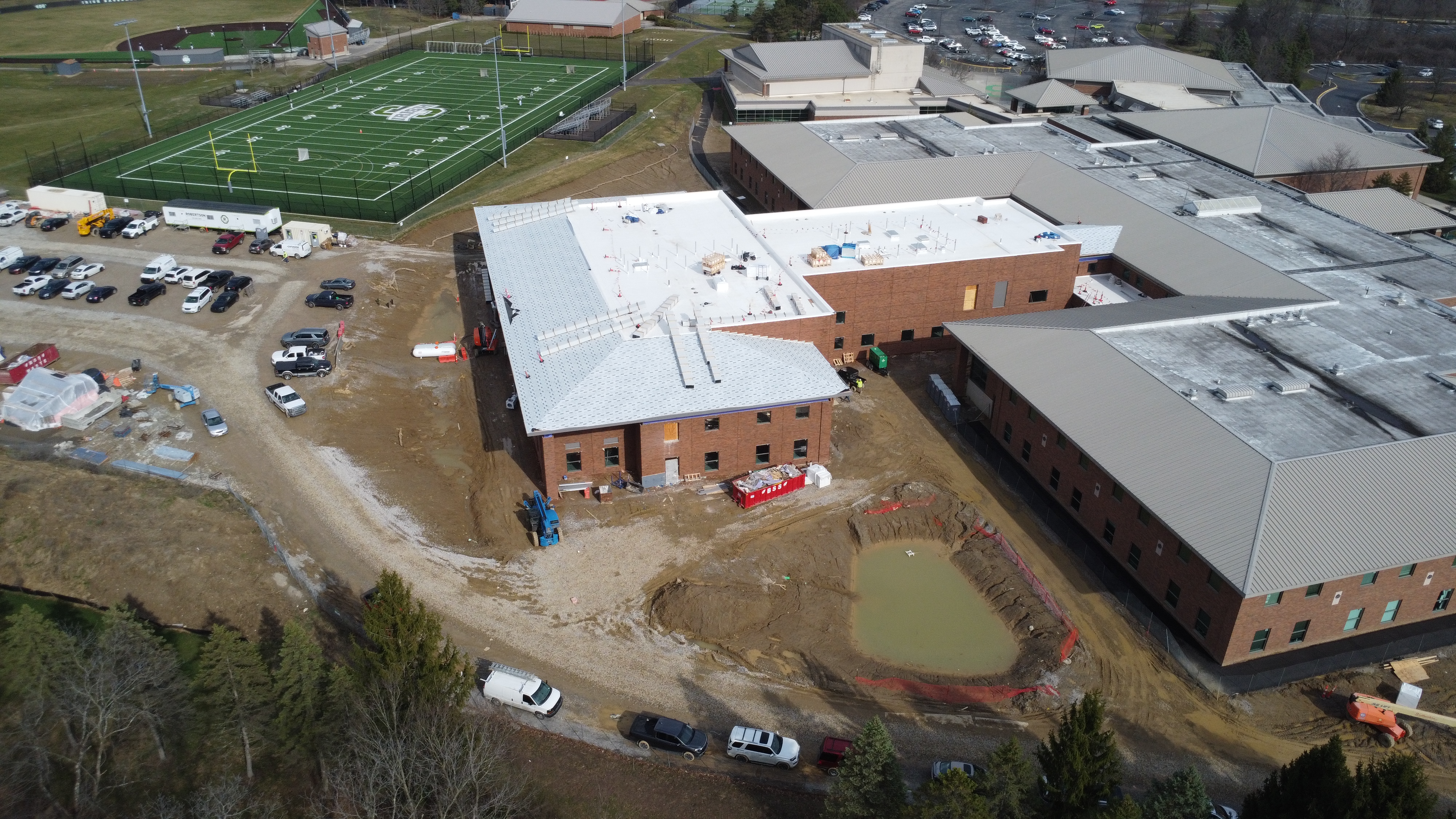
The 60,000-square-foot addition at Scioto High School will help balance enrollment and provide consistent opportunities for students.
Each summer, Dublin City Schools enters one of its most important—and often least visible—seasons of work. While students and staff step away, crews move in to complete critical facility upgrades that help ensure school buildings remain safe, modern, and ready for learning.
It’s a rhythm the district follows every year. Summer provides a narrow window to take on projects that can’t happen during the school year, while also allowing the district to proactively maintain the buildings and spaces the community relies on every day.
This summer brings a series of major infrastructure updates. Work continues on the 60,000-square-foot addition at Scioto High School, a project that will bring the building in line with Coffman and Jerome in both size and capacity. When complete, Dublin City Schools will have three equally-sized high schools, helping balance enrollment and provide consistent opportunities for students.
Across the district, several projects are focused on maintaining existing facilities. Coffman High School is receiving new roofing over key areas, including the commons, Performing Arts Center, and main office. Roof replacements are also underway at Wright and Thomas elementary schools.
Student experience remains a priority as well. New tracks at Grizzell and Karrer middle schools will enhance safety and usability for athletics and physical education, while a new HVAC system at Glacier Ridge is being installed to improve air quality and energy efficiency.
These projects often raise an important question: how can the district invest in facilities while also addressing financial challenges and the potential need for an operating levy in the coming years?
The answer lies in how school funding is structured—and the reality that districts must constantly balance multiple financial responsibilities at once.
The projects completed each summer are funded through Permanent Improvement (PI) funds and bond dollars, both of which are legally designated for capital needs like construction, repairs, and infrastructure. PI funding comes from a voter-approved levy in 2018 and supports ongoing maintenance. Bond funding, including the $195 million approved by voters in 2023, is restricted to the specific projects outlined on the ballot.
These dollars cannot be used for daily operations.
The district’s general fund—also supported by taxpayer dollars—is what covers salaries, benefits, transportation, and classroom resources. When Dublin City Schools discusses deficit spending or the need for a future operating levy, those concerns are tied to the general fund, not the funds used for facility improvements.
In practice, this creates a careful balancing act. The district must continue investing in buildings and infrastructure to maintain safe, functional schools, while also ensuring it has the resources to staff those buildings and support students each day.
Both responsibilities matter—and both require long-term planning.
As students return this fall, many of these updates will simply feel like part of the experience: comfortable classrooms, well-maintained spaces, and facilities that support learning and activities. Behind the scenes, those improvements represent not just summer work, but a broader commitment to managing both the places students learn and the resources that make that learning possible.