This Family Dog Has Gills
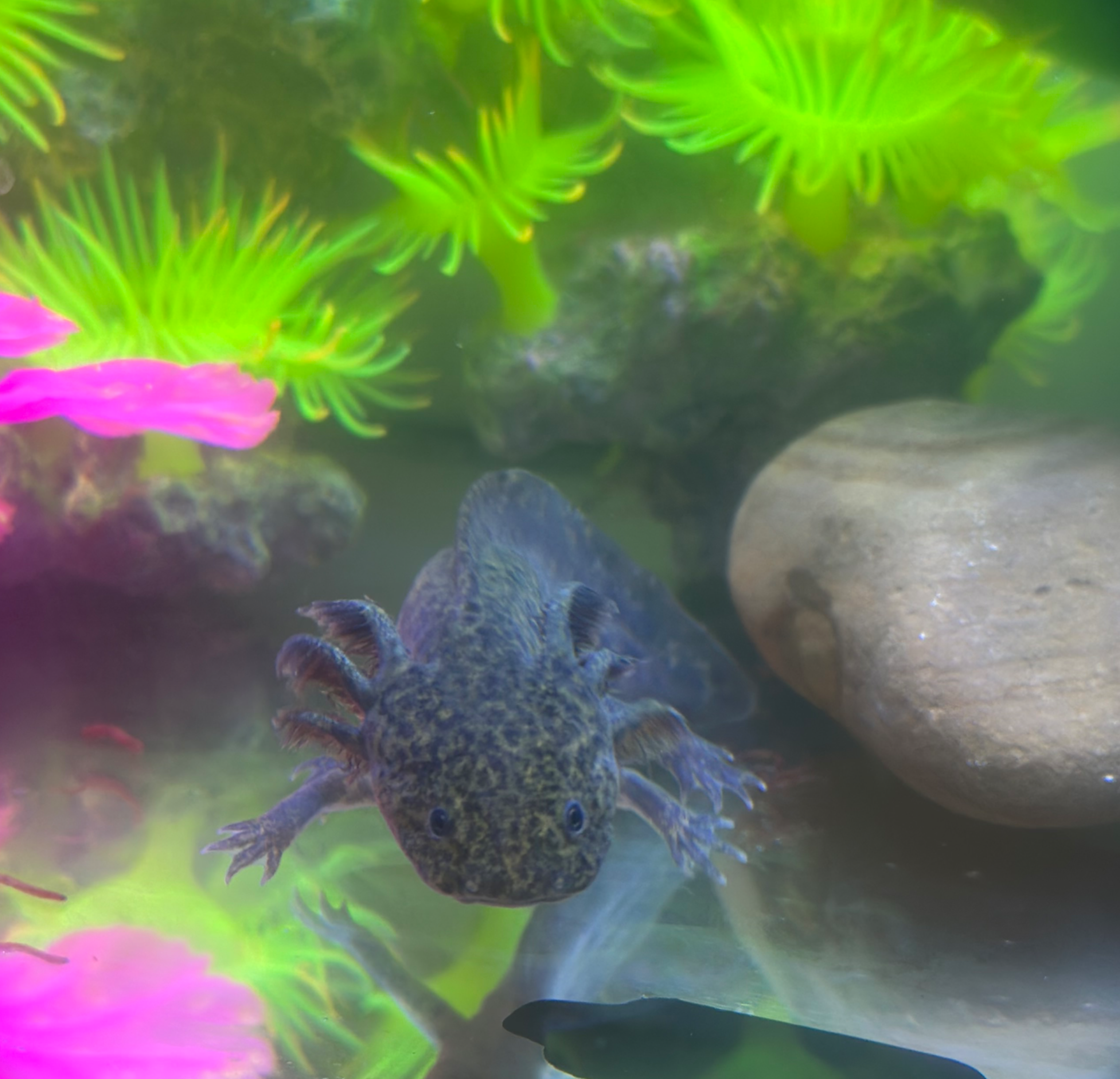
If you visit the DeFeo family on Springburn Drive, you will likely meet Roger. Roger is the family dog, of sorts. “Our kids were asking for a dog,” says Ashley DeFeo. A couple years ago, instead of a fuzzy puppy, trickster Santa brought their daughter, Reese, an axolotl.
The axolotl is a fully aquatic salamander species with a native habitat in and around present-day Mexico City. The name axolotl comes from the Nahuatl language of Central Mexico and is loosely translated as ‘water dog,’ among other things. Not the Labrador retriever kind of water dog, mind you. Roger won’t launch off the marina docks to snare frisbees or tennis balls anytime soon. On a positive note, he also won’t track mud through the house or shed on the furniture. The axolotl never leaves the water except to occasionally emerge to suck air.
Roger’s watery home is an aquarium, which he shares with some roommates. “A couple snails and some fish are his buds in the aquarium,” says Ashley. Other than that, he leads a simple life. “Roger likes to swim up to the top of the aquarium and back down,” says Ashley. “At night he’s really active.”
Captive axolotls eat trout and salmon pellets, frozen or live bloodworms, earthworms and waxworms. Although feeder fish and small crustaceans are also potential meals for the carnivorous axolotl, the danger of bacterial infection makes them an impractical menu item for those in captivity. Roger keeps his diet very basic. “He eats special ice cubes called blood worms,” says Ashley. Yum!
Axolotls feature biological peculiarities that are of great interest to science. Namely, they can regenerate body parts as complex as limbs and even organs, such as eyes or even hearts. With their natural habitat threatened by continuously encroaching development, the axolotl is classified as a critically endangered species.
Conservation centers and zoos around the world are helping the axolotl survive in captivity. They are also becoming popular as pets, as the DeFeos can attest. “He was a great family starter pet,” says Ashley.
It is estimated that the existing pet population emerged from a group of 36 captive-bred individuals, which exhibit genetic variations that are distinct from the wild population. None of this seems to bother Roger. “He always looks like he’s smiling,” says Ashley. Roger may not have been the family dog the DeFeo kids were expecting, but he was a good fit for their family at the time. Stay tuned to read Part 2 of this story to see what new pet has arrived at the DeFeo household.