Old Westbury: A Memoir
Part III: Old Westbury, 1959 to 1960
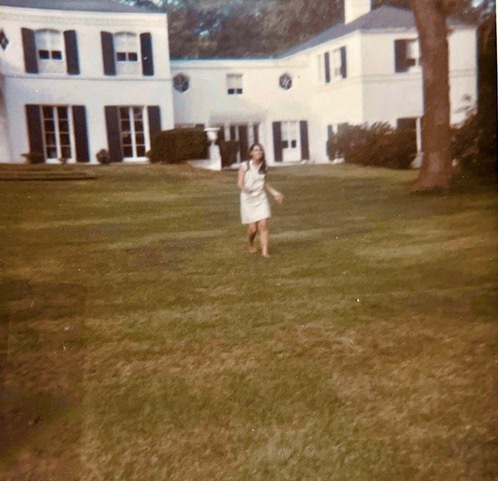
1959: The Cellar
“I have never gone down there,” she admitted. “Do you want to go together?” Every instinct screamed no. The sun was setting, and I missed my mother. But seeing how much she wanted me to agree, I nodded.
Alexa slid the metal latch and opened the creaky door. A wave of mildew and rot hit me. Beyond, blackness loomed. The stillness felt alive, heavy with unseen presence.
She flipped a switch. A narrow staircase emerged, its worn banister ready to splinter. The steps lay in shadow below.
We held hands as we descended, motes lifting with every creak. At the bottom, she tugged a string on the only bulb dangling from a wire. It sputtered to life, throwing restless shadows across the walls. Cobwebs clung thick in the corners, and the air felt stolen, untouched for years.
It felt ancient, as though built atop something buried that refused to be forgotten. The layout replicated the footprint above, a shadow beneath.
We turned left. She found a working flashlight. Its beam swept wine racks thick with dust and bottles that looked fossilized.
We passed a utility room with stone walls, a rusted pipe, and a worktable filmed with grime. Tools hung from hooks, their metal dulled.
Beyond a low stone archway lay a chamber carved deep into the earth. The air grew colder, quieter, so still I heard my heartbeat. The ceiling dipped so low we had to duck. Alcoves lined the walls, their curves resembling crypts. Alexa’s voice dropped to a whisper. “I heard family members from long ago were buried here.” A chill ran through me. We might be standing beneath the ballroom. Had we danced over the dead? The hair on my neck stood up.
We reached the far wall. No windows. No doors. No escape.
We did not linger. Back at the base of the stairs, we noticed the cellar’s right wing, darker, more forbidding. Shaking our heads, we ran up the stairs, still holding hands, palms slick with sweat. Only when the latch clicked shut did I exhale.
I told her I should go, blaming my mother’s worry. Her face fell. At the front door, guilt pricked me. Should I leave her? Should I ask her to come with me? I did neither. I just wanted to go home, a warm meal, my mutt Rusty, my parents close, the comfort of my room.
I sprinted down the gravel path until the house vanished behind the trees. Was it a dream?
1960: Friendship and Vanishing
From that point on, we were fast becoming friends. The house always felt alive, its silence haunting enough to send us to the television for Frankenstein after dark. When we were not spooking one another, we played hide-and-seek on rainy days, roaming its shadowed rooms and sometimes even the cellar. We explored every part of the house, often stumbling on locked doors we had never noticed before.
On sunny days, we wandered outside, climbing trees, rolling down grassy slopes, and riding horses that carried us along the famous Grace estate, a private kingdom where gardens, fountains, and statues heightened our adventures.
Those days were some of the best and worst of my life. Looking back, something mysterious surrounded Alexa’s world. The rooms were plain; the windows uncurtained; there were no rugs; and the light fixtures were unadorned; the furniture probably belonged to the previous owners. Only the ballroom felt complete. I never saw her talk to anyone on the bus or appear at school.
She had no siblings, and I never met her parents; they seemed not to be at home, leaving her alone in this giant place, a temporary landing before they moved on.
With Alexa, I felt seen. The taunts at school faded when she sat beside me. When we roamed her house, we were not two awkward little girls but explorers, musicians, dancers, companions. For the first time since arriving in Old Westbury, I felt a sense of belonging.
But our time together was fleeting. One summer afternoon, Alexa told me her parents were moving back to the city.
But our time together was fleeting. One summer afternoon, Alexa told me her parents were moving back to the city.
“When?” I asked. “Tomorrow,” she said.
There was no time for goodbyes. One day she was there. The next day she was gone. I was devastated, mourning the loss of our connection. The shock of her sudden departure left something frozen inside me.
Every now and then, I wandered down the long road that led to Alexa’s mansion. With frosty winds swirling, I stood at the edge of the driveway, remembering the days we played in its rooms and across its grounds. My reality seemed to shrink, turning from color to black and white. The trees stood stripped of their autumn leaves. The skies had turned to gray, the rhododendrons bore no magenta flowers, and the grass had turned dank brown.
And there it sat, with an eerie darkness looming in its windows. I approached the front doors, clinging to a faint hope that they might open and reveal Alexa inside. Yet the doors remained locked, a stark realization that the chapter of my life had ended. I missed my only friend. I missed the mansion. Or perhaps they were one and the same.
1968: Return to Old Westbury
Shortly after, my family moved away from Applegreen Drive, leaving the house and the life I had known with Alexa and the mansion behind. We eventually settled in another Old Westbury home, this time on Pinewood Road off Jericho Turnpike, near Wheatley School.
Even with a fuller teenage life, I mourned Alexa and the house. In 1968, nearly a decade later, my friend and I drove out to see it. The place looked abandoned, worn at the edges, yet still magnificent. No one answered my knock at the door, so we slipped to the backyard where Alexa and I had played and ran across the wide lawns, breathless, feeling I had come home.
Time moved on, but the house did not. Its image lingered in dreams, waiting for me to return.
Stay tuned for March: Decades later, the mansion calls again, and the call is answered.