Hedging Your Bets
What’s Threatening Old Westbury's Boxwoods
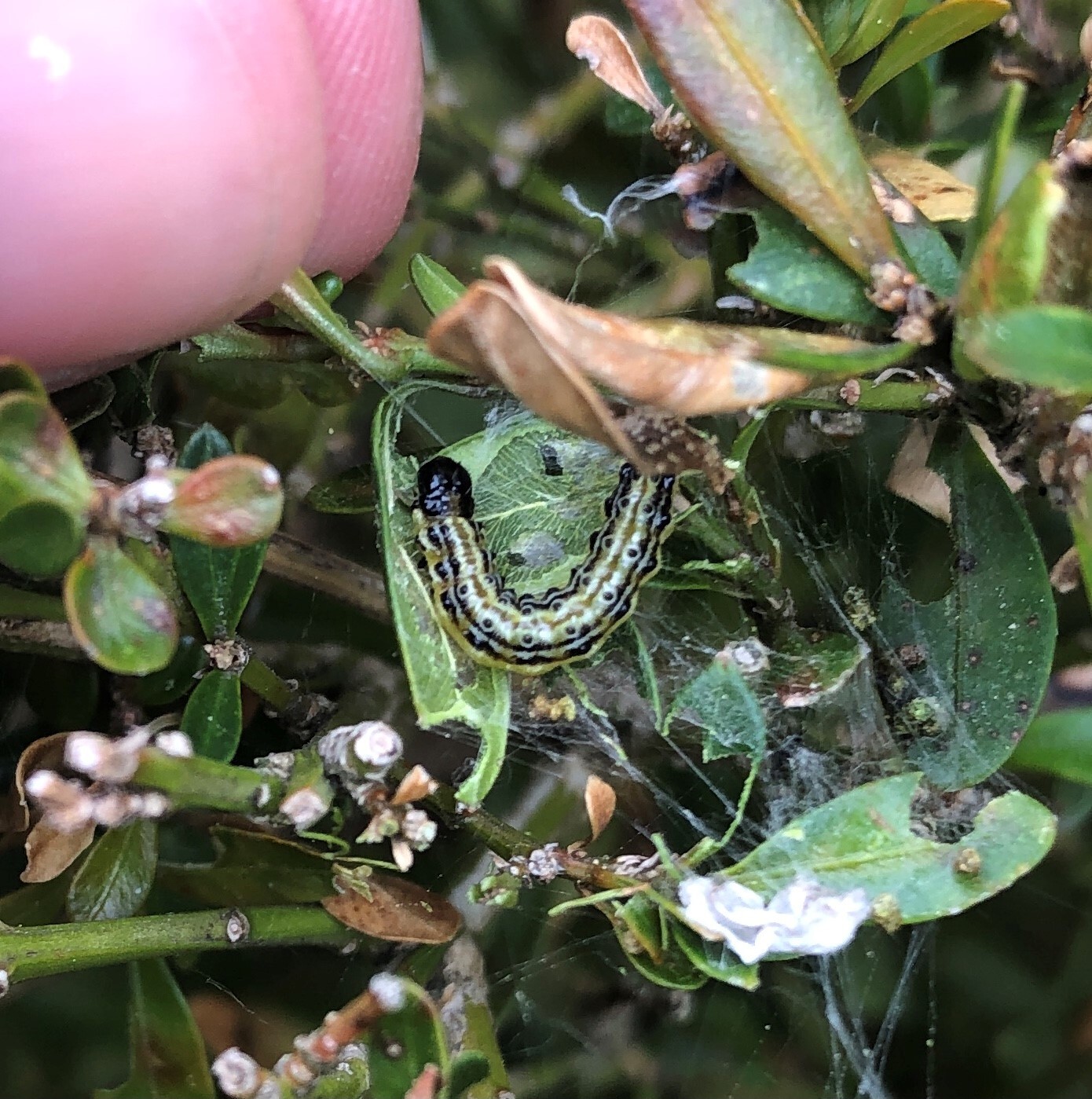
Box Tree Moth
Boxwoods are the backbone of the landscape in Old Westbury. They edge driveways, anchor foundation plantings, and shape the formal hedges that give our neighborhood its look. It may have even been part of the property longer than you have. A mature hedge isn't something you plant in a weekend, it's years of growth and a real investment. And right now, these plants face some serious threats.
One is the box tree moth, an invasive caterpillar confirmed in parts of New York. It eats shrubs from the inside out. The other is boxwood blight, a fungus that’s been confirmed in Nassau County and can defoliate a plant in days. Either can kill a mature boxwood, neither is obvious to the untrained eye, and each call for a different response.
The good news is that September is a great time to check for both. Here's what to look for:
The insect: box tree moth
Speed is what makes this pest dangerous. The caterpillars feed fast and hide while they do it, so by the time the damage is visible, the plant is often past saving. Look for:
- Chewed, skeletonized leaves. The caterpillars feed from the inside out, leaving thin, papery leaves while the outside still looks healthy.
- Fine webbing. These delicate silk threads bind leaves and twigs deep in the canopy, similar to spider webbing.
- Frass. Small yellow-green droppings caught in the webbing or on the mulch below. If you see it, something is actively feeding.
- Bare, tan stems. In heavy infestations the caterpillars strip the bark off green stems, killing the branch outright.
- The insects themselves. Caterpillars are green with black stripes, up to an inch and a half long. The adult moths are white with a wide brown border on the wings.
If you find any of this, don't haul the debris off the property, that's how the pest travels between neighborhoods. Bag it and call a certified arborist.
The fungus: boxwood blight
This is the one I see often. First confirmed in Garden City in 2013, it has been moving through Nassau County ever since. Blight doesn't chew, it defoliates. Look for:
- Round brown or black spots on leaves. Often with a darker border, usually starting low in the shrub.
- Black streaks on green stems. This is the giveaway that separates blight from lookalike diseases.
- Sudden leaf drop. Leaves brown and fall within days, leaving bare twigs. No webbing, no frass.
Blight spores are sticky, so they travel on pruning tools, gloves, boots, and clothing. Warm, humid weather suits it, which makes early fall peak season. Boxwood greenery in holiday wreaths is another documented way it arrives.
Why fall treatment matters
Neither problem disappears when the weather cools. Moth caterpillars overwinter between the leaves. Blight spores survive in fallen leaves and soil for years, ready to splash onto new growth with spring rain.
Dormant oil, applied once the plant has gone dormant, smothers overwintering larvae before they build up next season, and it's easier on beneficial insects than in-season sprays. For blight, cleanup is the treatment: rake and bag every fallen leaf from under and inside your boxwoods rather than composting them, disinfect tools between plants, and stay out of the shrubs when the foliage is wet.
A healthy plant defends itself better, so cover the basics: water deeply until the ground freezes, keep 2-3" of mulch around the base without piling it against the stems, and prune to open the interior so air moves and foliage dries. Catching either of these in September instead of next June is the difference between a treatment plan and a replacement quote.