What lurks under the snow?
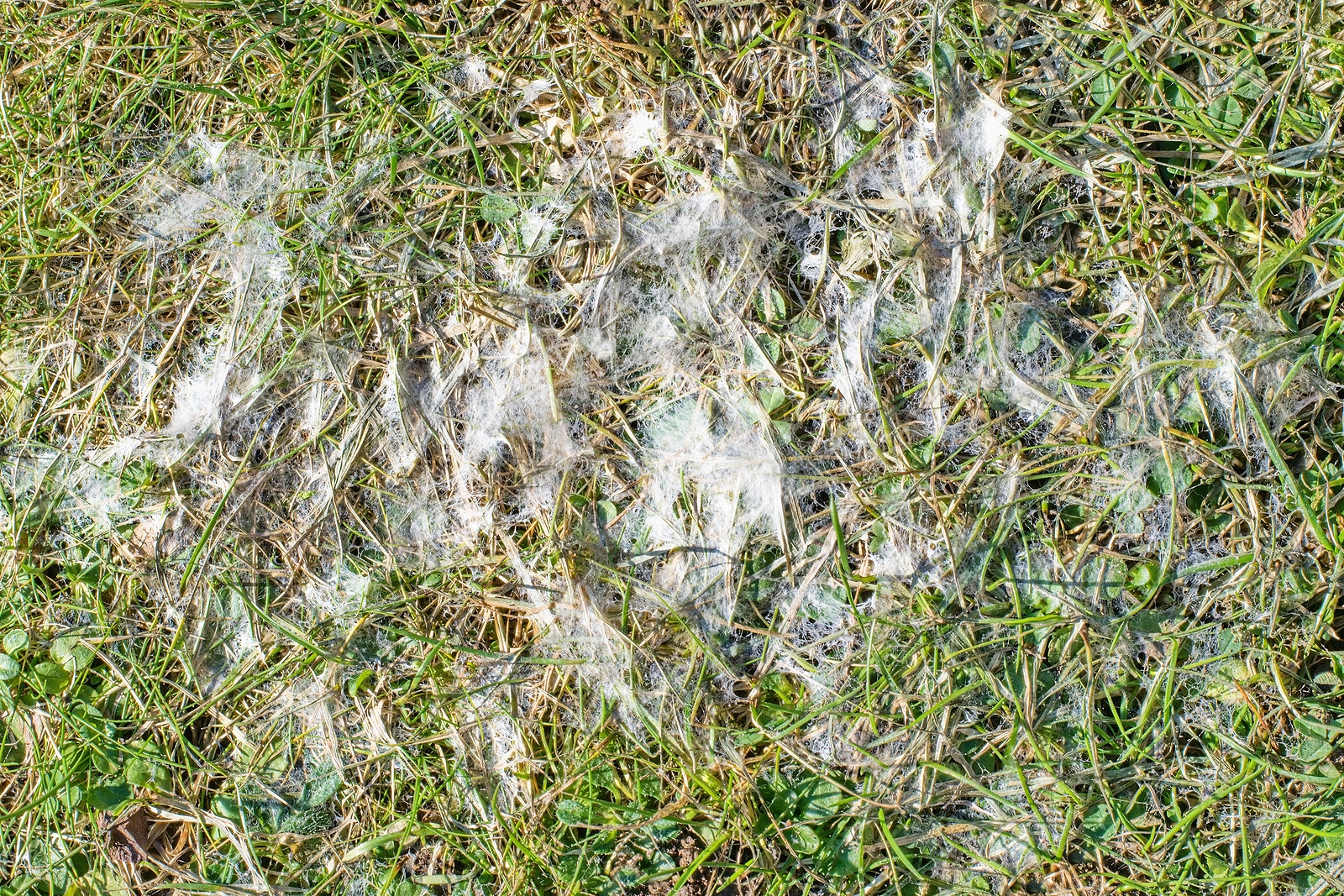
Gray Snow Mold
John Steinbeck once wrote, “What good is the warmth of summer, without the cold of winter to give it sweetness.” February’s cold weather certainly puts those of us who stay in New England to the test. There’s nothing sweet about it; nor of some of Mother Nature’s “gifts” when the warmer weather returns. For example, Snow Mold is a common fungal lawn disease, which may appear on your lawn after the snow melts. “The turf will appear matted and in patches or circles of pink or gray, which appear similar to paper mache,” described Junio DeLima, Fertilization Manager at Fairway Landscaping.
There are two types of this lawn disease, Gray Snow Mold (Typhula incarnata) and Pink Snow Mold (Micordochium nivale). “Typula blight appears as a light tan or gray patch with tiny brown specs,” explains DeLima. “Whereas Pink Snow Mold can appear to be pink, tan or white but there are pinkish threads (mycelium) found within the circular patch.” Pink Snow Mold is a more aggressive lawn disease than Gray because it has the ability to damage the crowns and roots of the turf.
How does Snow Mold happen? It is caused when the turf environment has a dark, damp area for the fungi to grow and thrive. “If you leave piles of leaves or grass clippings, the snow mold will grow under this debris and after the snow melts in spring and you finally rake up those leaves, what’s left are white, web-like spots on your grass,” says DeLima. Large snow piles that are slow to melt can also have the same effect because it traps moisture and prevents drainage.
There are, however, preventative measures homeowners can take to reduce the risk of Snow Mold on their turf. Fall cleanups with removal of debris and a final mow that keeps the grass clear of any opportunity for fungi growth is important. “Dethatching the lawn in the fall is another preventative step,” adds DeLima. Additionally, in spring, raking and loosening the grass and removing any winter debris and allowing airflow and sun to reach turf areas.
Fungicides can be considered for Pink Snow Mold if the spring weather is especially wet. These fungicides are less effective for Gray Snow Mold once the fungus is established, explains DeLima. Fungicides are actually best applied prior to the first snow in late November. “Fundgicides sprayed on Pink Snow Mold affected areas after snow melts are usually not needed unless conditions become conducive to continual disease activity,” notes Dr. Peter Landschoot of Penn State Extension school.
The good news about Gray Snow Mold is that once temperatures rise and the turf surface dries, it becomes inactive. “Gray Snow Mold is also less destructive than Pink Snow Mold because it does not kill the crowns and roots of the turf,” says DeLima.
Preventative measures are the best defense when it comes to Snow Mold on your turf—leaving you with a lawn that is picnic worthy when the sweeter weather arrives!