Knowledge, Early Detection & the Voices of Survivors
This Breast Cancer Awareness Month, three Riverlights women share their expertise, experiences and an important message about making breast health a priority.
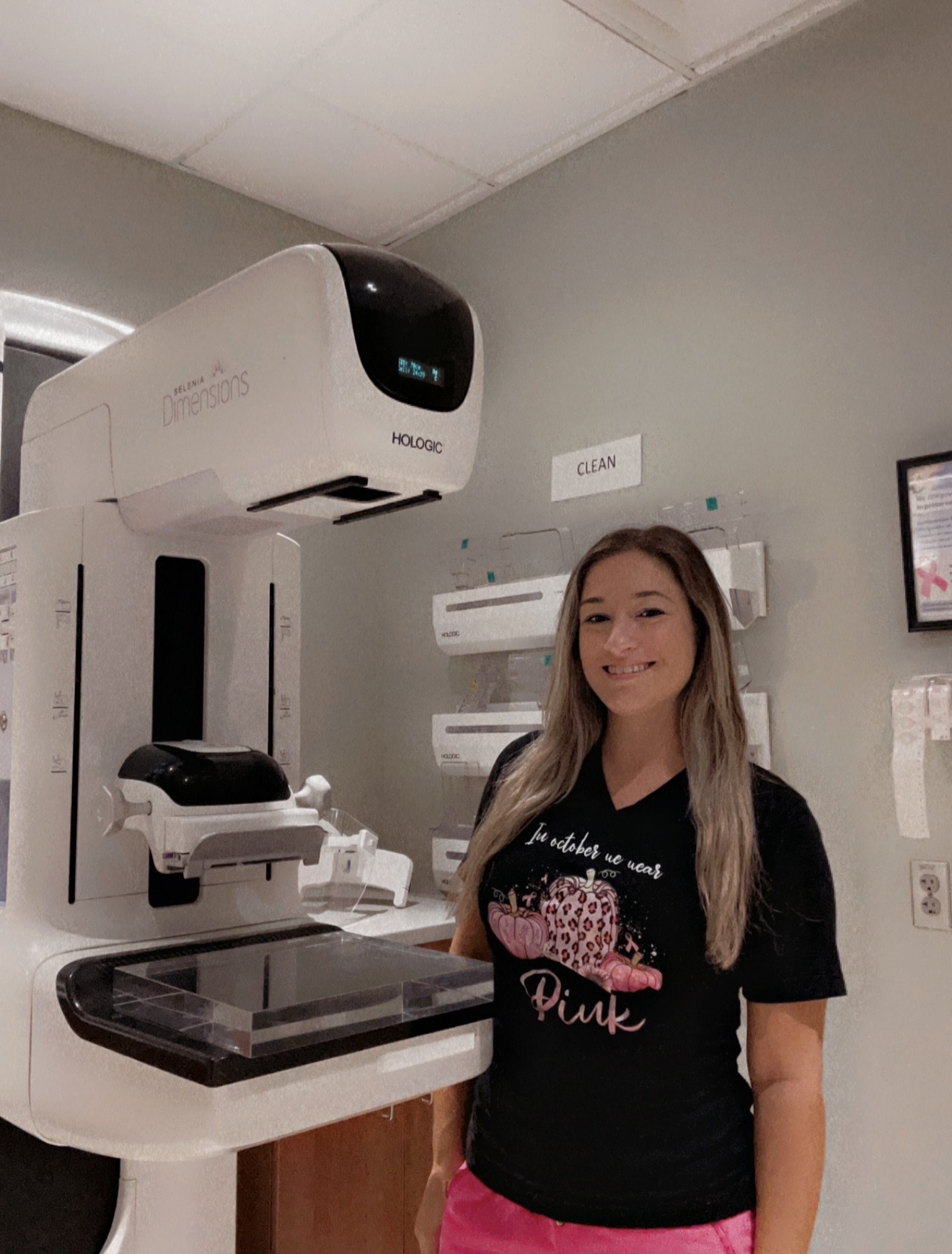
Christine Rosegren
October is Breast Cancer Awareness Month, and this month we're turning to women right here in Riverlights to help start an important conversation about breast health.
Riverlights resident Christine Rosegren has worked in mammography for nine years and shares what women should know about screenings, discomfort, breast density, callbacks and early detection. Fellow residents and breast cancer survivors Sheila Evans and Melissa Reed offer another perspective: what they learned through their own diagnoses and what they want other women in their community to know.
What Your Mammography Tech Wants You to Know
Riverlights resident Christine Rosegren is an ARRT-certified Radiologic Technologist and Mammography Technologist at Novant Health New Hanover Regional Medical Center in Wilmington. She has worked in mammography for nine years and says one of the most rewarding parts of her job is helping patients leave feeling more comfortable and less anxious about returning the following year.
When should women begin getting mammograms?
Age 40 is the recommended age for a woman to begin annual screening mammograms. Patients with a first-degree relative, such as a mother, sister or daughter, should begin screenings 10 years earlier than the age at which that relative was diagnosed.
What would you say to someone who feels healthy and doesn't have a family history of breast cancer?
Family history only accounts for 5%–10% of breast cancers. Most breast cancers happen in people with no family history.
A lot of women worry that mammograms hurt. What should they realistically expect?
They should expect firm pressure, rather than sharp pain, and this only lasts about five to 10 seconds per image. Newer mammography machines are so much different than they used to be and have improved tremendously for patient comfort.
I always ask my first-time mammogram patients at the end of their exam if it was as bad as they thought, and they always say it wasn't bad at all and wasn't what they expected based on what other people had told them.
Why is compression necessary?
Compression spreads out the breast tissue so lesions can't hide within it, prevents the image from being blurry and lowers the radiation dose to the patient.
What does it mean to have dense breasts?
Breast density cannot be felt. It refers to how breast tissue appears on radiographic imaging and will be included in a patient's breast imaging report. If a patient has dense breast tissue, the radiologist may recommend a breast MRI or ultrasound in addition to her yearly mammogram.
If you're called back after a mammogram, should you assume something is wrong?
No. A callback means the radiologist saw something they want to take a closer look at because of its characteristics. The majority of the time, the radiologist is being extremely cautious and may have noticed even a subtle change since your last mammogram. Only about 5%–10% of callbacks end up being breast cancer.
Are there symptoms women should tell their healthcare provider about rather than waiting for their next screening?
Anything new pertaining to the breast should be brought up to your healthcare provider. This includes a new lump, nipple discharge, new nipple inversion, skin changes, steady breast pain or a change in breast size.
Make sure you tell your doctor if you're having symptoms so the correct exam, a diagnostic mammogram rather than a routine screening mammogram, can be ordered.
If you could leave women with three things to remember, what would they be?
Early detection saves lives. A lot can change in your breasts even within one year, which is why it is so important to have your mammogram every year.
Compression is necessary to get clear images and find early cancer. Try to hang in there for those few seconds and make your mammogram worth it.
And speak up! If a position is uncomfortable, you need a minute between images or you'd be more comfortable sitting, let us know. We're there to help you, not hurt you.
In Their Words: Voices of Survivorship
Knowing what to expect from a mammogram can help take some of the uncertainty out of screening. But the importance of early detection becomes even more meaningful through the experiences of women who have heard the words “breast cancer” themselves.
Riverlights residents Sheila Evans and Melissa Reed faced very different diagnoses and treatment journeys, yet much of what they want other women to hear is strikingly similar: don't put off your mammogram, pay attention to your body, allow others to support you and don't let fear write the story before you know what you're facing.
Sheila Evans
Sheila was 48 when she went through breast cancer treatment. Just 14 months after her previous mammogram, she was diagnosed with Stage 3 breast cancer.
On getting your mammogram:
“It had only been 14 months since my last mammogram, and I was diagnosed with Stage 3. Don't wait!”
“It had only been 14 months since my last mammogram, and I was diagnosed with Stage 3. Don't wait!”
On what helped her:
“Keep moving! Don't decide that you are not going to feel well until you literally don't.”
“Keep moving! Don't decide that you are not going to feel well until you literally don't.”
Sheila also learned something that didn't come naturally to her: accepting help.
“I learned to let others help me, which I wasn't used to. People want to help, and you need to let them.”
After treatment, she began working out and hasn't stopped, something she calls “a great lifestyle change.”
On supporting someone with breast cancer:
“Try to treat the cancer patient as you normally would.”
“Try to treat the cancer patient as you normally would.”
That normalcy was especially important to Sheila as the mother of a 16-year-old daughter. She wanted her daughter's high school years to remain as normal as possible rather than having memories of her mother's cancer dominate them.
Her message to Riverlights women:
“Get the mammogram! Your journey does not have to be plagued with problems. Mine was not.”
“Get the mammogram! Your journey does not have to be plagued with problems. Mine was not.”
Melissa Reed
Melissa's experience was different. Her cancer was caught early and her treatment was manageable. In fact, she initially questioned whether her story was even significant enough to share.
“I almost didn't participate in this article because I felt like my breast cancer experience wasn't ‘bad enough’ to have much to offer. Then I realized that may actually be something worth sharing.”
On getting your mammogram:
“I had no symptoms and absolutely no reason to think I had breast cancer until I accidentally found a lump. It had only been six months since my last mammogram and a mammogram confirmed it. Because it was found early, my treatment was very manageable.”
“I had no symptoms and absolutely no reason to think I had breast cancer until I accidentally found a lump. It had only been six months since my last mammogram and a mammogram confirmed it. Because it was found early, my treatment was very manageable.”
Her advice is simple: “A mammogram takes a few uncomfortable minutes. Put it on the calendar and get it over with.”
On supporting someone with breast cancer:
“Follow her lead. Everyone handles a cancer diagnosis differently.”
“Follow her lead. Everyone handles a cancer diagnosis differently.”
“I appreciated people checking on me and being there, but I needed to be treated like myself and not ‘the person with cancer.’ Sometimes normalcy is a wonderful form of support.”
On perspective:
“It reminded me not to borrow trouble. The thing you're imagining may be much worse than the thing you end up facing.”
“It reminded me not to borrow trouble. The thing you're imagining may be much worse than the thing you end up facing.”
Her message to Riverlights women:
“Please don't skip your mammogram because you're busy, nervous, or feel perfectly healthy. And pay attention to your own body. Know what's normal for you, and if you notice something that doesn't feel right, trust your gut and get it checked.”
“Please don't skip your mammogram because you're busy, nervous, or feel perfectly healthy. And pay attention to your own body. Know what's normal for you, and if you notice something that doesn't feel right, trust your gut and get it checked.”
And if you do hear the words “breast cancer,” Melissa offers one more reminder:
“Don't immediately assume the worst. Get the information, learn what you're dealing with, and take it one step at a time.”