Voices from the Creek: Life in Owl City
Tucked within Rose Creek lies a wild little sanctuary known to one family as "Owl City." From quiet dusk walks to watching a new generation of owlets take flight, here is how a neighborhood creek sparked a lasting sense of wonder.
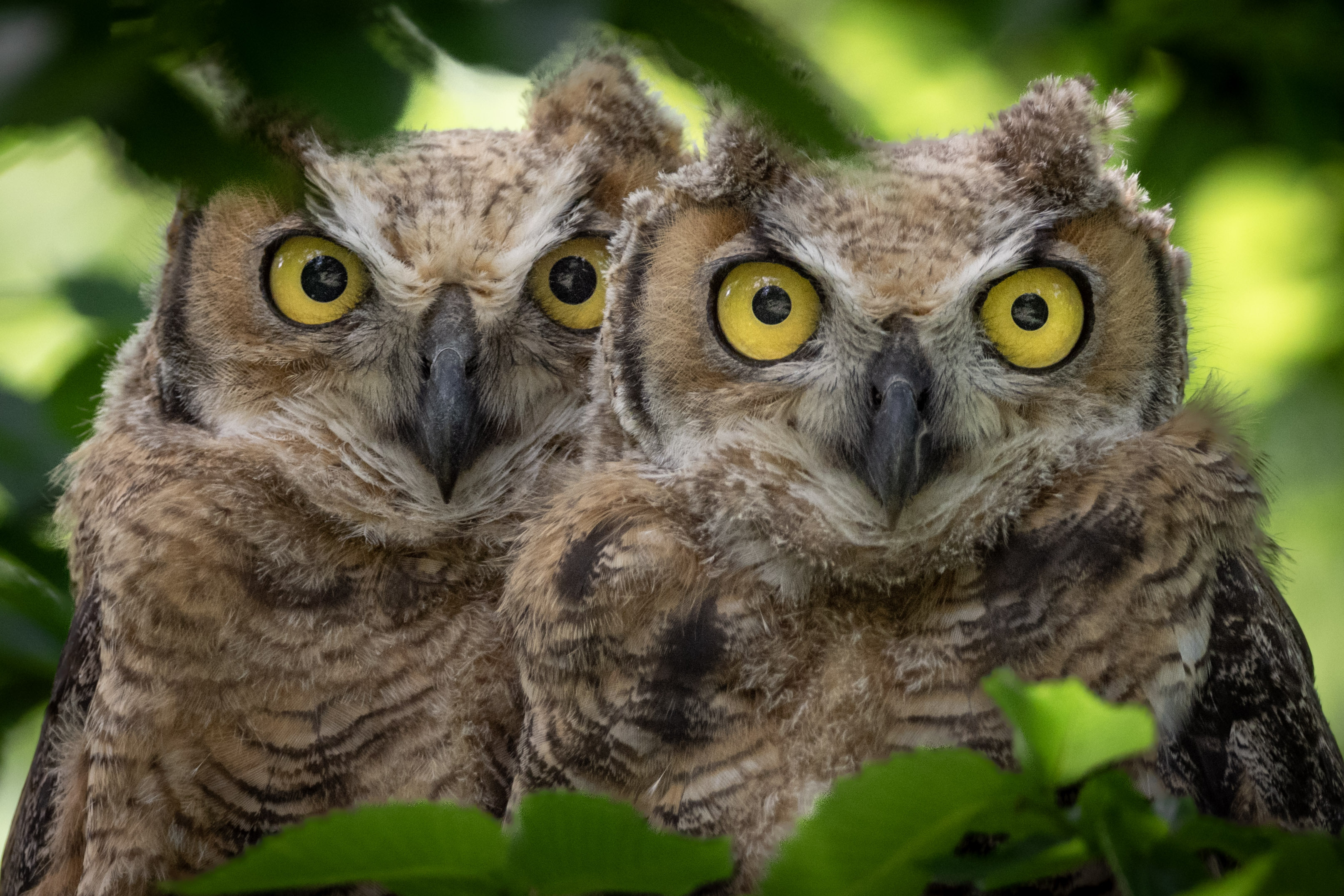
When we first moved into Rose Creek last year, we would see the great horned owls at dusk, eared silhouettes on our neighbors’ rooftops against an Oklahoma sunset. We could hear their low hoots back and forth before they disappeared on their nightly hunts. Our daughters, Maisie, 8, and Georgina, 5, are naturally drawn to the outdoors. We’d lived on a farm in east Edmond for years, but owls every night were something new. Whenever they appeared, the girls went nuts. Where did they live? What were their names? Which one was the girl? Did they have babies? Some nights they appeared. Other nights they didn’t. But we always looked.
One evening, we saw a neighbor returning from the pond carrying a fishing pole. Curious where he’d been, we wandered toward the creek. It was nearly sunset when, from somewhere ahead of us, a large brown shape lifted silently from the ground and disappeared into the trees. We froze. Then another owl moved from a low branch to one higher above us. The girls looked at me, grinning. We’d found them.
We started calling the place Owl City, despite it being perhaps the least urban place in our neighborhood. At first there were two owls. In winter, when the leaves were gone, they became easier to find—large shapes tucked against bare branches, their yellow eyes tracking us below. The girls gave them names and invented elaborate stories about where they went at night and what they did when we weren’t around. I started bringing my camera, trying to photograph them in the last minutes of daylight. The more time we spent there, the more familiar their rhythms became.
Then, this spring, two owlets appeared. They were extraordinary little creatures—pale fluffballs with enormous eyes, gathering together in the branches above the creek. We watched them change week by week. Down became feathers. Awkward hops became short flights and then longer ones. Eventually, it became difficult to tell the young birds from their parents. One disappeared from our regular sightings; three still remain.
By then, the creek itself had become as interesting to the girls as the owls. It’s a remarkably wild little ecosystem tucked inside a neighborhood of houses, sidewalks and manicured lawns. We began noticing the other lives moving through it: rabbits disappearing into brush, squirrels overhead, migratory birds in spring, insects and tracks along the muddy banks. The girls occasionally find owl pellets beneath the trees—compact bundles of fur and indigestible bone that offer a slightly gruesome glimpse at the mice, voles and other small prey that sustain the owls. Each one is a tiny record of another night spent hunting while the rest of the neighborhood slept.
We’ve learned to walk slowly there and be still. To notice a shape on a distant rooftop. A feather in the grass. A sound from the creek after dark. A pair of yellow eyes almost invisible among the branches. Whether or not we spot them, Owl City has become our favorite corner of Rose Creek.