Jerusalem
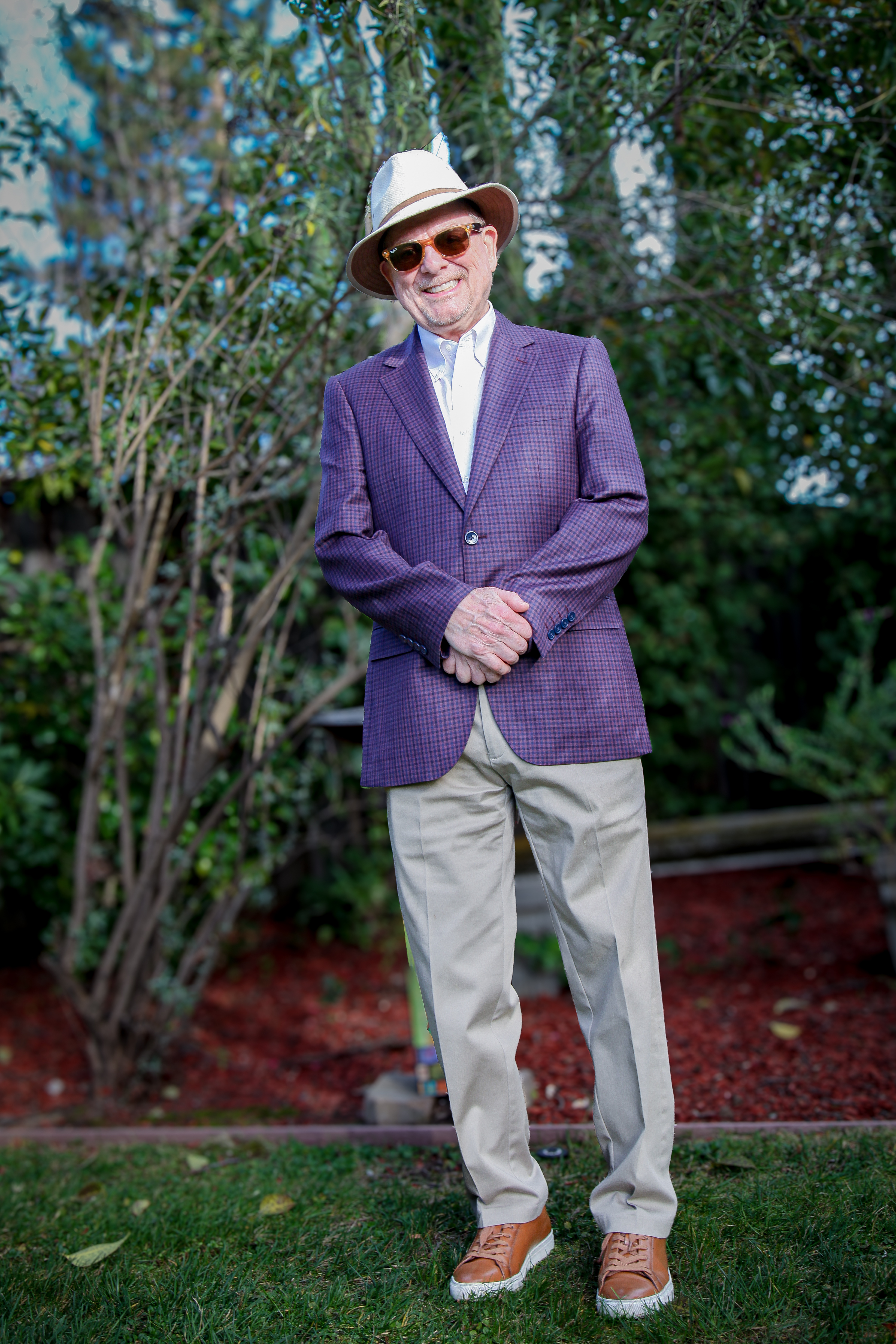
“Jerusalem. Oy Vey! What a City!”
After a conference in Rome one year, my son James flew over to join me for another adventure trip. We had considered Egypt and Tunisia, but the Arab Spring unrest made us rethink our plans. Looking at the map, our eyes landed on Jerusalem — the crossroads of faith, legend, and civilization. The “City of David”, the “City of Truth”, the “Holy City”, all emphasize the city’s enduring spiritual role.
This wasn’t James’s first “rodeo” in the region. He had already served two tours in Iraq with the U.S. First Armored Division from 2005 to 2007, atop a Humvee as part of a security detail — at a time when merely driving down a highway was a risk. For me, previous business trips and an earlier tech tour had introduced me to Israel’s geography and culture. Long before that, my British parents — married in 1940 — both joined the British forces early in World War II and were both deployed to the Middle East. Their impromptu honeymoon took place in “Palestine,” as it was then known, while my father served in the British Army and my mother in the RAF. They always spoke of Palestine in glowing terms — as a beautiful region rich with history and culture, a land of many faiths and languages, always welcoming but often in with conflict and tension.
Our journey began in Tel Aviv, with its wide stretches of white-sand beaches and shimmering Mediterranean waters. The sunsets were spectacular, and the city pulsed with an easygoing, modern energy full of cafés and coffee shops. But the real purpose of our trip lay inland, forty miles to the east — the ancient, walled city of Jerusalem. We hired a local taxi-guide and set out for a few unforgettable days, where time felt layered stone upon stone.
In the markets of the Old City, the air buzzed with bargaining — merchants calling out in Hebrew, Arabic, and English, each negotiation part ritual, part performance. One rug merchant named Ahmed, haggled with us for nearly an hour over a hand-stitched carpet. His $1,800 initial asking price tumbled to a “special” two-for-$1,100 offer as he and James continued bartering over cups of mint tea. In this city, bargaining is art, a custom, and necessity all at once.
Within these narrow lanes, Jews, Christians (Greek Orthodox, Roman Catholic, and Protestant), Muslims (mostly Sunni Arabs), and Armenians coexist with surprising ease. Living within the city walls is a treasure for any family. Today, as in millennia past, Jerusalem feels as complex as it is holy — a mosaic of belief and history. Guided by a knowledgeable local guide, introduced by Ahmed, we walked along Jesus’ Stations of the Cross through the Old City to the Church of the Holy Sepulcher, where Christ is said to have been crucified and buried. Moments later, we stood before the Western Wall — the last remnant of Solomon’s Temple — placing our notes of prayer between ancient stones while the city hummed around us. When I turned over the small white yarmulke handed to me, I noticed the words “Heritage Foundation” embroidered inside. “Interesting,” I thought.
From there, our eyes caught the golden shimmer of the Dome of the Rock and the Al-Aqsa Mosque just beyond — Islam’s third-holiest site, where the Prophet Muhammad is believed to have ascended to heaven. The Dome of the Rock was built in 691 AD, following the Muslim conquest of the region, and is said to be the spot where Muhammad ascended to heaven. Both of these holy sites are on the Temple Mount, atop the same hill. How extraordinary that two faiths share such sacred ground. Jerusalem is a city of contradictions and mystery.
Leaving the Old City, we rented a car and drove east to the Dead Sea, 400 meters below sea level — the lowest point on earth. Floating in its mineral-rich, silvery waters was both surreal and delightful. Our bodies lay half-submerged, buoyed effortlessly, as if gravity had taken the day off. The serenity was briefly interrupted by a loudspeaker calling out to a group of German tourists attempting to haul deck chairs into the water to have a floating group chat: “Please do not take the furniture out to sea!” Even paradise has rules. As we paddled around, we were careful not to open our eyes due to the high alkaline content and immediate stinging that would follow. After our swim, I joined the others smearing warm mud over our skin. I looked like someone from Seal Team Six, covered in mud… which is famed for its purifying properties and sold around the world — though after my shower, I was still the same pasty white fair-skinned person I’d always been.
We next drove toward the Jordan border near the Allenby Bridge Crossing but were turned back for lack of visas. The crossing, named after General Edmund Allenby, commemorates his capture of Jerusalem from the Ottomans in 1917, a key moment of World War I immortalized in the story of Lawrence of Arabia. Despite warnings from the car rental agent to avoid Palestinian territories (“too dangerous”), curiosity got the better of us, so we drove on to Jericho — a city with more than 5,000 years of history. At the entrance to Jericho was a huge signing, acknowledging, and thanking the US for its support from the US AID foundation. That eased our slight nervousness about going off the designated route.
Jericho felt serene and welcoming, shaded by palm groves. We rode the cable car up the Mount of Temptation, where Christ was tempted by the devil after his forty-day fast in the Judean desert. The monastery, run by the Greek Orthodox Church, clings gracefully to the cliffs — rebuilt in the 19th century after the land was reacquired by the Church. Before ascending, we hired a teenage boy to watch over our car, remembering the rental agent’s warnings. We were relieved to find both car and guard still there upon our return. A few years later, I watched Rick Steves in one of his TV travel shows, stroll through those same Jericho streets extolling the friendly locals and vibrant markets. For travelers, the city remains as open and inviting as ever, even if Israeli citizens cannot legally enter certain designated “Palestinian” areas like Jericho.
Bethlehem, another Palestinian city, our next stop, was unforgettable. Though geographically a suburb of Jerusalem, it feels worlds apart. The city is entirely surrounded by high walls with heavily guarded checkpoints. It’s a visible reminder of deep political complexities. Visitors may come and go freely, but Palestinian residents need permits to leave the city. Standing in Manger Square before the Church of the Nativity — the birthplace of Christ — was deeply moving. The world’s first Christmas began right here, amid today’s car horns and street bustle.
Jerusalem has been conquered and reborn more than any city on Earth — besieged some twenty times — and yet it endures. Police and soldiers are a ever present reminders about the ongoing conflict, but James, only recently out of military service himself, easily struck up conversations with the local security officers. Their imposing appearance softened quickly. A bit of friendly curiosity on our part sparked smiles and relaxed conversation. They were happy to chat with a couple of “hang loose” Americans. There’s no better education than talking to people face-to-face, on the street, in their own city.
As another Christmas season approaches and news flashes around the globe, continue, showing tragic images of conflict, I think back to the quieter times, and the strength of that city to endure. Beyond politics and heartbreak, Jerusalem is a living lesson that faiths and humanity can share space despite the odds. The Israelis we met were gracious and pragmatic, hoping for long-term peace. The Palestinians were kind, charming, and unfailingly hospitable, living their daily lives amid obstacles. Both sides used the same word — “complicated” — an accurate term to describe their world. Jerusalem inspires and refuses defeat. Even through troubled times, tour groups are returning, drawn by faith, history, and human connection. American travelers should do their homework, travel smart, and move with awareness, but don’t hold back on talking to people as you walk through the streets, you’ll find a city like no other. When a more peaceful time returns, Jerusalem will again be a place for pilgrims and travelers to rediscover their roots, to sip mint tea with merchants, and to savor its luminous food and layered history. Jerusalem will always be there to welcome visitors.
Amen.