Salado Square
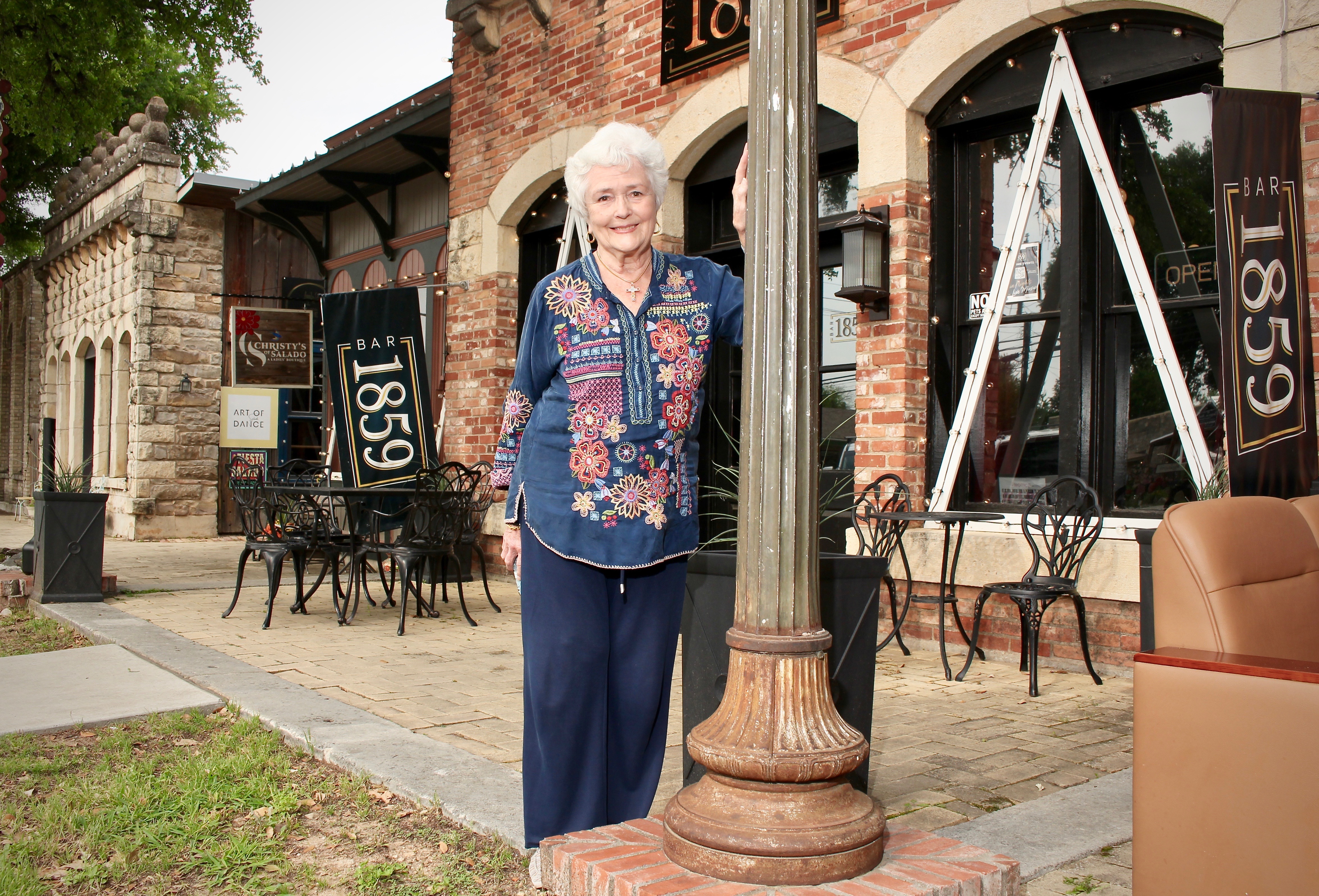
Carolyn and Darwin Britt moved from the Washington, D.C. area to Salado in 1974. “He had worked for IBM,” Carolyn says, “and we had had enough of corporate, metropolitan life. We were both Texans and wanted to come home.”
The couple purchased 13 acres which included the Barton House. “We dedicated part of the acreage to developing an idea that Darwin, Bryant Reeves and Lonnie Edwards came up with: Salado Square.” Darwin had become a home builder and later created a successful business handcrafting high-end furniture. “He also managed commercial properties,” Carolyn adds.
“Bryant Reeves worked for Grace Jones (Salado’s luxe ladies apparel retailer) and was a multi-talented artist in many areas. In 1976 he, Darwin and Lonnie discovered and bought some striking 19th century stone and brick commercial buildings in Santa Anna.” Population 1,500 then; 1,250 now, the Coleman County town’s loss of historic downtown structures would became Salado’s gain, adorning the east side of Main Street. Prior to dismantling, detailed photographs were made, painstaking measurements undertaken, stone building elements carefully numbered and the whole kit and caboodle was transported 146 miles to the village. That marked the beginning, Carolyn says. “We built the first two portions of Salado Square."
Other disparate elements were chosen: longleaf pine for siding, sourced from an old piano warehouse, wooden windows from East Texas, custom iron rafter braces fabricated by Reeves still visible inside Bar 1859. The eclectic architecture and whimsical appointments became landmarks for residents and visitors as Salado Square hosted numerous shops and restaurants.
Years passed, the Britts sold the Barton House and moved to Belton. “Then Darwin got Parkinson’s,” Carolyn says. “He died in 2016 and I sold the Square a couple of years later.” Today her primary home is in Georgetown, but she spends most days at the village in a rental cottage not far from the stone and brick facades that were a milestone of her and Darwin’s marriage.
“Those buildings get a lot of attention,” she says, gazing down the sidewalk. “They’ve kind of made their place here in the community.”