Growing Up in Sedgefield
From GGO week to summer days at the pool, holiday traditions and snow days on the golf course, Blair Beaumont Kopf remembers a Sedgefield childhood.
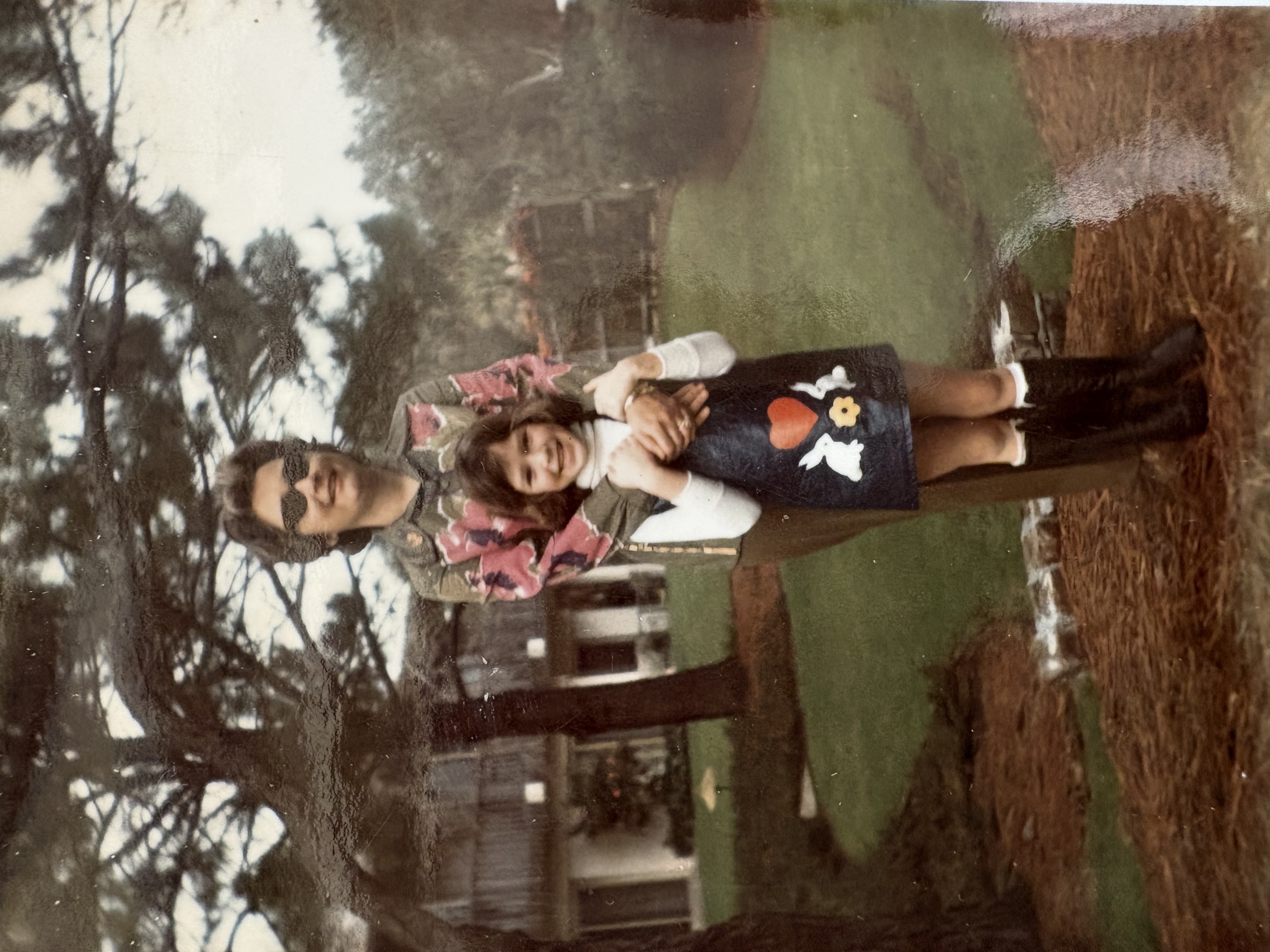
Mother's Day 1971, Blair and her mother, Sandy Beaumont
I have been associated with Sedgefield Country Club since I was born in 1965. My parents joined in 1962, so Sedgefield was simply part of my childhood.
And the Sedgefield I remember looked very different from the neighborhood today.
When I was growing up, most of the homes were along the golf course. None of the numbered sections were here yet. Dorchester Road, where I grew up, had just five homes. Today, only two of the original homes are still standing.
There were horses everywhere, or at least that's how it seemed to a child. There was the Little Bit Pony Farm on Alamance, where I would go pet the horse that still lived there. There were several other horse farms around Sedgefield, too, including the Dillard paper family's farm on Old Onslow and the Schiffman farm next door. Another farm on Gaston still has its old stables, now converted into a beautiful home.
Other places have nearly disappeared. The Embassy Club was a large log structure on the sharp curve by the creek on Rockingham. Rumor had it that it had once been a speakeasy. It burned down in the 1970s, but the old stone fireplace was preserved and can still be seen today.
The old Manor House was still standing when I was young and was used for parties. It was eventually torn down in the 1970s rather than restored—a loss I still regret. Its kitchen building survived and was moved to the property at the end of Forsyth on Wayne Road.
A Club That Felt Like Family
For a child, the clubhouse was a wonderful place.
Farmer, Baxter, Echols, Rosey—there were so many kind people working there who knew us and looked out for us. The club felt like an extension of your family.
Sunday lunch was a big event. There was always a huge buffet, and the club would be packed with families arriving after church in their Sunday clothes. The formal dining room was in the area that now houses the pro shop and Red Fox Lounge, with the buffet set up in the lobby.
There were two pools. The adult pool was where the golf carts are parked today on the turn around. Turning 18 was a big deal because it meant you were finally allowed to use it!
But for us kids, the big pool was the place to be. We'd spend the entire day there, playing four square, getting lunch from the snack shack and cooling off in the activities building.
And there was one telephone.
If it rang, whoever answered would yell across the pool for the kid whose mother was calling.
The kids had their own locker room. Down a dank set of stairs into some, well, kinda scary area, but it was ours.
Somehow, it worked.
When the GGO Came to Sedgefield
The Greater Greensboro Open was probably the highlight of the year.
It was held around the end of March or beginning of April, when the cherry trees and dogwoods were in full bloom. Sedgefield was spectacular.
All the big names in golf came to play. Neighborhood kids set up concession stands for spectators. A huge wooden viewing stand was built on the 18th hole—the ninth hole today—and, of course, we kids loved climbing all over it.
I remember television crews running cables near the activities building. We'd collect pieces of different-colored wire, make bracelets and trade them with our friends.
Arnold Palmer even stayed in the house next door to mine.
To us, though, all of this was simply what happened in the neighborhood every spring.
Holidays, Sedgefield Style
The Fourth of July was an all-day affair at the pool, with putting and driving contests, three-legged races, diving for coins and the greased watermelon, and all the food you could eat! At night the fireworks came.
At Easter, eggs were hidden among the beautiful cherry trees that lined the entrance circle. Somewhere was one special golden egg, and whoever found it won a prize.
At Halloween, every kid knew the houses you couldn't miss. Mrs. Binney gave each child an entire bag of goodies. Mrs. Campbell made caramel apples.
At Christmas, families decorated trees they had planted in their yards. The Campbells had a life-size Santa, sleigh and reindeer on their roof that everyone looked forward to seeing.
And then there were snow days. We'd head for the golf course, where the hills became sledding runs and snow forts inevitably ended in snowball fights.
Looking back, I realize how much Sedgefield has changed. New homes and streets have become part of the neighborhood, and generations of families have made Sedgefield their own.
But what I remember most isn't really the buildings. It's spending all day at the pool with one telephone. It's making bracelets from television wire during the GGO, knowing which neighbor made caramel apples and sledding down the golf course after a big snow.
Those are my memories of Sedgefield. Today's children will grow up with their own—and someday they'll be the ones remembering the traditions, neighbors and ordinary moments that made this place feel like home.
Sedgefield has changed a great deal since I was a little girl. That's what neighborhoods do. But generation after generation, it remains a place where people build lives and make memories.