More Than the Game
Beau Suman reflects on four years of high school basketball, growth, leadership, and the lessons that extend far beyond the game.
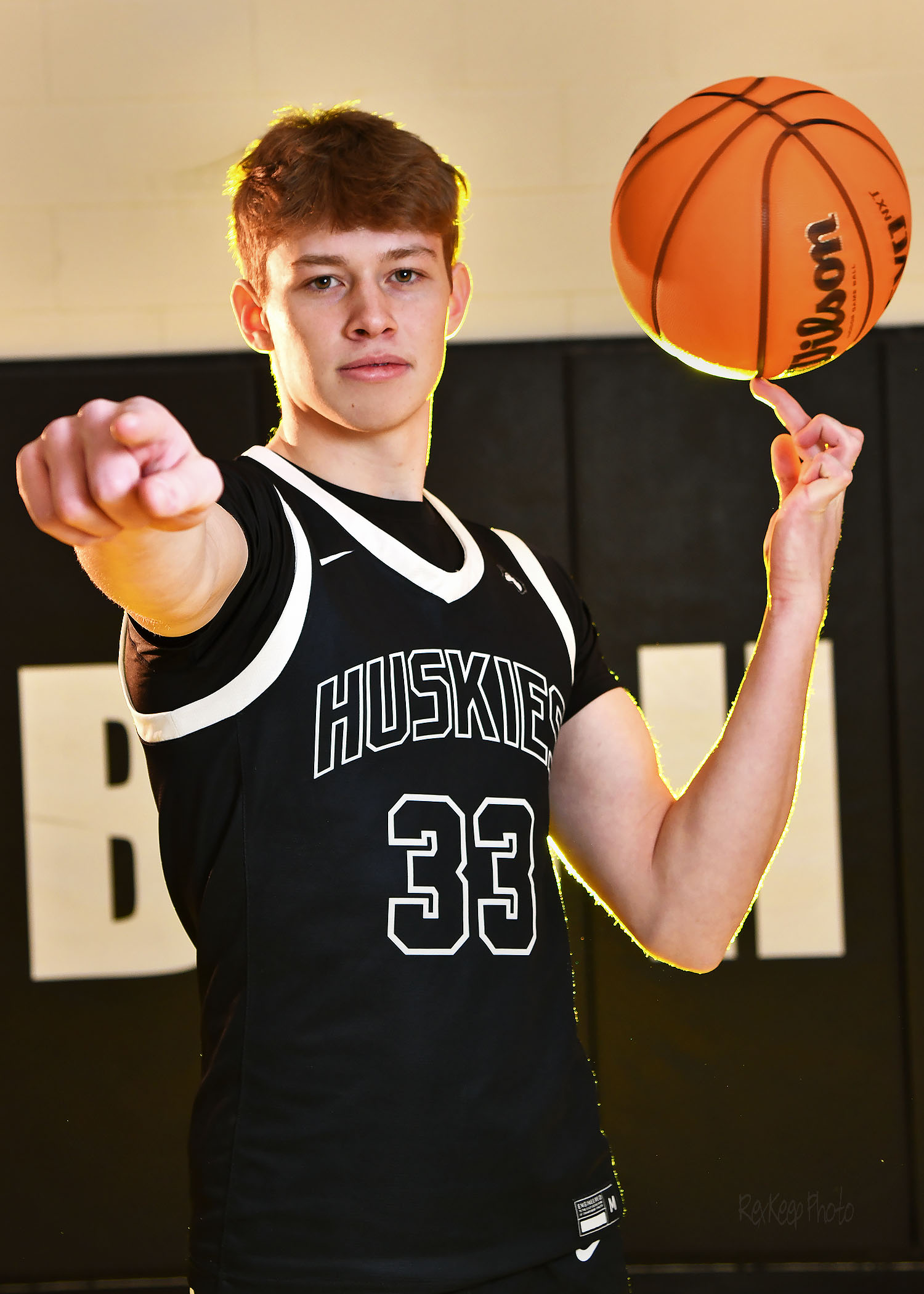
After four years on the court, Beau Suman’s high school basketball career comes to a close—not defined by wins and losses alone, but by resilience, accountability, and the experience of navigating constant change. From a quiet freshman finding his place to a senior setting the tone, his journey reflects both personal development and a shift within the program. Looking back, Bill shares what shaped him most and what he carries forward.
When you look back on your four years of high school basketball, what stands out to you the most?
When I look back at my 4 years, the thing that stands out to me the most is the fact that I had a new coach for each of the 4 years that I played, and despite this we still stuck together as a team.
How would you describe the player you were as a freshman compared to the player you are now as a senior?
When I came in as a freshman, I was very timid. I followed and looked up to the seniors as my role models. I wanted to be a leader, but I wasn’t strong enough as a person to be that role for others. Compared to being a senior, I am the role model. I am strong physically and mentally, and I use those strengths to show the younger players how to act on the court as well as help them to improve their skills.
What have these four years of basketball taught you beyond the game itself?
These 4 years have taught me patience with myself as well as others. It has taught me to be calm in times of chaos and how to stay focused. Most importantly, it has taught me how to act as a leader and a role model, sometimes to players older than I am.
As a team captain, what has leadership meant to you season to season?
Leadership for me has been picking each other up and showing younger players how to be a good sport as well as act on the basketball court. We had trouble as a team with these concepts throughout my 4 years, so it was really important for me to emulate these traits when I became a leader.
Was there a turning point—game, loss, coach’s feedback, or moment—that really shaped your high school career?
The biggest turning point for me was when I became a senior. In past years, we had struggled as a team, losing coaches and players to bad decisions. I had witnessed past seniors try and fail to make a change. I didn’t want it to be the same for my senior year; I wanted it to be the first year stepping in the right direction sportsmanship-wise and for our record as a team.
What has been the biggest challenge you’ve had to overcome during your basketball career in high school?
My biggest challenge was filling the role that needed to be filled on the court for my team to succeed. This may have been a position, acting as a leader in a certain way, or being supportive to keep my teammates in the game.
How has your relationship with your teammates changed over the years?
It has grown in many different ways. Overcoming all the obstacles together has definitely made us stronger together, but also has grown our appreciation for each other.
What do you hope younger players in the program learned from watching you play or lead?
I hope that the younger players will be able to keep the momentum into following years, progressing in skill individually and as a team. I want the Husky program to be recognized in a positive way, something it hasn't been recognized for in a long time.
Do you have one favorite memory or moment from your high school basketball career that you know you’ll never forget?
One of my favorite memories was the tournament at the beginning of my senior year. It was the first point when I realized that we can change our own narrative as a team.
As you close this chapter, what do you think you’ll miss most and what are you most ready for next?
I think I will miss the organized side of high school basketball as well as the rivalry games that come with organized sports. With the skills I have learned from basketball, I'm excited and ready to use them to meet new people and find new opportunities and networks in college as well as beyond.