Surgery with a Lifetime Impact
Johns Hopkins pediatric surgeon Dr. Paul Danielson talks about complex cases, emotional resilience, military service, and why helping children can mean changing lives for decades.
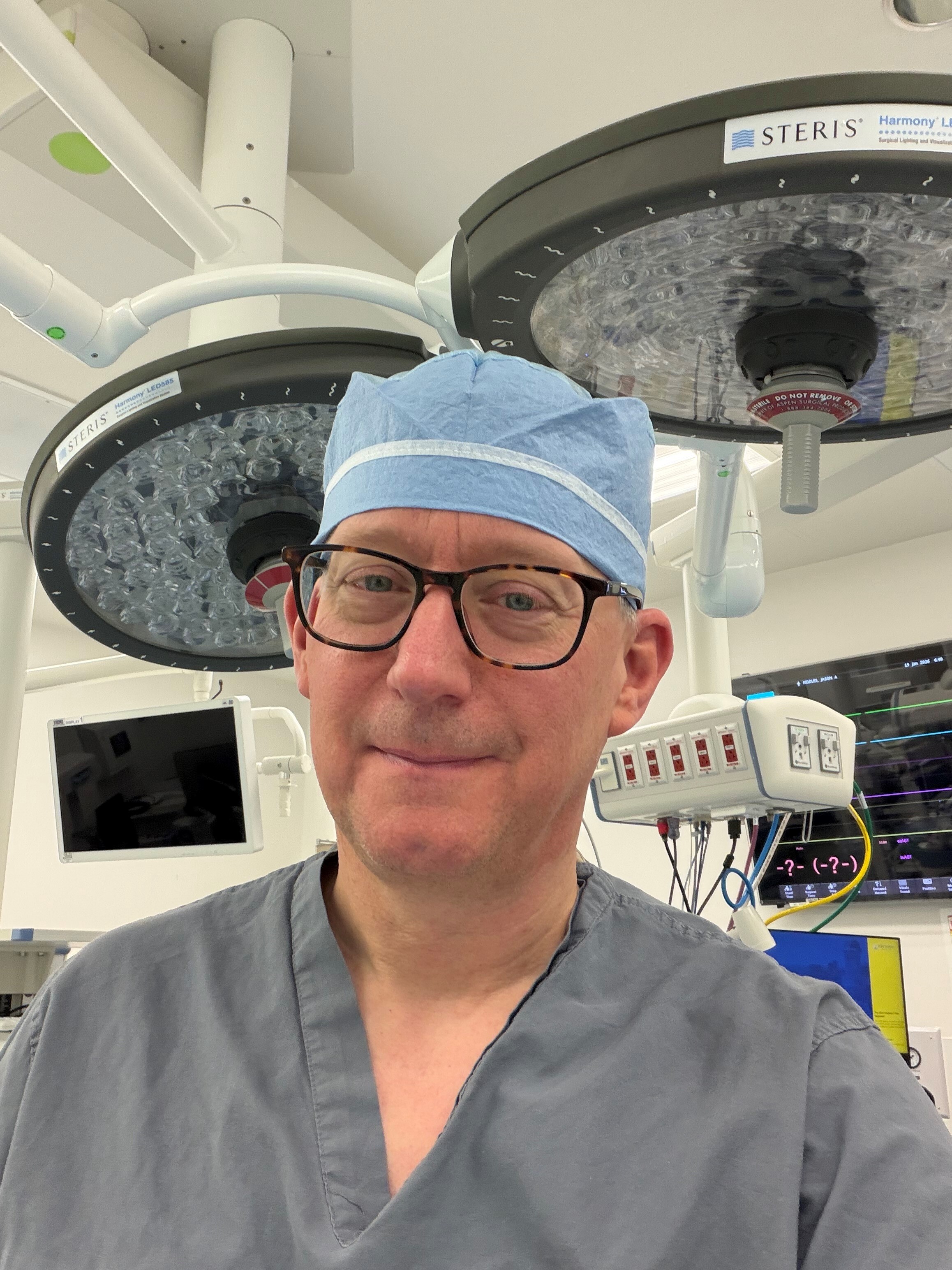
Welcome back! This month’s article features Dr. Paul Danielson, a pediatric general surgeon at Johns Hopkins All Children’s Hospital. He is the Chair of the Department of Surgery and the Associate Dean of Clinical Affairs at Johns Hopkins. I had the privilege to chat with Dr. Danielson and learn about his profession and his educational journey.
Almost every doctor’s pathway starts the same way: college, then medical school, and finally a residency. The length of the residency depends on what kind of doctor someone wants to be; it can range from 3 to 7 years. A residency makes you a specialist, whereas a fellowship makes you a sub-specialist. Dr. Danielson, after residency in general surgery, completed a fellowship to focus on pediatric general surgery. Because fellowships are so competitive, some people decide to take time out of their residency to do a research fellowship. Dr. Danielson took 2 years to do a research fellowship in Boston. Dr. Danielson did a total of 17 years of training after high school!
So, why did Dr. Danielson pick pediatric general surgery? He said that although he does like children, that wasn’t his main reason. He primarily picked pediatrics because it seemed more challenging than adult general surgery for him, and he liked the idea of his work staying with a person for their entire life. He loves it when his work has longevity, helps a patient for decades, and is impactful.
What makes pediatric surgery more challenging? Dr. Danielson said that adult surgery has some extremely challenging parts, but when he was training, only 40 pediatric surgeons were produced per year in all of the US and Canada. It was extremely competitive to get into pediatric general surgery. Additionally, a child’s anatomy is smaller and many are born with congenital anomalies that pose interesting and challenging cases for him.
Dr. Danielson has not only worked in hospitals, he has also served in the Army. His experiences in Afghanistan and Iraq put a spotlight on an interesting perspective on healthcare. In addition to helping people, Dr. Danielson mentioned that doctors need to suspend their own emotions when it comes to making decisions for patients. Doctors need to be universally caring and maintain their objectivity. In our interview, he spoke about how he would have to treat patients who weren’t necessarily “good guys”, but his profession’s goal is to help a fellow human being, regardless of their past actions and moral choices.
When choosing a medical career, Dr. Danielson had to think about the amount of time he wanted to dedicate to his career. For example, in trauma surgery, there are emergencies and you may be on call. However, in a more elective-based specialty, the doctor may have a more set schedule that doesn’t involve being on call. He said that maintaining a good work-life balance can be hard depending on what field someone chooses. But really, there’s a place for EVERYONE in medicine!
What does a typical week look like for Dr. Danielson? He usually sees patients in the office a few days out of the week, and he works in the OR a few days, too. He does research or some teaching on one day. He also has to attend a lot of meetings! But Dr. Danielson’s work during the week often changes because there could be random surgeries that pop up or a scheduled surgery could take longer than expected.
Although Dr. Danielson enjoys his job, he sometimes faces challenges. As a doctor, it is very important to learn how to manage your emotions. Sometimes, when things don’t go well in practice, doctors need to put their emotions aside to give the best possible care to their next patients. It is imperative, however, to revisit those strong emotions when a free moment comes about. Additionally, many doctors have a team around them who can offer support, too.
Finally, how do you become a pediatric general surgeon? Dr. Danielson said that it is extremely important to challenge yourself no matter what you’re doing. For example, taking the hardest classes in high school and trying to do the best you can. Not only does this create good habits, but if you put out your best work, you are more likely to be recognized. The journey to become a doctor is very competitive, so it is important to try to get into the best college you can, so that you can go to the best medical school you can and get the best residency you can. Although every step matters, when applying for fellowships, application reviewers don’t necessarily care about where you went to college; they care mostly about where the applicant did their residency. So the moral of the story is, even if you don’t get into an Ivy, your life is not over. People can still get into great medical programs. Just work as hard as you can at every step in your life.
Many thanks to Dr. Danielson for his thought-provoking insights and advice!