What's In Your Backyard?
"What counts more than style is whether architecture improves our experience of the built world; whether it makes us wonder why we never noticed places in quite this way before." - Ada Louise Huxley
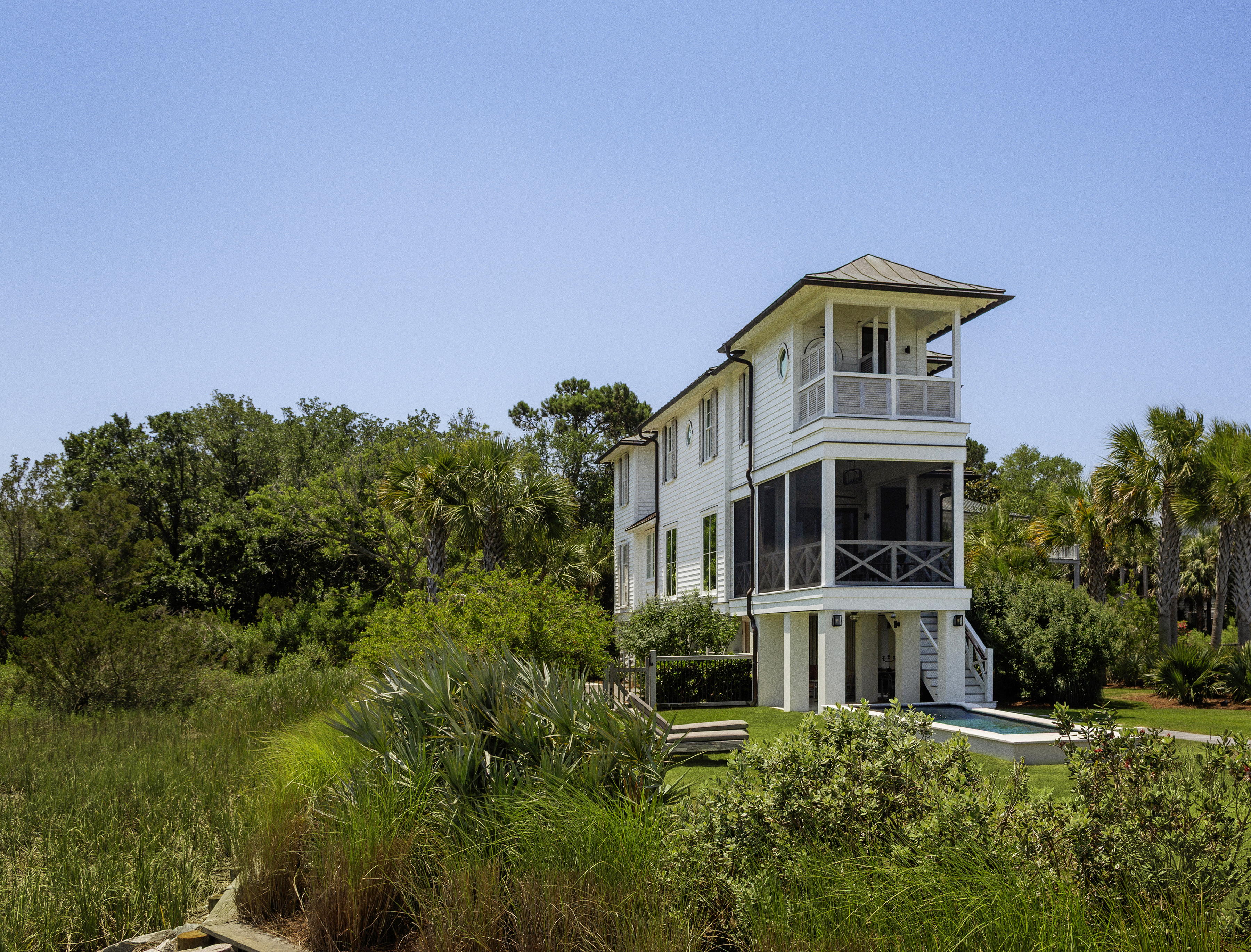
Growing up and observing over time the land features on the island reveals more than just historical artifacts in the ground. On the marsh side, there's a different atmosphere at work. Shrimp crackling, tides lapping, and minks reed-rafting are seen daily.
Off the marsh, on a tiny slice of land that seemed not large enough for the footprint of a house, was an existing dock that had been around for generations. The dock, flush with the horizontal landscape at high tide, was a place for seasonal action. Imagine a large floating deck used throughout the eras to ferry people and goods across the water to the mainland. A historical point of exit from the island. Before the house, the dock was there first.
Local legend said that this narrow land wasn't buildable, but that turned out not to be true. The surprise of realizing it was, after all those years, was contagious. Landscape recommendations from the town influenced the home's design. The site gets thinner as it approaches the marsh-side dock. As the land narrows, so does the house, built by Daly and Sawyer and designed by Beau Clowney Architects.
At the beginning stages of designing the house, Beau Clowney shared, "The setbacks and the buildable area are what determined the shape for that house. A long and skinny lot that most folks thought was unbuildable."
It takes a creative architect to imagine beyond the existing limitations, but with this land especially, Beau Clowney found a way to create a treasure. Additionally, innovative modern elements make the interior space feel equally timeless.
Down a long, secretive driveway exists a view so stunning that building in a traditional way and scale would obscure it. What followed was a home that seemingly floats above the marsh and creek from the inside. A great architect expands the view. A great builder views the expansion of space as a breathing body that maintains itself. Creating views of the hidden life in the marsh.
What does moonlight on the marsh smell like? Over time, living on this part of the island might start to answer that question.
The large existing dock becomes a stellar observation deck for sunsets and night-sky appearances. Look up at the open sky above for nightly moon viewings. Then, look down at the water and across the Intracoastal Waterway on a night with no moon and see the sparkling, glowing blue bioluminescent shrimp and algae flicker around. And now the home's second owners will steward the land for the next era of time.
Living in the humid atmosphere of the Lowcountry, ideas for ways of living are constantly being formed. Some ideas from midcentury modernism are still culturally relevant. For example, local materials and expansive glass-framed views depend on the specificities of the building site. At this home, modernism and traditional historic Charleston architecture merge to create a distinct style that continues to exert a postmodern influence on the island.
Ada Louise Huxtable, on postmodern architecture, states, "One faces a dilemma peculiar to the very process of preservation: the past is as evanescent and irretrievable as time itself" (The Unreal America: Architecture and Illusion, 1997).