Our Amazing Trip to Lisbon, Portugal
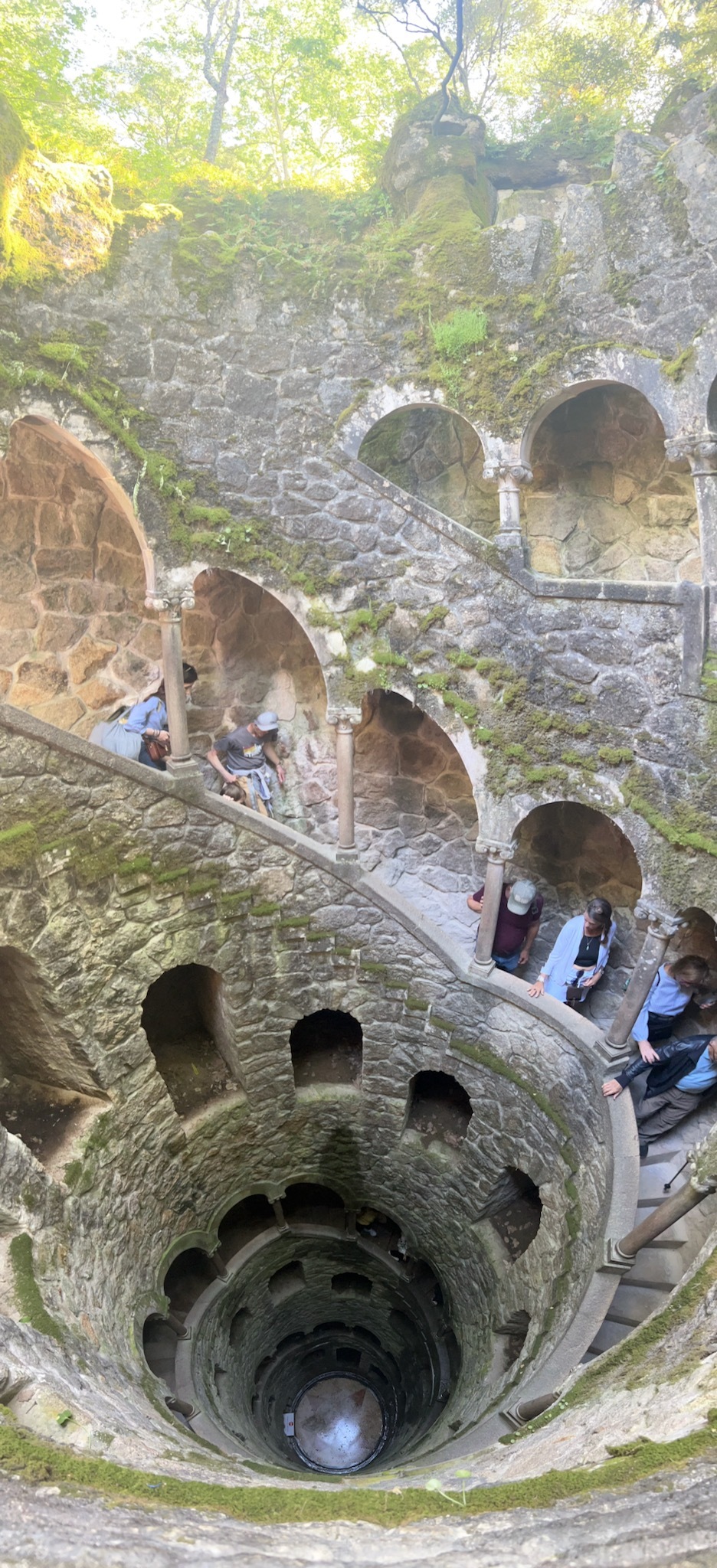
Initiation Well at Quinta da Regaleira
My daughters and I have just returned after spending one week in Lisbon, staying at the Heritage Avenida Liberdade hotel on popular Avenida Liberdade Boulevard only a 5 minute walk to Rossio train station. The afternoon we arrived, we spent exploring the Barrio Alto and Chiado district, taking the Elevador da Gloria, located near the Obelisk at Praca dos Restauradores. As we exited the funicular, we had the most stunning views overlooking Lisbon at the Miraduoro de Sao Pedro de Alcantara. Here were local artists painting scenic views and musicians serenading us with Portugese fado music. As we reached a small square, Largo Trindade Coelho, we entered the Sao Roque Church, a 16thC Jesuit church, its’ ceiling painted with angels and cherubs. I was mesmerized by the beautiful baroque Chapel of St. John the Baptist with gold and blue lapis lazuli columns, rich precious marbles, gold and silver and walls of beautiful mosaics all that had once been in The Vatican.
Walking further we came across the Largo do Carmo square with the policemen guarding the National Guard headquarters and trumpeting the change of shift, then headed down for afternoon tea and the Portugese signature dessert of pastel de nata, delicious custard filled tarts.
The following day, taking the train from the Rossio to Sintra, a 40 minute ride, we ventured up steep hills and steps, climbing and exploring the Pena Palace, the Moorish Castle and Quinta da Regaleira. Pena Palace with its’ brightly colored walls of yellow and red with intricate blue tiles, the tall red clock tower, drawbridge and vault arches is a magical hilltop palace. It is one of the Seven Wonders of Portugal, high above the Moorish Castle ruins, built from 1840-1885 by King Ferdinand II and of absolutely well preserved Portugal’s Romanticist architectural and artistic heritage. The palace, rich in Moorish, Gothic and Manueline motifs was originally built on a 16thC monastery.
Thereafter we walked downhill through forest trails to Moorish Castle, a hilltop medieval castle of stone built by the Moors between the 8th and 9thC. I enjoyed the wonderful view of Sintra as my girls continued on the treacherous crenellated wall walkway to the top of the Royal Tower. Further was the absolutely beautiful Quinta da Regaleira, a romantic palace and chapel with an unbelievable Initiation Well that transcended a narrow winding staircase to 90 ft. below. There appeared before our eyes a beautiful waterfall, lush landscaping and secret underground passages, a truly mystical 1912 mansion. What an amazing day of sightseeing!
Exploring Belem the next day we passed the Padrao dos Descobrimentos, the Monument to the Discoveries, a gigantic riverside monument, the shape of a large ship, honoring the 500th anniversary of the death of Prince Henry the Navigator and other great navigators, sailors and explorers. We entered the Belem Tower, built from 1515-1520 to protect Lisbon’s harbor. But the most awesome was the Monastery of Jeronimos of pointed Gothic or Renaissance arches with elaborate Manueline carved stonework built from 1501 and completed about one century later. The white limestone church is interesting with Vasco da Gama’s tomb, but it’s the Cloisters that were so impressive. At Pasteis de Belem, its’ birthplace since 1837, we enjoyed delicious pastel de natas , then back in Lisbon we rode the Elevador de Santa Justa designed by a student of Gustav Eiffel.
My daughters decided to partake in a 9 hr. car tour to Tomar, to explore the Castle of the Knights Templar and Convent of Christ. That day I choose to meander through the streets of the Baixa district, down the Rua Augusta past many cafes, restaurants and shops to the very impressive Arch of Triumph and the statue of Jose I at Praca do Comercio, the large square at the Tejo River.
The following day, as Karen headed off on a bus tour to Obidos, Nazare and Porto, Kimberly and I took a taxi up to the hilltop Castelo de Sao Jorge, St. George Castle built in the 11thC by the Moors to house their army. We explored the Alfama district, meandering down the narrow winding cobblestone streets, making our way past the statue of St. Vincent at Largo Santa Luzia and the Lisbon Cathedral, admiring the panoramic views along the way. Passing through the Praca da Comercio, we came across the popular Pink street with umbrellas hanging from above, finding Lisbon’s most picturesque Elevador da Bica funicular, climbing up steep steps to capture that photo moment, then enjoying a long ride with an informative Tuk-tuk driver back to our hotel.
Our last day in Lisbon, we enjoyed the majestic viewpoint again of Miraduoro de Sao Pedro de Alcantara shopping for Portugese artwork, jewelry, antique tiles, having lunch, then exploring the Convento do Carmo, with its’ Gothic arches left standing open to the sky as a reminder of the devastating 9.0 earthquake in 1755. During dinner we reminisced about our wonderful, amazing time in Portugal!