Anne Duyser: The Winding Road to a Little Slice of Paradise
Part 1 of a continuing series featuring one of our Moorings originals. Anne will share a bit of history from her arrival in the early 60's, along with her teaching career at Naples High and extensive travels. Be sure to follow along and enjoy the nostalgia!
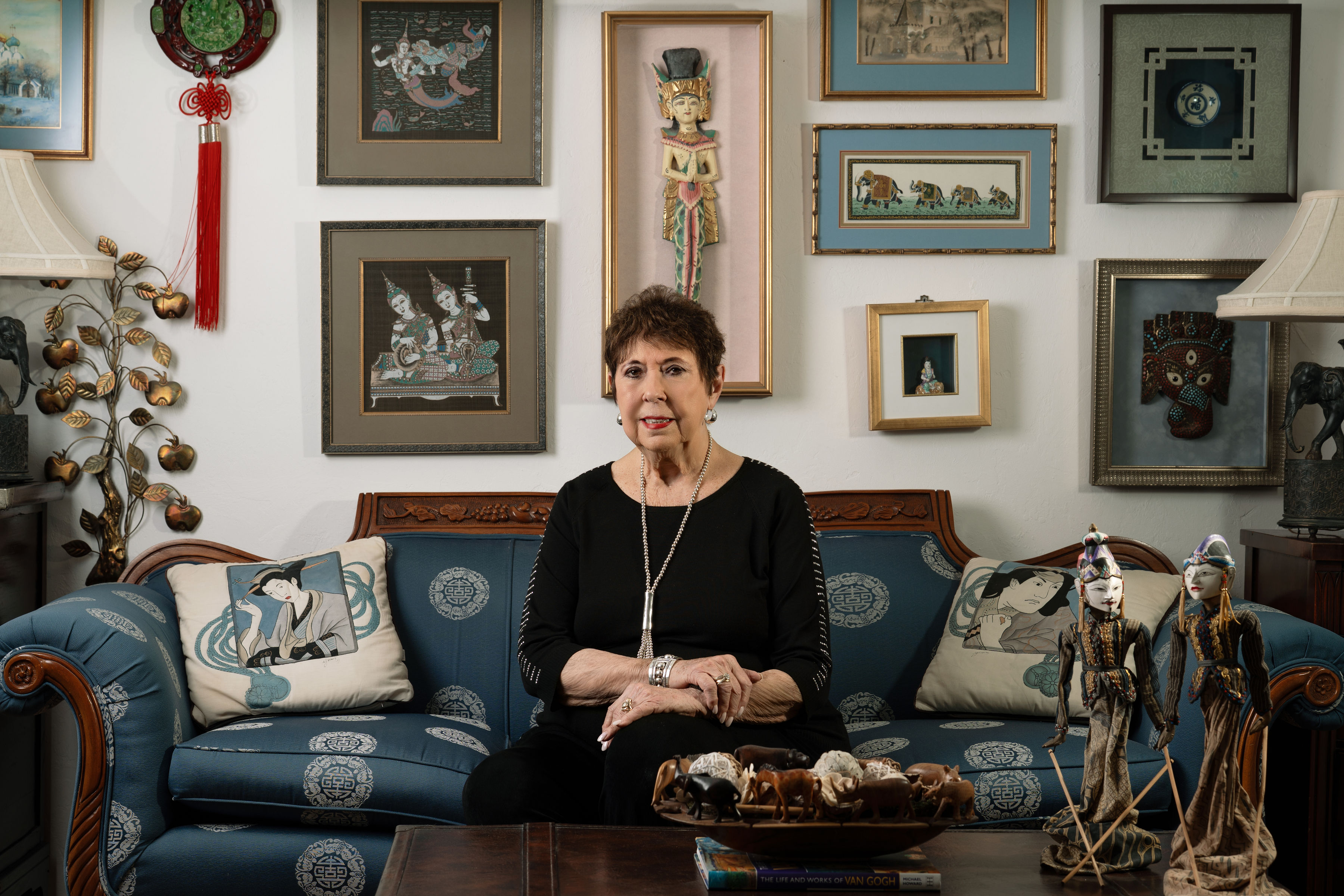
I grew up in the mountains of southwest Virginia, close to the state lines of West Virginia, Tennessee, Kentucky, and North Carolina. I graduated from high school in 1957 and enrolled at Radford College, which at the time was the Women’s Division of Virginia Polytechnic Institute. My plan was to major in history, a subject I loved.
In high school, I had the opportunity to take Spanish classes and discovered a fascination with learning new words for concepts I already knew. That curiosity remained with me through college, and I ultimately graduated with majors in both History and Spanish—never intending to do anything with the Spanish major. At that time, I had never heard a native Spanish speaker, and the only person of Spanish descent I had ever encountered was a girl from Puerto Rico at my college.
After graduation, I went to my first interview at Marion High School, Marion VA, expecting a position teaching history. The principal explained that the football coaches taught history, but there was a Spanish position available. My response was that I didn’t think I could teach Spanish—I had taken the classes simply because I enjoyed them. In those days, we were taught to read and write the language, but not to speak it. The principal encouraged me to take the position, which I did because I needed a job. I began teaching vocabulary, verb conjugation, and writing, without really knowing how to carry on a conversation. This was typical for language teachers at that time.
In 1957, Sputnik was launched, and the United States realized a growing need for citizens fluent in foreign languages. The federal government created the National Defense Education Act, which sent language teachers back to school to learn how to teach using the audio-lingual method. I applied to Appalachian State University in 1962, which offered a summer program. Native speakers were hired to immerse us in the language. Although it was designed as a two-summer program, I chose to continue my education, and ultimately earned a Master’s degree in Spanish and Education.
Boone, North Carolina, is a charming town in the summer, and many teachers from Florida came there to earn their master’s degrees. There were lots of friendly young men from Miami who encouraged me to come teach there. Just to humor them, I sent applications to Broward, Dade, and Collier counties- never imagining I would actually move.
I had already accepted a position in Richmond, Virginia for the 1963-64 school year and assumed that would be the end of my Florida prospects. I had been to Fort Lauderdale once, but I had no real desire to leave Virginia. Then out of the blue, as I was leaving for school one morning, Mr. Woodruff, the principal of Naples High School, called to discuss teaching in Naples. I thanked him and explained that I had already accepted a position in Richmond. As an afterthought, I asked, “Where is Naples?” He replied, “You should know—you sent an application here.” I then asked, “What county?” When he said Collier, I told him that while I had sent an application, I was no longer interested. He pleaded with me to reconsider, explaining that they urgently needed a History–Spanish combination teacher and that my résumé was perfect. Again, I declined and headed off to school. About a week later, he called again. I said no once more, unaware that he was not accustomed to taking no for an answer.
Although he did not know me personally, the Head of Foreign Languages for the State of Florida—who had been my professor at Appalachian—had given me a strong recommendation- enough to sway him. He called again, this time with the Spanish teacher on the line. To make a long story short, he called several more times. Something told me that if the principal wanted me that badly, it must be for a good reason. I spoke with friends in Miami who told me Naples was only two hours away and encouraged me to take the position and reapply elsewhere the following year. I resigned my contract in Richmond and prepared to move to Naples. It turned out to be one of the best decisions I have ever made.
Arriving in Naples
In August of 1963, at the age of 22, I packed my car with all my belongings and headed to Naples, a place I had never seen. Travel in the 1960s was not easy—there were no interstates, and much of the journey was made on rural roads. It was a two-day trip. Upon reaching Fort Myers, I admired the stately palm trees along Colonial Boulevard, thinking I had finally arrived at civilization. That illusion quickly passed, as there was essentially nothing between Fort Myers and Naples. Once again, I thought to myself that I must be crazy, but I continued to Naples. Upon arriving in Naples, I stopped at a service station—now a bank—on the corner of U.S. 41 and Fifth Avenue South. I asked the attendant, “Sir, can you tell me where the main part of town is?” He replied, “Honey, you’re looking at it.”
I was stunned driving down Fifth Avenue. There were only a few stores: a liquor store across from the service station, a Rexall Drug Store with a lunch counter, two banks, a hardware store, a couple of dress shops, The Blue Mussel Shop which still exists in another location, a private home, Ingram’s Hardware, a small Wynn’s Market, the Piccadilly Pub restaurant, a few other shops I no longer remember, and several vacant lots.
At the end of Fifth Avenue, I reached the beach and began to cry, realizing that I had signed a one-year contract to teach in a town that felt empty. I couldn’t turn around and go home, so I checked into the Beachcomber Motel—now the Escalante—where I got a room and tried to understand how I could have made such a terrible mistake.
The next morning was spent exploring Third Street South. There were quite a few apartment buildings, so I went into the first one and said, “I am a new teacher in town and I’m looking for a place to live.” The person behind the desk told me the rent was $75 a month until January, and then $300 a month until April. There was no way I could afford that on a teacher’s salary. My salary was $5,000 a year. I asked why it changed, and the answer was, “Because of season.” I then asked, “What is season?” and was told it was when wealthy northerners came to enjoy the beautiful weather. Even then, prices increased during season—though certainly nothing like what we see today.
After several unsuccessful attempts, I called Mr. Woodrfuff. He sent his son to help me look for a furnished apartment. Fortunately, we found one in a wonderful location, directly across from the library and six blocks from the beach. It was unfurnished, but the landlord and several teachers helped gather furniture for me, which gave me a start. It was my first little slice of paradise.
I visited Miami a few times, and we would drive 30 minutes to a crowded beach. Eventually, I realized how lucky I was. I could walk six blocks to a beautiful, uncrowded beach. From then on I told my friends, “If you want to see me, you can come to Naples.” On August 15, 1963, I began teaching at Naples High School, not realizing that Naples would become my slice of paradise. Here I am, 63 years later, grateful that I allowed Mr. Woodruff to convince me to come to Naples. I have traveled the world, but Naples is the place I prefer to call home.