Hydration with Heart: A Mom and Business Owner’s Mission
Written and provided by Lindsay Christensen, Thornwood resident and owner of Prime IV Hydration & Wellness in Geneva
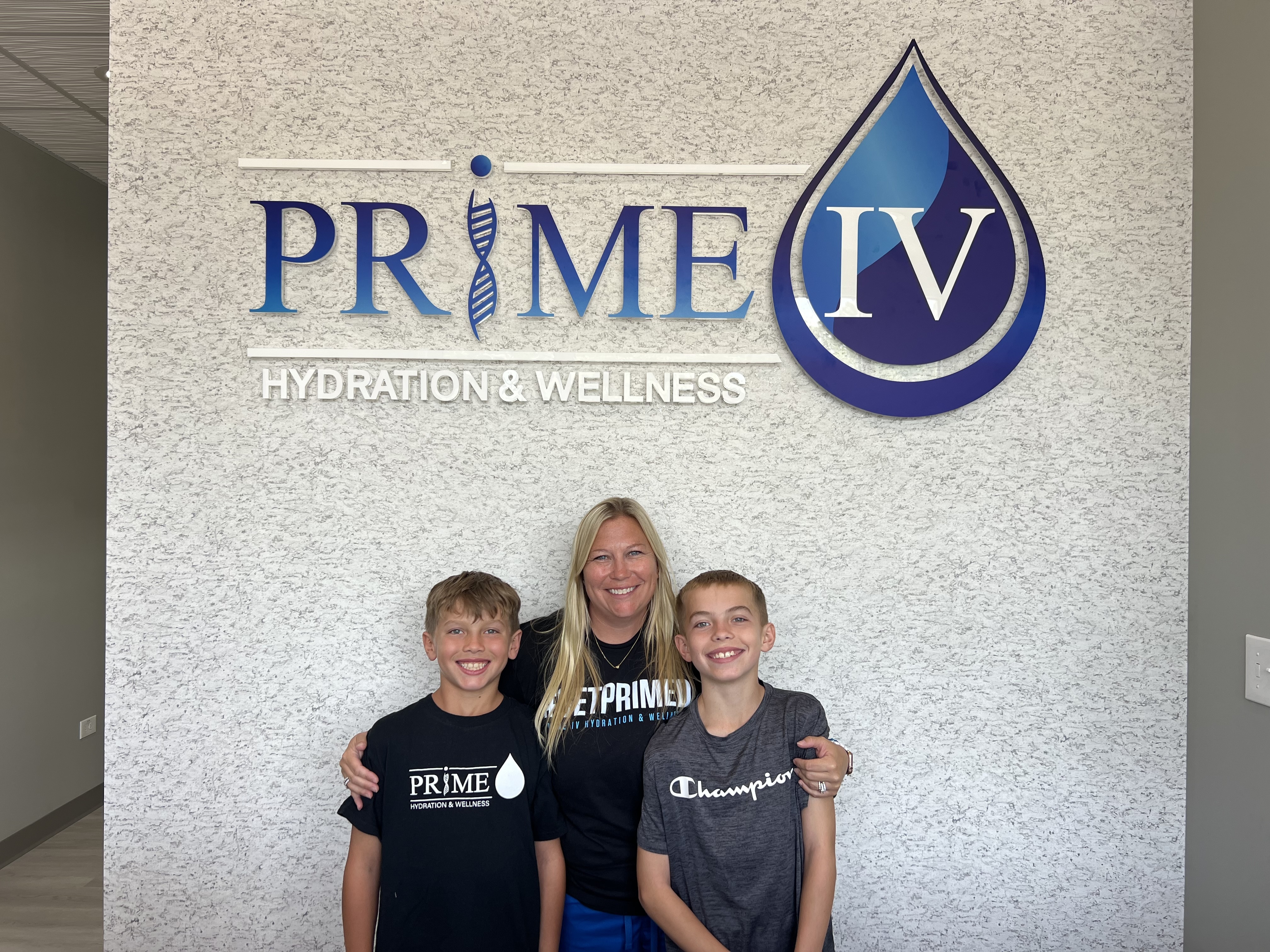
Photo credit: Becca Lentz / B&B Photography
If you find yourself struggling to stay hydrated on a daily basis, you're not alone. I own a hydration business in downtown Geneva and am guilty of carrying around my emotional support water bottle, getting to the end of the day, and wondering if I actually drank it or just brought along for the ride. On average adult men should drink about 13 cups of water while adult women should drink about 9 cups of water based on the 80/20 rule. Simply put, 80% of daily fluid intake comes from drinking water and other beverages, and 20% comes from foods like fruits and vegetables. The following factors would determine more fluids are needed than the averages suggested above: exercise resulting in heavy sweating, pregnancy, excess caffeine or alcohol consumption, or fever, diarrhea vomiting from an illness. There are a couple of easy ways to see if you are drinking enough water. Your urine color should be pale yellow, similar to lemonade, and a urination frequency of 6-8 times per day indicates you are hydrated.
Stanley, Owala, and Yeti water bottles are dropping new colors and styles faster than the temperature in Thornwood every time we think we made it to nicer weather. Water is the primary and most vital nutrient of every cell in the body. The brain is made up of 73% water. Adequate hydration lifts mood, reduces fatigue, reduces depression and anxiety, and improves cognitive function. The heart is made up of 73% water. Proper hydration lowers your heart rate, improves cardiovascular function, and may reduce long-term risk for heart failure. Blood is made up of 80% water. Hydration reduces blood pressure, improves blood vessel function, and allows for more efficient transport of nutrients. Kidneys are made up of 79% water. Hydration ensures that the kidneys can remove waste, reduce the possibility of kidney stones, and improve life expectancy in people with chronic kidney disease. Joint cartilage is made up of 80% water. Adequate hydration stimulates synovial fluid production, reduces inflammation around the joint, and encourages the growth of new cells in the cartilage tissues. Muscles are 79% water. Proper hydration improves strength, power, high-intensity, endurance, and muscle hypertrophy.
What about the sudden boom in electrolytes? Electrolytes are simply minerals like sodium, potassium, magnesium, and calcium. Your body loses electrolytes through sweat, urine, vomit, diarrhea, or even heavy breathing in hot conditions. Gatorade started the OG electrolyte craze back in the 1960's geared towards athletes. Electrolytes are helpful for intense exercise, heavy sweating, illness (vomiting, diarrhea), hangovers, low carb/keto diets. The average person gets electrolytes from food. For some easy sodium intake, you could try foods like dill pickles, olives, or salted nuts. For some easy potassium, you could try foods like bananas, avocados, and potatoes. For easy magnesium intake, you could try adding foods like almonds, spinach, and dark chocolate. For easy calcium intake, you could add foods like milk, yogurt, and broccoli. If you want to knock out several foods that deliver multiple electrolytes in one bite, you could focus on yogurt, milk, leafy greens, avocado, and coconut water.
Staying hydrated is essential to ensure your body is functioning at its optimal potential and electrolytes act like magnets for water, improving absorption and retention.
As the owner of Prime IV Hydration & Wellness, Lindsay brings care and intention to everything she does—but her most meaningful role is being a mom. She balances the demands of business ownership with a deep commitment to her family, showing up each day with energy, compassion, and strength. This Mother’s Day, we celebrate Lindsay for the way she pours into others, both at home and throughout the Fox Valley.