The "Longhouse"
1005 Wolver Hollow Rd.
Recently purchased by Stephen Kappel, a young tech talent who made an early entrance into AI, this rambling cottage is affectionately nicknamed "Longhouse."
Accented with specimen plantings and an English-style garden designed by Innocenti & Webel, the home was originally commissioned in 1950 by Alfred J. Seaman Jr., a renowned post-war advertising CEO and Upper Brookville's mayor from 1966-1998.
The home's original architect, Royal Barry Wills (1895-1962) of Royal Barry Wills Associates, is widely considered to be the master of the Cape Cod Revival Style. Most of his work was in New England, but his firm designed a handful of homes on Long Island, including this Upper Brookville gem.
All alterations throughout the years, including the rightmost segment of the home, were handled by the original architectural firm. When Wills himself passed away in 1962 (three and a half months shy of his 100th birthday), his son carried tradition through.
On his planned renovations, Kappel says, "Overall, my goal is to retain the original aesthetic of the exterior design, while making several updates that will help the house last another 75 years," he told Stroll, adding that he's quite taken with the history of the home and enjoys talking about it if you ever see him around town.
--
@DESIGN - pls if you pull these out as individual sidebars:
Who was the original owner, Alfred J. Seaman Jr.?
- Served as Upper Brookville's mayor from 1966 to 1998 (the longest-serving elected official at the time).
- Graduated from Columbia University.
- Served in World War II on both the Atlantic and Pacific fronts as an aircraft carrier CIC officer.
- Chairman and CEO of SSC&B (later Lintas Amirati Puris) and was a key figure in the agency's joining The Interpublic Group of Companies.
Updates over the years
- The original house was built in 1950.
- In 1964, the right-most segment of the house (viewed from the front) was added. It includes the master suite with a bedroom, 2 bathrooms, a Delft tile accented fireplace and closet space.
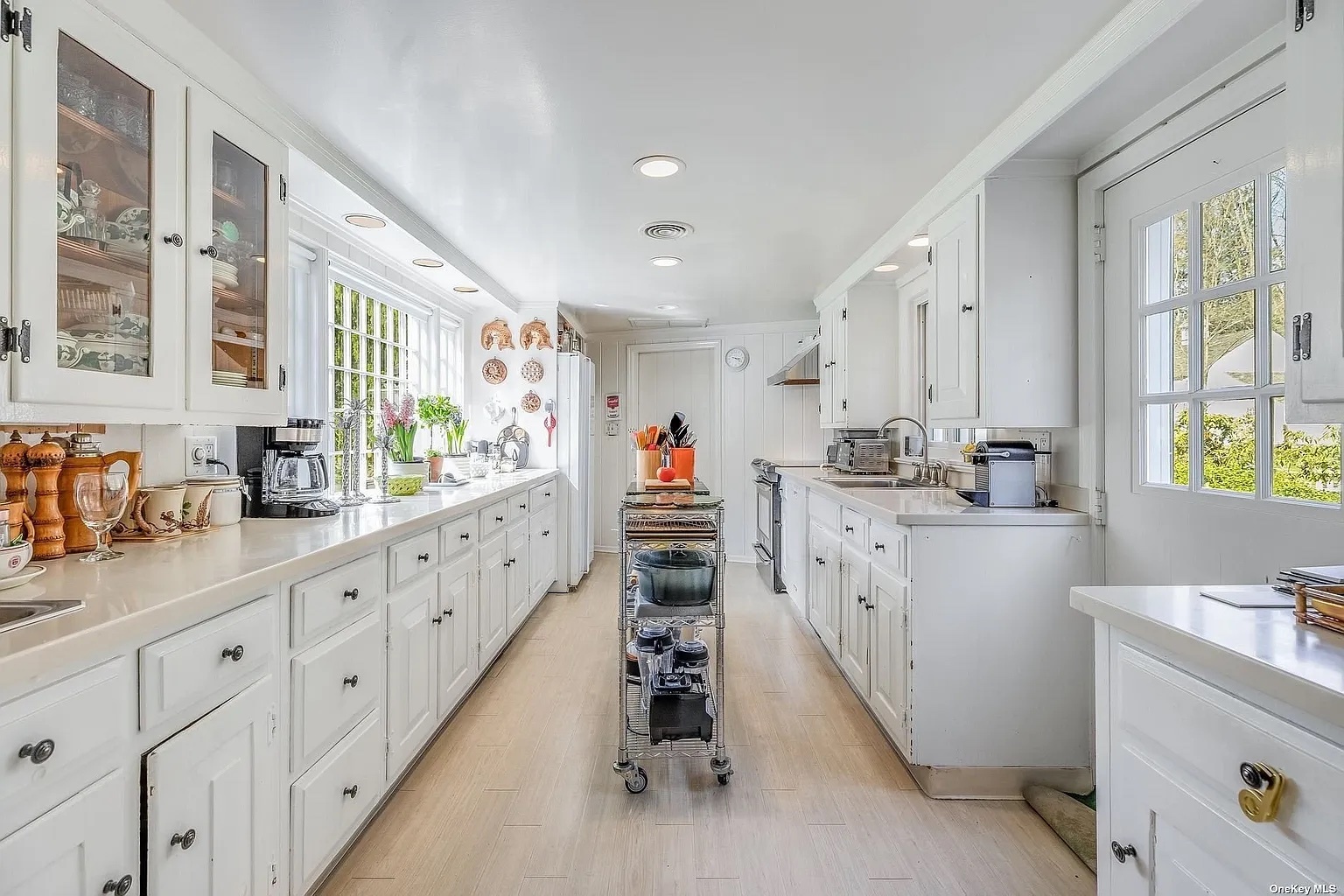
- In 1986, the covered walkway between the garage and the main house was enclosed and transformed into a kitchen (hence the long, narrow layout). The original kitchen became a breakfast room.
- Also in 1986, the detached "barn" (garage + upstairs studio) was added.
Historic features remain today
- 3 wood-burning fireplaces
- Wood-paneled library
- 12 over 12 double-hung windows
- 18th-century Dutch Delft tiles
- Open and covered terraces
- Beamed ceilings
- Pre-war details
- Detached barn
Kappel's renovation plans
- By early January, the house will have a new cedar roof and new gutters.
- Many of the house's shutters and storm windows have also fallen victim to time. I hope to restore the 12-over-12 window shutters by the end of 2024 and revert them to their green color.