One Dough, Many Pastas
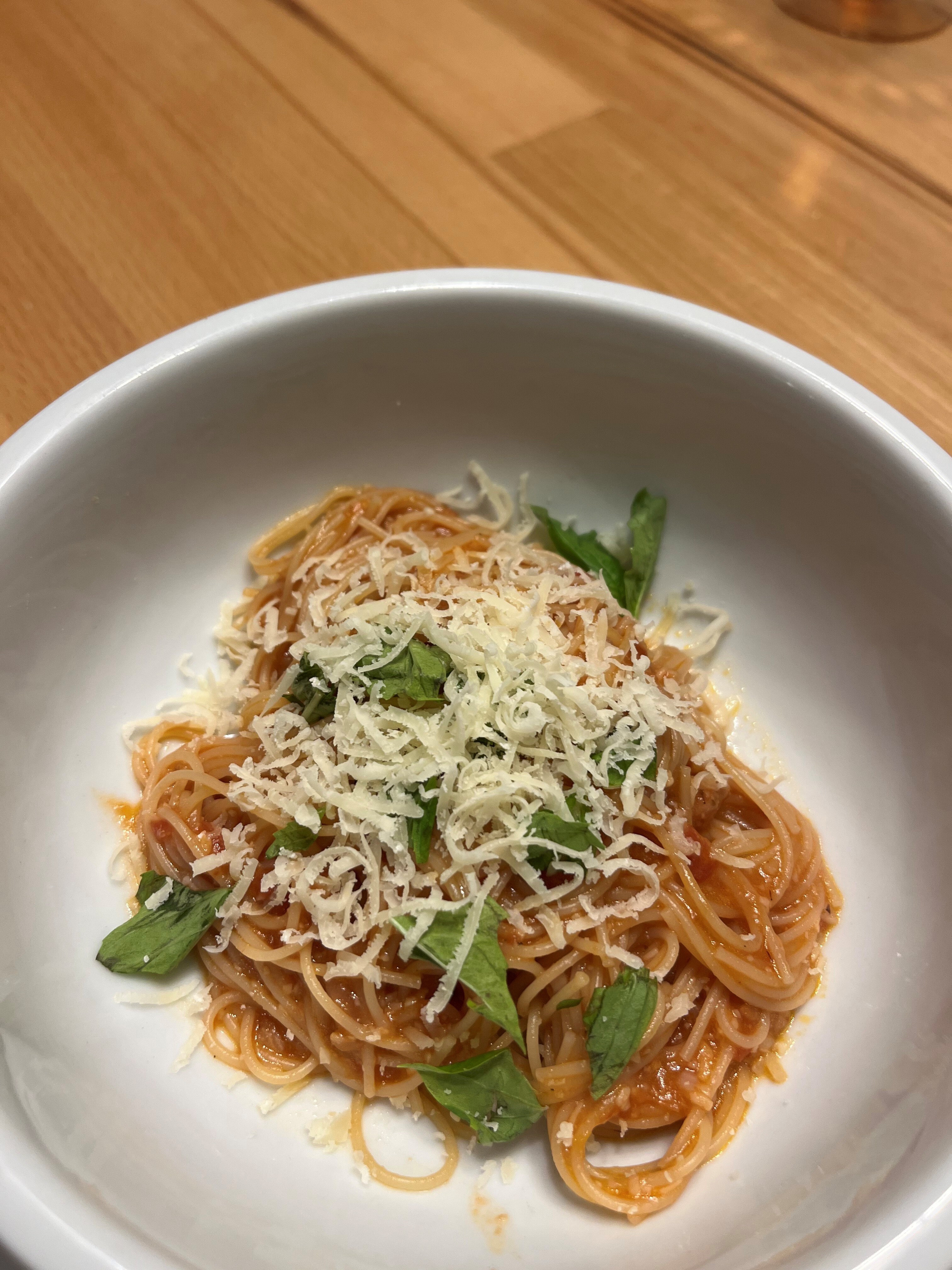
Spaghetti Pomodoro
Most of my recipes say a lot of things like “eyeball it,” “to taste,” or “feel free to substitute.” In other words, you’re mixing and splashing things all over a recipe like Jackson Pollock.
For this recipe, I am asking, just this one time, for you to be precise. Mondrian-esque. It’s worth it.
Fresh pasta sounds like one of those things that belongs in the category of things other people make. People who have giant Italian grandmothers. People who own those enormous wooden pasta boards. People who somehow know what “al dente” means before they have even tasted the pasta.
But it is actually ridiculously doable.
I make this once a week, and once you get the hang of it, the whole process doesn’t take terribly long. It is also, I will tell you, a passable arm workout. You’re going to need a food scale, a pasta machine (or mixer attachment equivalent), and at least an hour for the dough to rest. You will also need a little patience the first time. After that, you’ll wonder why you ever bought fresh pasta.
And here’s the real magic: this is one dough that can become a whole bunch of different pastas. Roll it thin and cut it into fettuccine. Make wider ribbons for pappardelle. Cut it into sheets for lasagna. Use the sheets to make ravioli or other filled pasta. Run it through a cutter for spaghetti. Or, if you are feeling particularly ambitious, turn it into something shaped and adorable.
The dough doesn’t care.
I’d also insist on good flour. A 00 pizza or pasta flour is a must for me because it produces a much silkier, more workable dough. Although you can find 00 flour at most supermarkets, I take this one step further and use a heritage flour from Sunrise Flour Mill. They are absolutely not paying me to say this, and you can order it directly from their website. It is my go-to pasta flour and, as an added bonus, I find it easy to digest.
One other thing: weigh the ingredients. I know. I know. This is coming from the woman who routinely tells you to “add enough olive oil” and “throw in some red pepper flakes.” But flour varies, eggs vary, and pasta dough is one of those rare occasions where a scale will make your life easier rather than more annoying.
Once you have the dough down, you can stop being Mondrian and go back to being Pollock when it comes to what you put on it.
Ingredients
For the dough
255 g (9 oz.) 00 pasta or pizza flour, plus more for dusting
2 large eggs (about 110 g)
4 large egg yolks (about 70 g)
1 tsp. kosher salt
More flour for dusting
Method
Make the dough
Pile the flour onto a large, clean work surface and make a well in the middle, about 4 inches across. Put the eggs, egg yolks and salt into the well and beat them together with a fork.
Now start bringing the flour into the eggs, a little at a time, until you have a wet, sticky mess. This is correct. Do not panic.
Use a bench scraper to scrape the dough off your fork, your fingers and whatever else it has managed to attach itself to. Start folding more flour into the dough with the bench scraper, turning the dough about 45 degrees as you go. After a few minutes, you should have a fairly firm, shaggy ball.
Now knead.
Push the heel of your hand into the dough, pressing forward and down. Rotate the dough about 45 degrees and repeat. Keep going until the dough becomes smooth, elastic and feels roughly like a firm ball of Play-Doh.
If it feels too wet, add flour one teaspoon at a time. If it feels too dry, add water a few drops at a time. Do not dump a bunch of either one in and hope for the best.
Remember: Mondrian.
Wrap the dough tightly in plastic wrap and let it rest on the counter for at least 30 minutes. I usually give it an hour.
Roll the pasta
Cut the rested dough into four equal pieces. Rewrap three of them so they don’t dry out.
Take one piece and flatten it with a rolling pin into an oblong shape about ½-inch thick. Set your pasta machine to its widest setting and run the dough through three times.
Now fold the dough in on itself: bring each end toward the center, then fold it in half. Flatten it again with the rolling pin and run it through the widest setting three more times.
Reduce the setting by one notch and run it through again. Repeat, reducing the setting one notch at a time, until the dough is as thin as you want it.
For most cut pasta, I take it down until it is very thin, delicate and slightly translucent. You should be able to feel the difference: it becomes silky and elastic rather than doughy.
Keep the sheets lightly dusted with flour and covered with a clean kitchen towel while you repeat the process with the other three pieces.
Now Make Some Pasta
And this is where the recipe stops being a recipe and starts being a choose-your-own-adventure.
Fettuccine: Run your finished sheets through the fettuccine cutter. Toss the strands lightly with flour so they don’t stick together, then either cook immediately or make little loose nests and set them aside on a floured tray.
Pappardelle: Skip the cutter. Use a sharp knife or pasta wheel to cut the sheets into wide ribbons, approximately ¾ to 1 inch wide. The less precise you are, the more rustic they look, which is a very convenient way of saying that mine are never exactly the same size.
Lasagna: Cut the sheets into pieces that fit your baking dish. No further cutting required.
Ravioli or other filled pasta: Cut the sheets into manageable lengths, add your filling, fold, seal and cut. There are approximately one million recipes for fillings, and this dough is happy with just about all of them.
Spaghetti: If your machine has a spaghetti cutter, use it. If it doesn’t, cut the sheets very thinly by hand and call it rustic. I will not tell.
Fresh pasta cooks much faster than dried pasta, so keep an eye on it. Depending on the thickness and shape, it can be done in just a couple of minutes. Taste it rather than relying entirely on a timer.
And then comes the sauce. Butter and Parmesan. Brown butter and sage. A simple tomato sauce. Pesto. Vodka sauce. Seafood. Mushrooms. Garlic and olive oil. Whatever you have in the fridge that needs rescuing.
Because the real recipe here is not fettuccine, or pappardelle, or ravioli.
It’s the dough.
Make it once, and you can turn it into dinner in about seventeen different directions.