The Nurse Next Door
Molly McClain-Barker: A Friendly Face for Every Fall and Fever
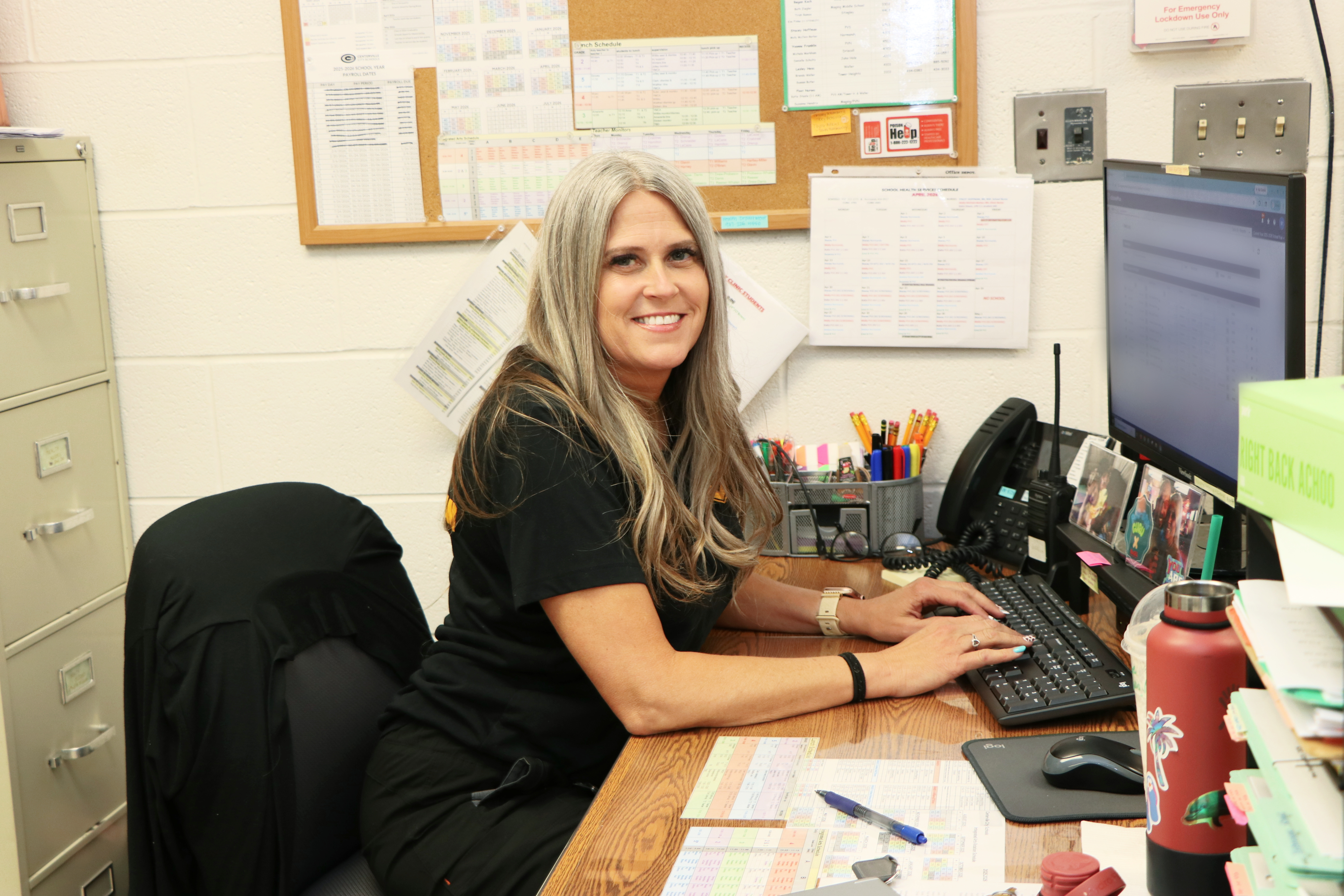
On a warm, sunny day, recess is in full swing, which, for Molly McClain-Barker, usually means one thing: a steady stream of students headed her way. “Nice weather is great because the kids get outside,” she says with a smile. “But it also makes for more injuries and a lot of clinic visits.”
As a school nurse serving multiple buildings in the Centerville district (including Normandy (grades 2-5) and Primary Village South (Pre-K-1), Molly is a steady, familiar presence for hundreds of children. Her role goes far beyond bandages and ice packs. She manages chronic conditions, administers daily medications, and offers reassurance when kids need it most, all while supporting teachers and families throughout the school community. The role is deeply connected to the rhythm of the neighborhood she calls home, where students know her as “Nurse Molly” at school and recognize her at the pool, on sidewalks, and even at her front door on Halloween.
On busy days, her clinic can fill quickly, sometimes with a line of students. Each visit may be brief, but the responsibility is not. “I might only spend five minutes with each student, but I have to assess them carefully,” Molly notes. “My license is on the line. I hold myself to a high standard.”
Today, Molly’s responsibilities reflect just how much school nursing has evolved. “When I started, we had maybe five or six nurses total,” she says. “Now, we have 19 across the district. The student population has grown, and kids are sicker than they used to be.” From diabetes and seizure disorders to severe allergies and asthma, the needs are wide-ranging and often complex. “At my 2-5 building alone, I have about eight kids who need daily meds,” she explains. “Some students even require one-on-one nursing care.”
While her current role feels like a natural fit, Molly didn’t originally set out to become a nurse. Her path began in education, where she studied to become a teacher and worked in preschool settings. But something didn’t click. “I said, ‘I think I’ll be a nurse,’” she recalls. “Everyone laughed because I hated doctors and shots.” Still, she made the switch, entering a nursing program and quickly realizing she’d found the right direction. “Nurses are a lot like teachers, with so many directions you can go,” she says.
Early in her career, Molly worked in pediatric care at Dayton Children’s Hospital, eventually becoming an ER nurse. The work was meaningful and fast-paced, but the demanding schedule became difficult as her family grew. She later transitioned to a specialty clinic with more predictable hours, though even that job didn’t offer the flexibility she needed while raising her son.
The shift to school nursing came unexpectedly. While helping her dad search for a post-retirement job, Molly came across an opening for a school nurse and decided to apply. She got the job. That was 2007.
What she found was a role that brought together her clinical experience, her early interest in education, and the flexibility her family needed. “If my son had a day off school, I didn’t have to worry,” she states. “And school is just two minutes from my house.”
For Molly, the most rewarding part of her work is the trust she builds each day. “I love taking care of the kids and building trust with them and their families,” she shares. Looking ahead, she sees opportunities to expand the role even further. She envisions a school nurse liaison who could help coordinate care for students with complex medical needs, bridging the gap between families, doctors, and schools. She also sees room for more proactive health education, from vaccination programs to dental workshops.
Nearly two decades into her nursing career, Molly remains deeply committed to the work. “Don’t forget the school nurse,” she says. “We’re here every day, caring for sick and injured kids, managing medical plans, training staff, and supporting families.”