Nor-folk or Naw-folk?
Our sister city has been mispronouncing its own name for three hundred years. Locals call it Naw-folk. The English city it was named after, Norfolk, in East Anglia is Nor-folk, two clean syllables, exactly as spelled. That small divergence in pronunciation is, in miniature, part of the whole story of what happened when English culture crossed the Atlantic: it took root, adapted, and became something new, while remaining, in ways that still quietly surprise you, unmistakably itself.
The unrushed pace of coastal Virginia, the soft lilt still audible in older generations, the deep-rooted traditions of courtesy and social grace are not simply Southern charm. They are the living residue of 18th-century English aristocratic culture, carried here by the gentry families who fled a civil war and built a new world in their own image along the banks of the Chesapeake.
I didn't fully understand that until I moved to London. Early in my career I joined a UK-based company. It was only my second time in Europe and my first time living abroad, and I missed coastal Virginia in the specific way you miss the familiarity of a place once you're truly far from it. What I didn't expect was how familiar England would feel. Not identical, of course, but familiar in the way a melody sounds when played in a different key.
The polite formality in how people addressed one another. The unhurried turn-taking in conversation. The manners not as performance, but as habit, reinforced so deeply they'd stopped being conscious. And then the names. Norfolk. Suffolk. Surrey. York. They exist in both places not as coincidence but as record, a map of where people came from, where to find your people once you've arrived, and what they could not bring themselves to leave behind, even when they left everything else.
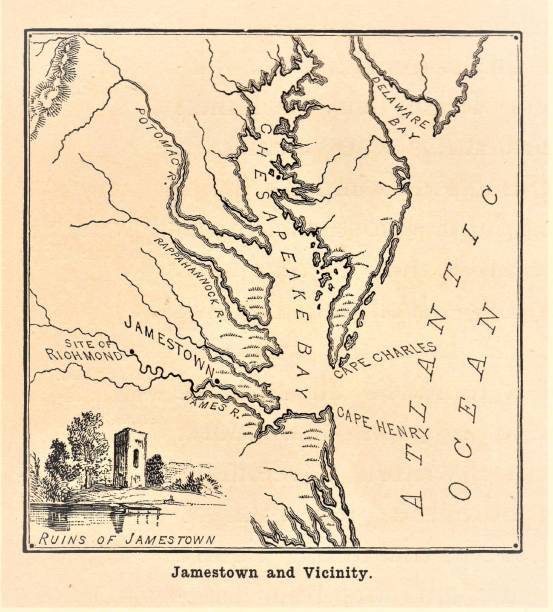
It made me wonder how much of what we call Southern culture was never really Southern at all. How much of it arrived here already formed, packed into the trunks of cavalier families sailing up the James River in the 1640s, and simply...stayed? This is a glance at the threads that remain, still visible, if you know where to look.
The Civil War Nobody Talks About
Not the American one. The English one.
Beginning in the 1640s, England was tearing itself apart. The Royalists – the cavaliers, the gentry class, the landed families who had backed King Charles I against Parliament – were losing. Younger sons of aristocratic households in England's southern and western counties began looking across the Atlantic. Virginia, under the sympathetic governorship of William Berkeley, became their refuge.
What they carried with them was not merely furniture and silverware. It was an entire template for living: hierarchical, honor-bound, organized around the great house, the horse, the hunt, and a code of social conduct that governed every interaction from the dinner table to the courthouse. Historian David Hackett Fischer, in his landmark work Albion's Seed, documented this migration in forensic detail, tracing how the customs and speech patterns of specific English counties took root in Chesapeake soil. That definition of gentlemanliness came with them, and the Virginia manor house, the mounted hunt, the elaborate codes of honor, all of it traces back, county by county, to the south and west of England.
But Virginia was not the only destination, and the English who came were not all cavaliers.
Fischer identified four distinct British migrations, each landing in a different region, each carrying a different culture. The Scots-Irish – poor families from the contentious borderlands of northern England and Ulster – pushed into the Appalachian backcountry, bringing with them a fierce, egalitarian independence and a dialect so old it still carried traces of the speech patterns Shakespeare would have recognized. Meanwhile, Puritan families from East Anglia built New England in the image of the godly English village they had left behind, and Quakers from the North Midlands shaped the more moderate middle ground of Pennsylvania and the Delaware Valley.
Four migrations. Four Englands. All of them still visible in the regional cultures of America today.
The Accent That Was Imported Twice
The story of the Southern accent is stranger than most people suspect – because the most recognizable version of it was not preserved from colonial England. It was re-imported from England after the Revolution.
Before American independence, English speakers on both sides of the Atlantic pronounced their r's fully and clearly. The clipped, r-dropping accent we associate with Virginia and Charleston – the sound of a more formal, antebellum world – did not exist in colonial America. It emerged in southern England in the early 19th century, a new prestige accent adopted by the British upper classes as a marker of refinement. And Southern landowners, still culturally and commercially oriented toward England, followed suit. The softened vowels, the dropped r, the unhurried cadence, all of it spread through the port cities that maintained the closest ties with Britain: Richmond, Charleston, Savannah. From there it moved inland with the culture and the wealth that sustained it.
The South didn't preserve the English manner. It kept importing new versions of it.
The Appalachian mountains tell a different story. Isolated by geography from the coastal culture and its transatlantic fashions, the Scots-Irish communities of the interior froze in linguistic time. Scholars have described the Appalachian dialect as a window into colonial English – not Elizabethan, precisely, but the speech of 18th-century British borderlands, preserved by the mountains and a stubborn self-sufficiency that kept the outside world at arm's length. Expressions dismissed as hillbilly slang – afeared, I reckon, right smart – are not corruptions of proper English. They are older than the nation, carried here intact from the other side of the Atlantic.
What the Names Remember
Drive through coastal Virginia and the names do the work that history books often don't. Norfolk. Suffolk. Essex County. Surry County. Isle of Wight County. York County. These are not poetic choices or nostalgic gestures. They are a literal map of England's southern counties — the precise region from which the Tidewater gentry came — pressed into the Virginia soil by people who wanted to remember, or perhaps could not forget, exactly where they were from.
The town names are the most visible layer. Beneath them run the deeper currents — the social rituals, the way a conversation is entered and exited, the weight given to courtesy, the particular kind of pride that expresses itself through graciousness rather than boast. I noticed all of it in London before I had the language to explain it. The overlap felt personal, almost private, like recognizing a family resemblance in a stranger's face.
It turns out it wasn't a coincidence. It was history, still breathing.
Two hundred and fifty years after independence, the connection between Virginia and England is not merely a matter of ancestry or archive. It lives in the cadence of a conversation, in the unhurried warmth of a greeting, in a town that has been saying its own name wrong — or right, depending on which shore you're standing on — for three centuries.