Rhodes Hall
How "The Castle on Peachtree" became one of Atlanta's most treasured architectural landmarks.
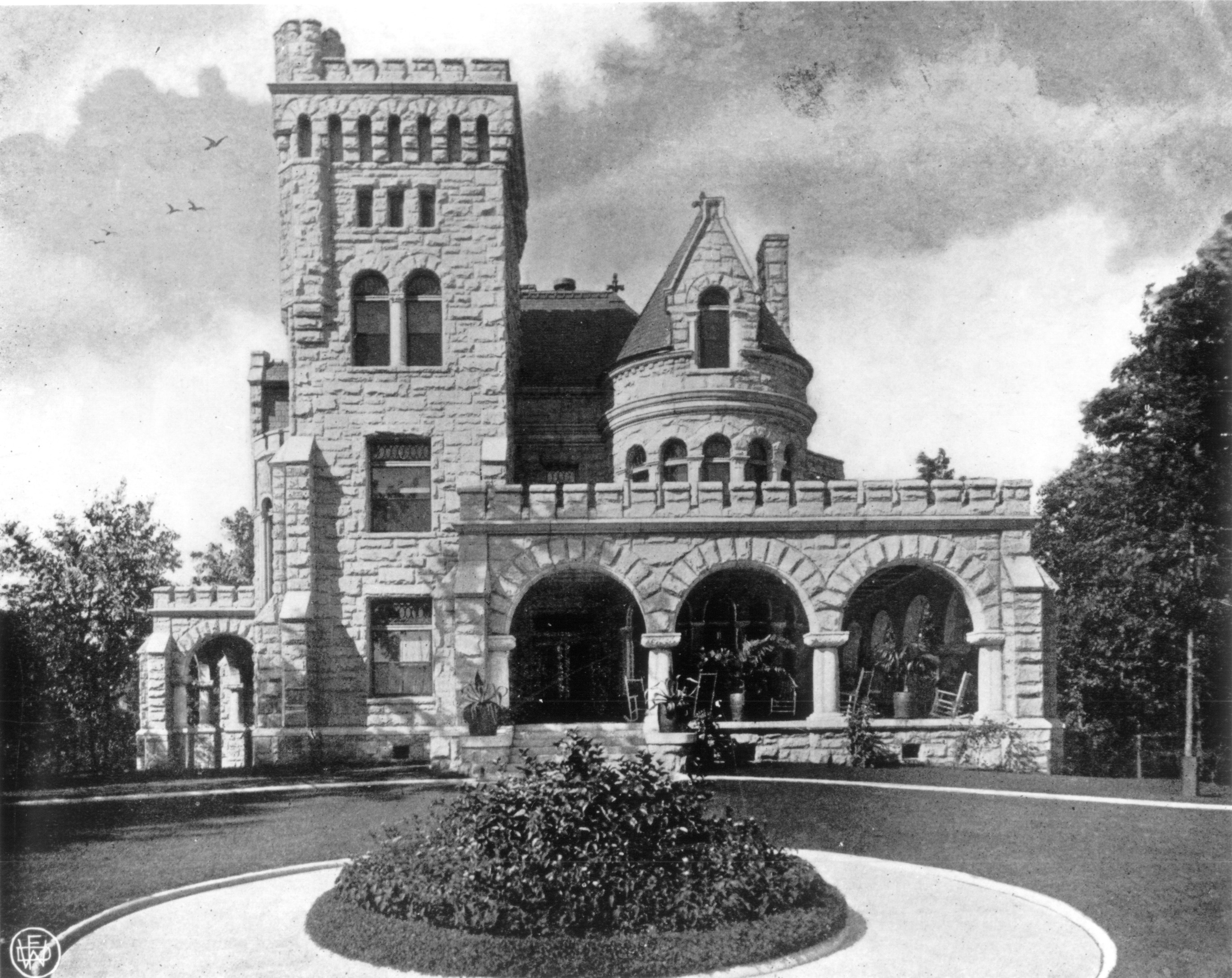
Courtesy of the Georgia Trust for Historic Preservation
Few buildings in Atlanta capture the imagination quite like Rhodes Hall.
With its soaring granite tower, rounded stone arches, intricate stained-glass windows, and fortress-like appearance, the mansion has long been affectionately known as "Atlanta's Castle." Standing on Peachtree Street just across from the Peachtree Circle entrance to Ansley Park, Rhodes Hall has overlooked more than a century of Atlanta history while remaining one of the city's most extraordinary architectural landmarks.
Completed in 1904, the same year developer Edwin P. Ansley began creating Ansley Park, Rhodes Hall and Atlanta's first garden suburb grew side by side during one of the city's most remarkable periods of expansion. As elegant homes began lining Ansley Park's winding streets and landscaped medians, Rhodes Hall became part of the prestigious residential corridor that helped define Atlanta's northward growth.
The mansion was built for Amos Giles Rhodes, founder of Rhodes Furniture Company. Arriving in Atlanta with little more than determination and an entrepreneurial spirit, Rhodes built one of the South's most successful furniture businesses. His stores became household names throughout the region, allowing him to purchase more than 100 acres along Peachtree Street for what would become his family estate.
He named the home Le Rêve—French for The Dream.
Designed by renowned Atlanta architect Willis F. Denny II, the mansion drew inspiration from the Romanesque castles the Rhodes family admired while traveling through Germany's Rhine Valley. Rather than following the Colonial Revival style that was becoming popular at the time, Denny created a distinctive Romanesque Revival residence built from massive blocks of Stone Mountain granite. Construction reportedly cost approximately $50,000, making it one of Atlanta's most impressive private homes of its era.
Inside, Rhodes Hall was every bit as remarkable as its exterior.
Visitors entered richly appointed rooms featuring hand-carved woodwork, elaborate fireplaces, and magnificent stained-glass windows created by the Von Gerichten Art Glass Company. The windows, depicting scenes from the Civil War, remain among the home's most celebrated artistic features and continue to captivate visitors today.
The mansion also reflected the latest innovations of the early twentieth century. It was equipped with electricity throughout the house, hundreds of electric light bulbs, electric call buttons, and other modern conveniences that were considered extraordinary in 1904.
Although Rhodes Hall sits just beyond Ansley Park's official boundaries, its story is closely connected to the neighborhood's history. At the beginning of the twentieth century, Peachtree Street had become Atlanta's premier residential boulevard, where successful merchants, industrialists, physicians, attorneys, and civic leaders built elegant homes that reflected the city's growing prosperity. Rhodes Hall was among the finest of these estates.
Unlike many of Peachtree Street's grand mansions, Rhodes Hall survived.
Following the deaths of Amanda Rhodes in 1927 and Amos Rhodes in 1928, their children donated the home to the State of Georgia with the understanding that it would be preserved for public and historical purposes. Beginning in 1930, the mansion served as the home of the Georgia State Archives. In 1983, it entered a new chapter when it became the headquarters of the Georgia Trust for Historic Preservation, which continues to restore, preserve, and share this remarkable landmark with the public.
Today, Rhodes Hall stands as one of the few surviving reminders of an era when Peachtree Street was lined with magnificent private residences. Surrounded by Midtown's modern skyline, it offers a striking contrast between Atlanta's past and present while reminding us of the vision, craftsmanship, and architectural ambition that shaped the city more than a century ago.
For Ansley Park residents, Rhodes Hall is more than a beautiful landmark across the street. It is a neighbor whose story reflects the same optimism and forward-thinking spirit that gave birth to one of Atlanta's most beloved historic neighborhoods. More than 120 years after Amos Rhodes called it The Dream, the mansion continues to inspire everyone who passes beneath its granite tower.