The Power of Believing in People
Helping people feel stronger has never been about fitness. It’s always been about believing they can.
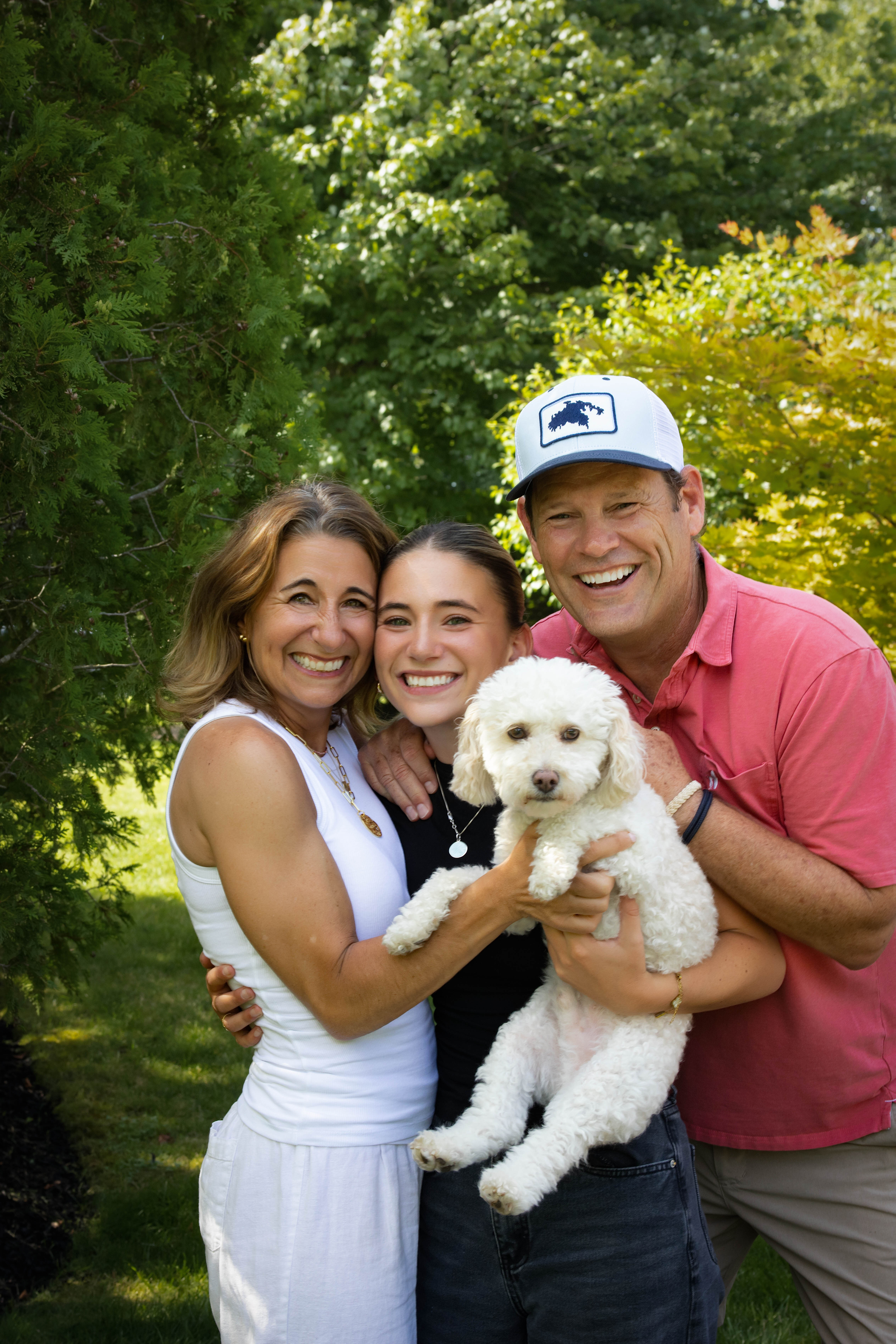
When Emily McCavanagh talks about her work, she rarely starts with exercise.
She starts with people.
Long before she built a fitness community in Manchester-by-the-Sea, Emily had a successful career in public relations and advertising in Boston. She loved the city. She loved Charlestown. But one day, on a run, something became unmistakably clear.
She remembers, “I had a feeling like I had a bigger purpose to help people beyond PR & Advertising.”
She walked into work, resigned that day, and continued building a business centered on something much bigger than workouts. She was already teaching bootcamp on the side so the transition to lean into wellness felt natural.
But that doesn’t mean it was easy.
"We had two little kids," Emily says. And when she got home and told her partner, John, his response was, 'What did you just do?'"
It was a leap into the unknown. Their dependable two-income household suddenly became one built on faith, hard work, and vision.
But instead of asking her to play it safe, John simply said they would figure it out together.
After getting to know Emily and John, this isn’t surprising. Their relationship isn’t one of chance. It’s well rooted and full of generosity and care. And it had been established in time-tested friendship first.
The two met while studying abroad in London and stayed friends for nearly a decade before life unexpectedly brought them back together in Boston.
Emily had even tried setting John up with several of her friends.
One evening she asked what kind of woman he was looking for.
The rest, she says with a smile, is history.
And so when this new transition came into their lives, Emily did what she always does when she believes in something. She went all in.
She coached before sunrise. She taught boot camps after work. She met clients at grocery stores, led after-school programs, and created wellness plans wherever people needed them.
Looking back, she doesn't remember those years as exhausting. "I loved it."
"I want to help people," she remembers thinking. "I want to connect people to wellness."
And that’s the idea that shaped not only her career, but the lives of hundreds of people throughout the Cape Ann community.
Building Something Different
As Emily worked with clients, she noticed a pattern. People weren't avoiding fitness because they didn't care. They were overwhelmed. They were intimidated. Or they believed they couldn't afford it.
So she designed her business around removing barriers.
Affordability became part of the mission. Accessibility mattered just as much. She wanted people to feel welcomed before they ever picked up a weight.
"When I created my mission," she says, "I looked at all the reasons people say they can't do something."
That philosophy stayed with her when her family moved to Manchester.
Friends suggested she raise her prices. She never considered it.
"It was never about the socioeconomic side of things," she says. "It was about doing what was right for people trying to get healthy."
For Emily, wellness was never meant to be exclusive.
But she did know that now being in Manchester, she didn't want to spend years searching for gyms and borrowed spaces the way she had in Boston.
Their new home came with a large garage. John looked at it practically. Emily looked at it and saw possibility. "He said, 'If you can pay for it, you can redo it.'"
Rather than take out a loan, Emily rented out their home for a month while the family stayed with her parents on Martha's Vineyard. The rental income funded the renovation, transforming the garage into what would become FIT House.
John laughed. He knew that he probably shouldn't have challenged her. Emily smiled. "He made out pretty well in the deal."
Listening First
If there's one thread woven through every chapter of Emily's story, it's listening.
She didn't create schedules based on what the fitness industry said people wanted.
She asked.
Young moms wanted an 8:30 class right after school drop-off. So she offered one. As those families grew, their schedules changed. Emily changed with them.
"My community told me what they needed," she says. "I just listened." That willingness to adapt became the heartbeat of her business.
Some people came to exercise. Many stayed because they found something they didn't even realize they were looking for.
Friendship.
Support.
A place to belong.
Parents brought babies who played together while moms worked out. Children grew up watching their families build friendships that lasted long after class ended.
Years later, one of those children reached out to Emily. He remembered watching movies upstairs while we were downstairs in the studio. It's those moments that remind her the workouts were only part of what she was creating. "I never wanted to be more than a community fitness center," she says. "The community was always the priority."
Strength Looks Different for Everyone
Emily understands that better than most. For much of her life, she believed she simply wasn't good at school. At 43 years old, after her daughter was diagnosed with dyslexia, Emily discovered she had lived with the same learning disability her entire life.
Instead of feeling discouraged, she felt free. "It was like a monkey came off my back," she says.
Suddenly, decades of self-doubt made sense.
"All those years feeling something was off... when in reality, I just learned differently."
That revelation unlocked an entirely new chapter. Emily became an eager student again, soaking up everything she could about the mind, performance, and human potential.
Today, that curiosity has evolved into coaching athletes’ mental and emotional games. She helps them navigate pressure, anxiety, confidence, and identity, giving them tools to become stronger both on and off the field. "The physical side gets people in the door," she says. "But often we end up working on something much deeper."
Looking Ahead
After years of leading FIT House, Emily recently closed that chapter. It wasn't an ending filled with sadness. It was one filled with gratitude.
Former clients wrote letters. Friends gathered for one last class. People shared stories Emily never knew had become part of their lives. "The things people told me... I didn't even realize I'd done for them."
While leading fitness classes have come to a close, Emily's purpose has not.
And she never sits still for long.
As she figures out what’s going to be the long-term plan, there are a couple of things that will be staying in the mix. She will continue helping athletes develop mental resilience. And she will continue building Creative Chixx. Together with longtime friend and business partner, Dana Levitt, Emily co-founded Creative Chixx, a nonprofit initiative designed to help women business owners grow through education, connection, and collaboration. The organization brings women together through conferences, meetups, and shared experiences, creating a supportive network where ideas, resources, and honest conversations are freely exchanged.
What makes Creative Chixx different is its philosophy: friendship before competition. "It's about helping women realize they don't have to figure it all out alone," Emily says. Whether members are looking for practical business strategies, trusted referrals, or simply encouragement from someone who's been there, the goal is to create a community where women can learn from one another, celebrate successes, share failures, and grow together.
For Emily, it's a natural extension of the work she's always loved most: helping people discover what's possible. If Emily hopes readers take away one thing from her story, it's this:
"If you have a dream," she says, "follow it."
Then she adds something she's learned through years of listening—not just to others, but to herself.
Lean into your community. Ask questions. Pay attention to what people need. Sometimes the strongest thing you can build isn't a business. It's a place where people feel seen.