Hope in Motion
From Denali 310 to AVLAYAH™: A Journey of Advocacy, Science, and Community.
There are moments in life when time seems to stand still—and others when it feels like everything depends on how fast the world can move. For my family, the journey from Denali 310 to AVLAYAH™ has lived in both of those extremes.
Like many rare disease families, we found ourselves navigating a path we never expected—one defined by science, uncertainty, and an urgent hope for progress. The therapy we were waiting for represented more than innovation; it represented possibility. Possibility for more time, more milestones, and more moments that too often feel fragile when you’re raising children with a rare disease.
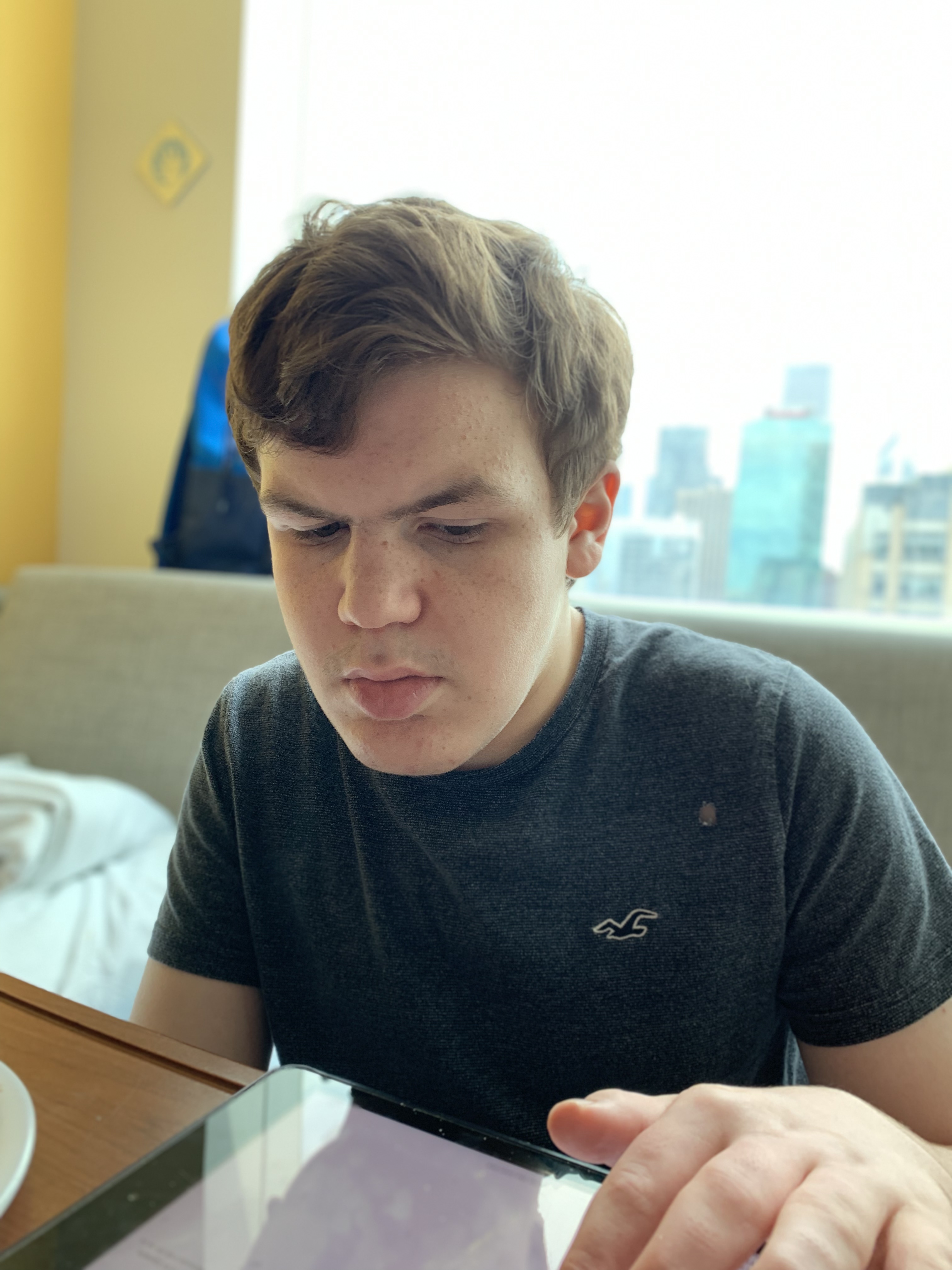
This has been a long road. Hunter Syndrome is caused by a gene mutation on the X-chromosome. Generally, a mutation is either passed from the mother to her sons or is a spontaneous mutation. One of our two sons was diagnosed at 2 years old, and the other at 3 months old. The mutation causes the absence of an enzyme needed to purge cells/toxins from the body, causing them to build up in vital organs such as the brain, heart, lungs, etc. Our sons immediately started the standard of care, an enzyme replacement therapy, but this therapy cannot pass the blood-brain barrier and treat the central nervous system (brain, nerves, etc.). Due to this limitation, our sons immediately screened for available clinical trials, with one son entering a trial at 18 months old and the other at 12 years old. One trial failed but kept cognitive decline at bay, and he continues to exceed life expectancy, and the other trial was the one just evaluated in March by the U.S. Food and Drug Administration (FDA).
Working through the regulatory process with the FDA is not for the faint of heart. It is rigorous, complex, and at times deeply emotional when the stakes are this personal. From the early promise of Denali 310 to its evolution into Avlayah, we experienced the highs of scientific advancement and the lows of delays and uncertainty. Each decision, each data point, each meeting carried enormous weight. For us, if this medicine did not get approved, our sons would decline and eventually succumb to the disease.
But what stands out most in this journey is not just the science—it’s the people.
Our neighborhood and the Red Tail community became an unexpected but essential part of this story. In moments when the process felt overwhelming, it was the simple, steady presence of others that carried us forward.
Neighbors checked in—not just with polite curiosity, but with genuine care. They asked questions, listened, and stood beside us even when the details were complicated. They helped transform something that could have been isolating into something shared.
Conversations that might typically revolve around tee times and weekend plans became opportunities for awareness and advocacy. Friends took the time to understand what we were facing. They amplified our voices, shared our story, and reminded us that we were not navigating this alone.
There is something uniquely powerful about community support when you are advocating for something larger than yourself. It turns private struggle into a collective purpose.
Advocacy, I’ve learned, is not just about engaging institutions like the FDA. It’s about building a network of people who care enough to stand with you—whether that means writing letters, spreading awareness, reaching out to your contacts to help us, or simply showing up on a difficult day.
As Avlayah moved closer to approval, we felt that collective energy. Every conversation, every show of support, every small act of kindness contributed to something bigger. It reminded us that progress in rare disease is not just driven by scientists and regulators—it is sustained by communities.
This journey is far from over. But reaching this milestone has reinforced something I now hold deeply: breakthroughs may begin in labs and clinical trials, but they are carried forward by people.
To our Red Tail neighbors and golf club community—thank you. Your support has meant more than we can fully express. You’ve been part of this journey in ways that truly matter.
And for that, we are endlessly grateful.
A special thank you to the Bilardo family, Kasey Crawford Kellem /Stroll, and the Red Tail Golf Club leadership team, especially Nick Rudy and Jonathan Khouri, and his family.
For more information about Hunter Syndrome and our family, please visit raisingrareboys.org.