Croatian Escapes Part 2
From ancient Roman ruins and UNESCO treasures to turquoise lakes and charming Adriatic islands, Croatia offers a captivating blend of history, culture, and natural beauty.
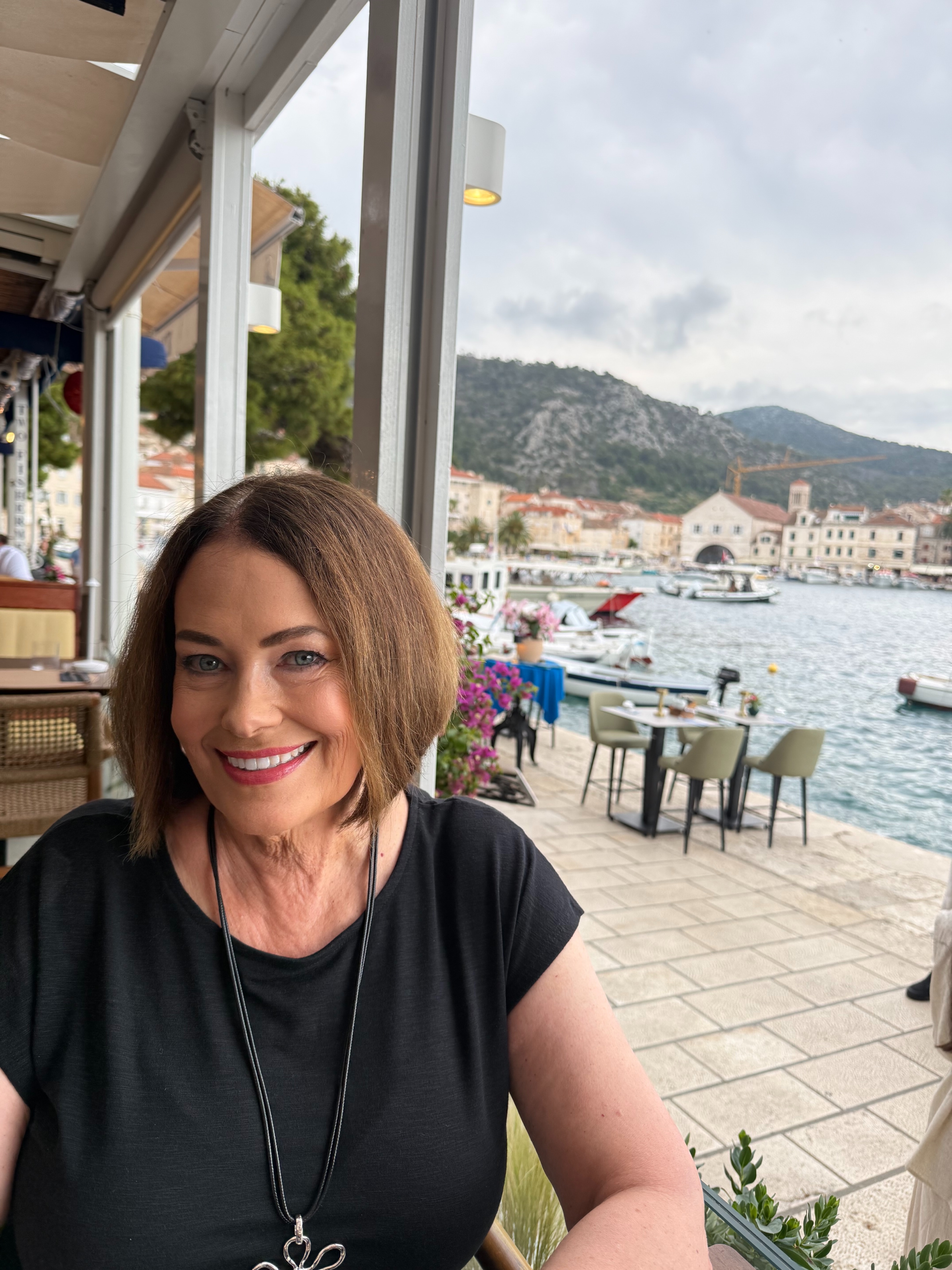
Susan Enjoying al Fresco Dining in Hvar
Croatia has many beautiful and historic regions, islands, and towns. Last month, I covered Dubrovnik, its largest city. On our recent trip, Rich and I also visited Split, its second-largest city, located on the Dalmatian coast along the Adriatic Sea.
Split is most famous for Diocletian’s Palace, a massive Roman palace and fortress complex. It was built at the end of the third century AD by the Roman Emperor Diocletian as his retirement residence. He was the first Roman emperor to voluntarily retire and is also known for establishing the tetrarchy system of rule, where power was split among four co-rulers. At the Palace, about half of the complex was for Diocletian’s personal use, with the rest housing the military garrison.
Diocletian’s Palace is a UNESCO World Heritage site and is one of the best-preserved monuments of Roman architecture that has been continuously lived in for 1,700 years. Probably the most impressive part of the whole palace is the basement. Sometimes also referred to as the cellars, the different names for the vast rooms supporting the southern part of the complex can be somewhat misleading. What are designated as the basements are actually substructures that were designed to elevate the Emperor’s apartment above sea level, creating a passage to the sea, and providing rooms for storage.
The Palace and surrounding area were famously used as a major filming location for Game of Thrones Seasons 4 through 6, where they served as a stand-in for the fictional city of Meereen. The cellars were featured as the lair where Daenerys Targaryen trained and kept her dragons.
Another must-see in Croatia is Plitvice Lakes National Park, one of the oldest and largest national parks in Croatia. It, too, is on the UNESCO World Heritage list for its picturesque series of tufa lakes comprised of porous limestone that give the water its intense aqua blue color, caves, and connected waterfalls. We hiked through Plitvice and enjoyed the breathtaking scenery.
Our trip to Croatia covered a lot of ground as well as sea as we took ferry transits out to several of the nearby Dalmatian Islands, including Hvar. Hvar is located on the northeast center of the Adriatic sailing routes, which made it an important base for trade up and down the Adriatic, across to Italy, and throughout the Mediterranean. Al fresco dining is very popular in Hvar, and we enjoyed it too.
We also traveled by ferry to the island of Korcula, which the islanders claim through folklore is the actual birthplace of Marco Polo, even though Venetians make the same claim. On Korcula, they have an historic building that they have designated as Marco Polo’s Birth House. Records also show the Polo family held long-standing property and trading ties to the island, which was under Venetian rule during the 13th century.