If These Walls Could Talk
From antique roses and hurricane scars to salvaged ferry doors, Sullivan’s Island homes hold stories that are passed from one generation to the next.
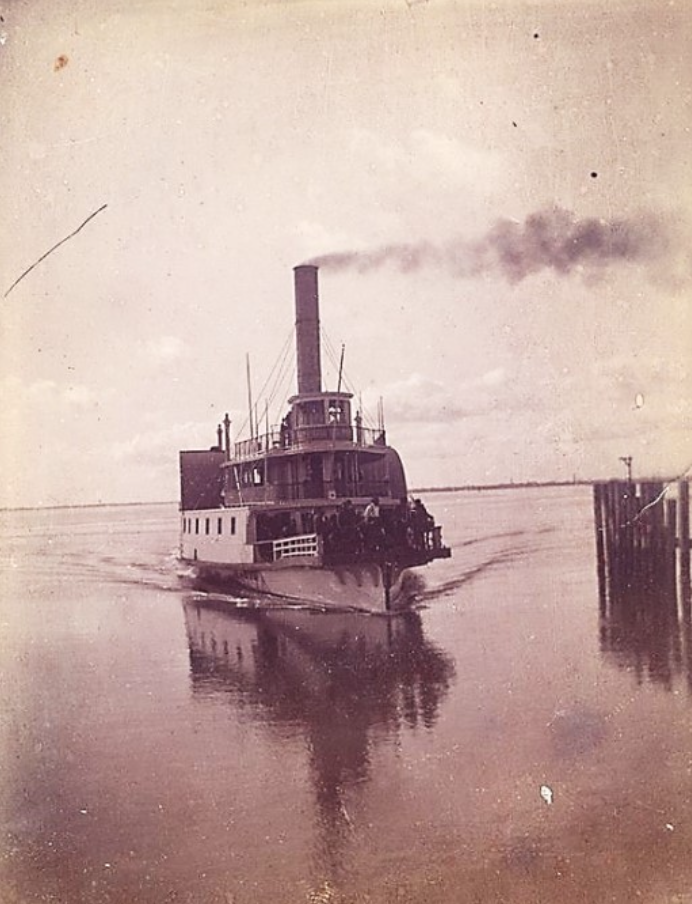
Sappho Ferry
Last year, I had the privilege of selling one of Sullivan's Island's oldest and most recognizable homes: Shell Rose Cottage. Dating to around 1870, the cottage sits across from the lighthouse, surrounded by the antique roses that gave the home its name. It is the kind of place that feels inseparable from the island itself—simple, enduring, and filled with a history that cannot be recreated.
For decades, Shell Rose Cottage was home to renowned rosarian Ruth Knopf. Her passion helped preserve Charleston's historic Noisette roses and return them to gardens throughout the Lowcountry. Her work led to the creation of the rose garden at Boone Hall Plantation, the Noisette Study Garden at Hampton Park, and Charleston's Heritage Rose Trail. In 2011, she was recognized as a Great Rosarian of the World.
That history remained alive in the garden surrounding the cottage. The roses were not simply landscaping; they were part of the home's identity and part of a much larger Charleston story. You could sense that Shell Rose Cottage had been shaped not only by the people who lived there, but also by the things they loved and chose to preserve. The new owners have restored the home with obvious care, keeping the roses and the rhythm of the place intact.
Selling a home like that stays with you. It reminds you that some houses are more than a collection of rooms or a piece of real estate. They are keepers of stories.
A few blocks away, another historic island home tells a story of survival. Construction on the Moultrieville cottage began around 1850, was interrupted by the Civil War, and was ultimately completed around 1870. More than a century later, David Russell purchased the home in 1985. Just a few years after that, Hurricane Hugo tore away roughly a third of the house, removed the roof, and scattered its historic porch columns several blocks from the property.
The house was repaired, but its evolution did not end there. Over the next four decades, it grew from a rustic bachelor beach retreat into a family vacation home and, eventually, a full-time residence. Rather than erase the building's past, its owners incorporated it into each new chapter. Antique heart pine discovered during renovations was reused throughout the interior. Handmade bricks from an old cistern became part of a fireplace, and two massive original porch columns found a new purpose in the kitchen. The house was later raised to protect it from flooding, while thoughtful additions allowed it to meet the needs of modern life without sacrificing its familiar historic character.
Then there is Soul Cottage, whose story may begin at its front door. The door and several unusual pocket windows were salvaged from the Sappho, a ferry that once served Charleston, Mount Pleasant, and Sullivan's Island. When the ferry was retired, pieces of it were given new life in the house. The slightly crooked front door came from the vessel's hull, while the windows still operate on weighted pulleys, sliding down instead of up. Their origins can even be recognized in old photographs of the ferry.
The home later became the childhood residence of Buff Ross, whose family purchased it in 1974. His mother, artist and potter Rose Mitchell, maintained a studio there, filling the cottage with her creative spirit. Years later, Buff returned to raise his own children in the house. They ran through the same halls, gathered around the same breakfast booth, and lived among the accumulated art, objects, and family memories of two generations.
These three homes tell very different stories. One remembers a woman whose roses became part of Charleston's horticultural legacy. Another bears the scars of a devastating hurricane and the care required to rebuild. The third carries pieces of a long-vanished ferry, along with the creative spirit of the family who called it home.
Together, these stories reveal something essential about Sullivan's Island: its history does not live only in monuments or archives. It lives in old floorboards and rescued bricks, crooked doors, deep porches, and gardens that have been tended for generations.
And not every meaningful house needs to date to the 1800s. A home's story might be a family tradition, a memorable storm, an unexpected discovery during a renovation, or simply the neighbor who always stopped by the back porch. These smaller histories are often the ones that give a house its soul.
We may hold the keys to these homes for a time, but we are really their temporary caretakers. Each owner inherits the chapters that came before, adds a few of their own, and eventually passes the story along.
After all, if these walls could talk, imagine the stories they would tell.