The Next Chapter: A Conversation with Alex Rich
I got a front-row seat to Alex Rich's first year as CEO and Executive Director at the Gibbes Museum of Art, working alongside him as president of Society 1858, the museum's young patrons group, while he found his footing in a city he'd never even visited before taking the job.
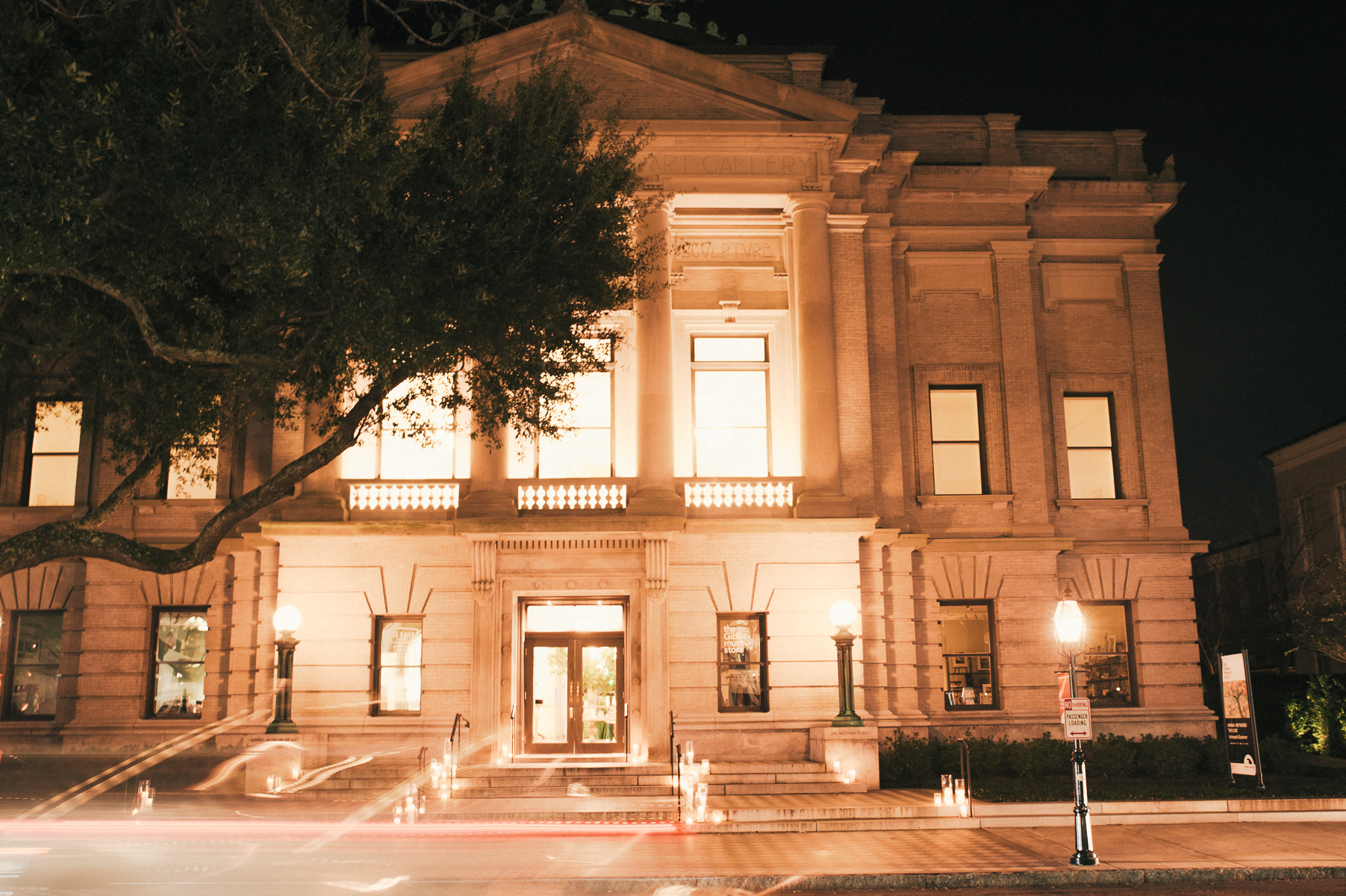
The Gibbes Museum By Joseph Rogero
What struck me from the start was how personal Alex's connection to museums has always been. He was drawing since he was barely out of toddlerhood, apprenticed at the Met as a teenager, and once got a letter back from Roy E. Disney encouraging him to keep at his art. That same wonder is what drew him to the Gibbes, an institution he'd long admired from afar before ever setting foot in Charleston. For this issue, I sat down with Alex to talk about his path into museum leadership, his first year here, and where he sees the Gibbes and Society 1858 headed next.
You've spent your career at institutions like the Met and the Whitney before leading the Ashley Gibson Barnett Museum at Florida Southern. What made the Gibbes, and Charleston, the right next chapter?
I've been fortunate to have amazing museum and academic experiences over the past 30 years — starting at 16 at the Met — guided by one principle: encouraging others to love art as much as I do. By the time I was 5 or 6, I assumed museums were the coolest places in the world to everyone. So nerdy, I know.
I wasn't looking to leave a tenured position, but the Gibbes excited me. That it was in Charleston sounded cool, too — but I'd never been! Had I known then what I know now about this region, I'd have gunned for the position. Leaving what we'd built in Lakeland wasn't easy. But we knew in our hearts it was the right decision. And it was.
You're stepping into very big shoes after Angela Mack's 44-year tenure. What do you see as her legacy, and where do you want to put your own stamp?
Angela was — and is — a cultural force. She led the Gibbes through a historic renovation and grew its collections and national reputation. The Museum was already in a strong position when I arrived.
Our new expansion, at the start of my tenure, adds a floor dedicated to education — doubling down on our founding 1858 mission. The Gibbes in its next chapter will be unapologetic about checking two boxes at once: if it isn't educational and it isn't fun, we shouldn't be doing it. That's where I hope my stamp becomes most apparent.
Your academic focus is 19th- and 20th-century American and European art. How does that shape your thinking about the Gibbes's collection and programming?
A major draw was the permanent collection of more than 10,000 objects. Our strengths in American art and American art of the South distinguish us uniquely — there's no other museum anywhere like the Gibbes. But we're a Southern museum with a global perspective. Bringing in fourteen Rodin sculptures and three Monet landscapes this past year speaks to my expertise and to what draws people through our doors.
At Florida Southern, you led a major expansion. What did that teach you about balancing ambition with an institution's identity?
An expansion shouldn't require reimagining a museum — that's simply a new museum. It should expand on what a museum does well while holding firm to its legacy. At the Gibbes, that means renovating a historic 1876 building never meant to be a museum — a moment to celebrate our legacy while propelling our narrative forward.
What's surprised you most about Charleston's art community since you've arrived?
How close-knit it is! I had no idea what the scene was like before I got here — and I'm a New Yorker who misses New York culture — but the arts are stronger here than in most any city I've been. Every organization has its own niche, so we're sharing audiences, not competing for them.
What's one exhibition or initiative you're most excited to bring to the Gibbes in the next few years?
Too many to count! We'll be revealing our new wing within months — an education center meant to be an incubator for lifelong learning, and a blockbuster series of exhibitions. We're also expanding collaborations with the Gaillard, Spoleto, and the Symphony.
What role do you see young patron groups playing in the museum's future?
Groups like Society 1858 are fundamental. Our younger patrons help guide us toward what entices the next generation, and we get to educate them on the inner workings of the museum world in return.
What would you tell someone looking to become more involved at the Gibbes?
Come visit us! Become a member, a docent, join Society 1858. Personally, I try to be really accessible — it's the professor in me — and welcome anyone to call or email. Museums are fun!
I've always loved Vanity Fair's Proust questionnaire. Would you answer a few?
Of course! I love it.
Perfect happiness?
Apart from a day in a museum? I kid. A miniature schnauzer curled in my lap and a toddler wanting to play with Daddy — put it all on a beach, and it's heaven.
Current state of mind?
Stressed! Always. My mind never stops running.
Overused words?
I'm an avid, principled user of em-dashes — it mimics how my brain works. Also “indeed” and “truly.”
Most treasured possession?
My letter from Roy E. Disney, reminding me that “with hard work on your part, any dream can come true.” It hung over my bed my whole childhood.
Heroes in real life?
Lucille Ball, always. And my parents, who encouraged us to pursue our dreams — it was my mom who predicted pre-teen Alex would one day run a museum.
Your motto?
Don't write yourself out of anything. If you don't ask, you'll never know. The worst case is a no.