Cardio Is Hardio
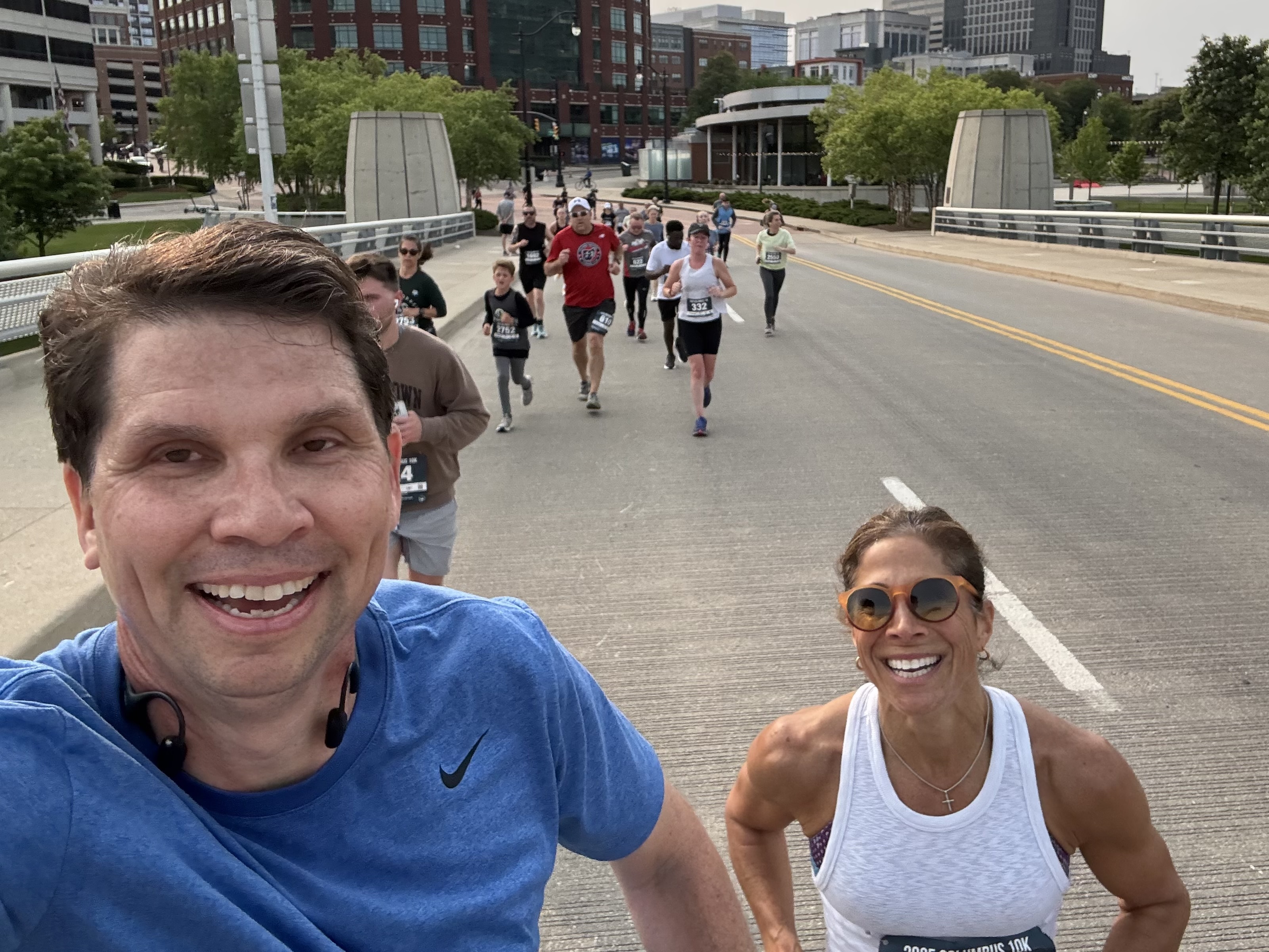
Teresa Haas and Dublin Resident Tim Wilson enjoying a quick selfie at the 2025 Columbus 10K
Cardio is next in my series of exercise styles I can’t live without. I aim to elevate my heart rate for at least 30 minutes, three to five times per week, and my favorite form of cardio is running. For me, it offers the biggest bang for the buck. It’s efficient, clears my mind, improves my endurance, and, thankfully, has been kind to my joints. Most importantly, it improves cardiorespiratory fitness—better known as VO2 max.
You’ve probably heard that several key factors linked to longevity include VO2 max, grip strength, and balance. I’ve worked on balance through hot yoga at Harbor, grip strength through bodybuilding training, and VO2 max through regular cardio workouts. But what exactly is VO2 max, and why should you care?
VO2 max refers to the maximum amount of oxygen your body can use during intense exercise. The higher your VO2 max, the more efficiently your heart and muscles work together to deliver and use oxygen. In simple terms, it helps your body perform everyday tasks—whether climbing stairs, biking uphill, or running a race—with less fatigue.
At rest, oxygen consumption averages about 3 to 3.5 milliliters per kilogram of body weight per minute. During exercise, a healthy middle-aged adult may have a VO2 max between 30 and 35, while endurance athletes can reach 60 or higher. An untrained person may fall closer to 20 to 25. Higher numbers are generally associated with better cardiovascular fitness and improved longevity.
Many people are surprised to learn they can estimate their VO2 max right from their smartwatch. Devices such as the Apple Watch and Garmin watches can track trends in cardiorespiratory fitness during walking, running, or hiking workouts. For the most accurate measurement, VO2 max can also be tested in a medical or sports performance setting using a treadmill or bike test while measuring oxygen consumption through a mask.
The good news is that you don’t have to run to improve your VO2 max. The best cardio exercise is the one you enjoy enough to do consistently. Walking, swimming, dancing, tennis, skiing, pickleball, cycling, and fitness classes all count. Gym equipment such as the elliptical, rowing machine, stair climber, and stationary bike are also excellent options.
To improve cardiovascular fitness, aim for at least 150 minutes of cardio each week. Most workouts should bring you into “Zone 2,” where you can still talk but not sing. Adding occasional high-intensity intervals can improve VO2 max even further.
While running remains my personal favorite—especially on the Muirfield trails—I’ve recently incorporated rowing, incline walking, and the elliptical while preparing for a figure competition. The key is simple: move consistently, challenge your heart, and choose activities you genuinely enjoy.